The Brainwave Patterns Behind Age-Related Decline
Mind AliveThe Brainwave Patterns Behind Age-Related Decline
As people age, they often notice slower thinking, weaker memory, lighter sleep, emotional fluctuations, reduced energy, and more difficulty recovering from stress or illness. Many assume this is “just aging,” but neuroscience shows that many senior health challenges are connected to changes in brainwave rhythms — not just wear and tear.
The brain’s electrical patterns become less flexible with age. Transitions between states — from alertness to rest, from focus to calm — become slower and less precise. This lack of rhythm flexibility is a major reason seniors experience cognitive decline, poor sleep, low mood, and daytime fatigue.
Why Aging Feels Like the System Is Slowing Down
Healthy brain function relies on smooth transitions between frequencies. But with age, the nervous system gradually loses its ability to shift efficiently between brainwave states. Seniors often experience:
- more time stuck in lower-energy rhythms
- difficulty accessing fast, engaged thinking
- fragmented sleep and lighter nights
- slower cognitive processing
- reduced resilience to stress
These changes are not signs of failure or degeneration — they are signs of a nervous system that needs stronger, clearer cues to support healthy rhythm transitions.
Aging slows the brain’s timing mechanisms.
When rhythm flexibility declines, so do energy, clarity, and restorative sleep.
The Brainwave Shifts Common in Older Adults
The aging brain tends to gravitate toward slower, less efficient patterns during the day, while losing access to deeper restorative rhythms at night.
| Brainwave Pattern | Role in Healthy Aging | Age-Related Change | How It Feels |
|---|---|---|---|
| Beta | Fast thinking, problem-solving, focus | Reduced daytime beta activity | Slower thinking, brain fog, indecision |
| Alpha | Relaxed alertness, emotional balance | Alpha drops and becomes unstable | More irritability, difficulty relaxing, restlessness |
| Theta | Memory integration, emotional processing | Irregular theta regulation | Reduced memory recall, emotional swings |
| Delta | Deep sleep, immune function, healing | Much less delta during sleep | Light sleep, frequent waking, poor restoration |
These patterns help explain why seniors often feel mentally slower, sleep more lightly, and become more sensitive to stress or emotional triggers.
Why Sleep Deteriorates With Age
One of the biggest challenges for seniors is the decline in slow-wave (delta) sleep. Deep sleep becomes harder to reach and harder to maintain. This affects:
- memory consolidation
- immune resilience
- cellular repair
- emotional stability
- daytime alertness and motivation
When deep sleep shrinks, seniors feel tired even after a full night of rest — because their nervous system never enters the states that restore it.
Why Memory Becomes Less Reliable
Memory relies heavily on theta and slow-wave activity. As the nervous system ages, these frequencies become less coordinated. This leads to:
- difficulty retrieving names or words
- trouble learning new information
- heavier mental fatigue
- slower integration of experiences
Many seniors describe it as:
“I know it’s there… it just doesn’t come out.”
This is not memory loss — it is rhythm disruption.
Why Mood Becomes More Fragile With Age
Brainwave flexibility is crucial for emotional stability. When transitions slow down, seniors may feel:
- more easily overwhelmed
- less emotionally resilient
- more irritable or withdrawn
- more prone to low mood
This often worsens when sleep disruptions are involved — because sleep architecture strongly affects mood regulation.
Why Binaural Beats Rarely Work for Seniors
Audio-only tools depend on a healthy frequency-following response — the exact mechanism that weakens with age. Seniors often need a stronger, more structured, multimodal signal to guide their brain into healthier rhythms.
This is why binaural beats might relax younger adults, but feel ineffective or inconsistent for older adults.
A Stronger Approach: Structured Light + Sound Brainwave Entrainment
The brain’s natural ability to synchronize with rhythmic stimulation is still present in older adults — it just requires a clearer, stronger signal. Multimodal entrainment (light + sound) provides this, helping seniors:
- improve cognitive speed
- enhance mood stability
- deepen sleep
- support memory processing
- increase daily energy levels
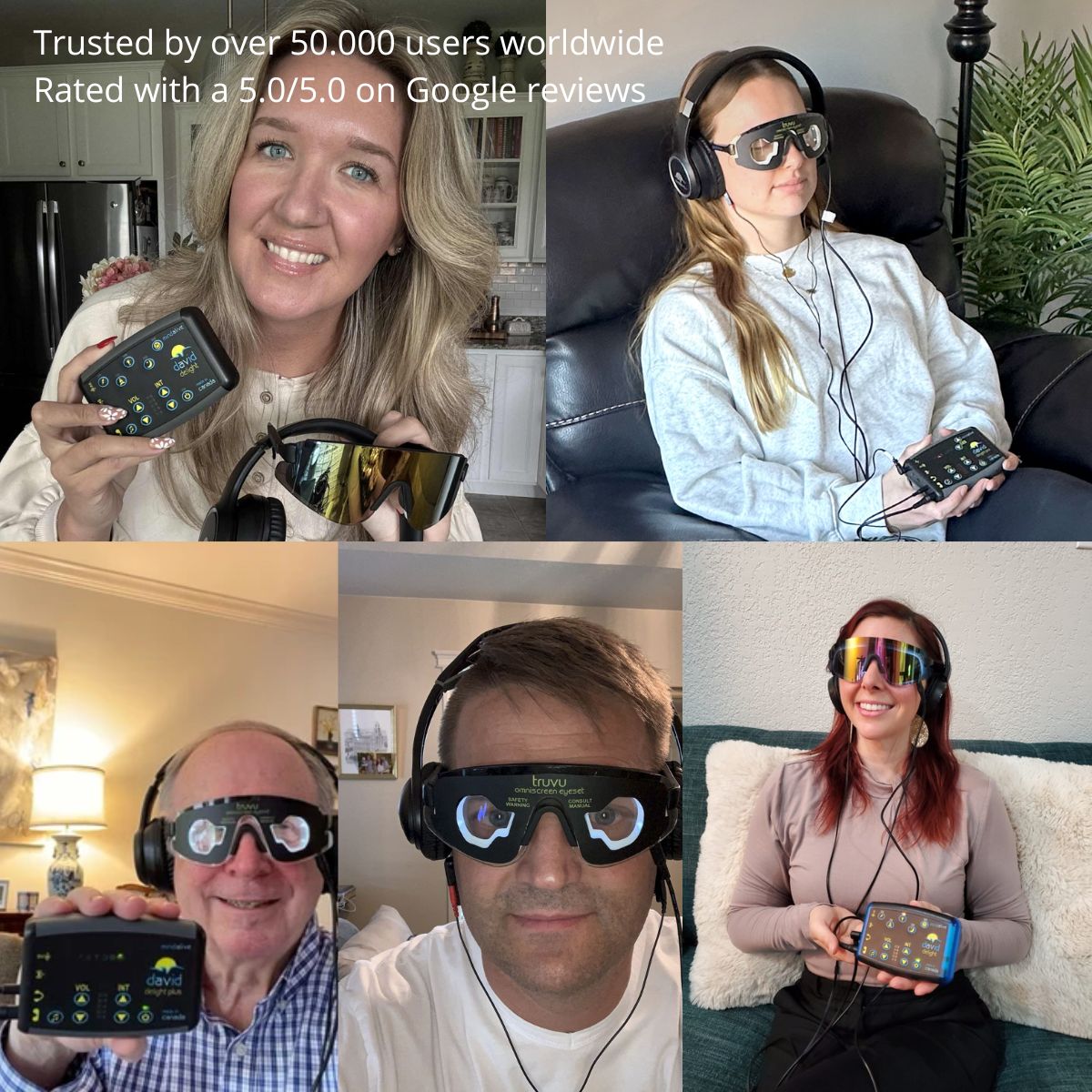
The DAVID Premier: Supporting Healthy Aging Through Brainwave Regulation
The DAVID Premier uses synchronized light and sound frequencies in structured protocols designed to help guide the brain into healthier patterns for sleep, memory, mood, and daytime energy. For seniors, this can mean:
- more restorative deep sleep
- better morning clarity
- less daytime fatigue
- improved cognitive resilience
- greater emotional stability
It does not replace medical care — but it supports the neurological foundation behind healthy aging. The nervous system becomes more flexible, more balanced, and more capable of functioning at a higher level.
Explore DAVID Premier