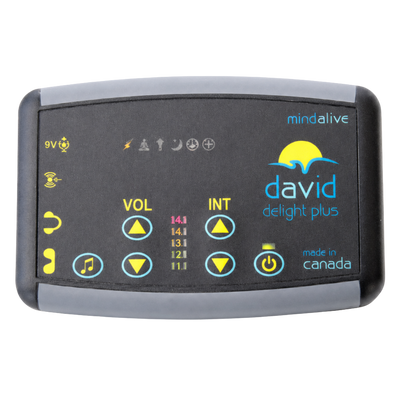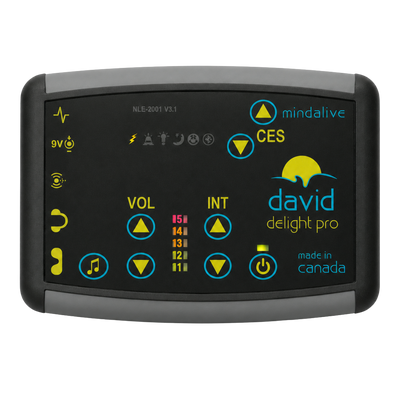
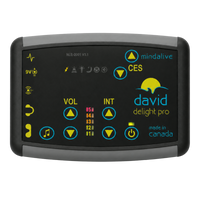


The DAVID Delight Pro: Advanced AVE + CES for Natural Brain Training
Yrian Brugman
Brain Training · AVE + CES
Used by clinicians, wellness practitioners, and home users in more than 40 countries
An in-depth guide to the DAVID Delight Pro — what it does, how it combines Audio-Visual Entrainment (AVE) with CES, and how to use it as a natural, structured brain-training system for stress, sleep, mood, and cognitive performance.
The DAVID Delight Pro

Why the DAVID Delight Pro Exists
For decades, people have searched for non-drug, non-invasive ways to calm the nervous system, improve sleep, and support mental clarity. Meditation apps and binaural beats helped a little. But many users wanted something more structured — and more powerful — without having to go into a clinic.
The DAVID Delight Pro was designed to meet that need. It combines:
- Audio-Visual Entrainment (AVE) — gentle light and sound pulses that guide brainwaves into targeted patterns.
- Cranial Electrotherapy Stimulation (CES) — tiny microcurrents that support stress regulation and emotional balance.
Instead of guessing which audio track or gadget might help on a given day, the Delight Pro offers carefully structured protocols for:
- deep relaxation and stress reduction
- falling asleep more easily and sleeping more deeply
- daytime energy and mental clarity
- mood support and emotional resilience
- focus, learning, and cognitive performance
1. AVE: Guiding the Brain with Light and Sound
At the core of the Delight Pro is Audio-Visual Entrainment. AVE uses:
- specialized glasses with gentle, flickering lights (eyes closed)
- headphones with synchronized pulsed tones
These pulses are set at specific frequencies that align with known brainwave bands:
- Delta (0.5–4 Hz) – deep sleep and physical healing
- Theta (4–7 Hz) – dreamlike creativity, deep relaxation
- Alpha (8–12 Hz) – calm, relaxed awareness
- Beta (13–20 Hz) – focused attention and alertness (in its healthier ranges)
Through the brain’s natural frequency-following response, these rhythms encourage large networks to synchronize — making it easier to settle into a specific mental state, whether that’s relaxed, sleepy, or focused.
2. CES: Calming the Nervous System from the Inside Out

AVE works largely through rhythm and timing. Cranial Electrotherapy Stimulation (CES) takes a different route: very low-intensity microcurrents (in the microampere range) delivered via ear clips.
These microcurrents are thought to influence structures involved in:
- stress and anxiety regulation
- mood and emotional processing
- sleep onset and sleep quality
The Delight Pro integrates CES directly into many of its AVE sessions, so you can:
- run AVE alone (light + sound)
- run CES alone (microcurrent only)
- combine AVE + CES in a single, powerful session
3. Inside the DAVID Delight Pro: What’s Included
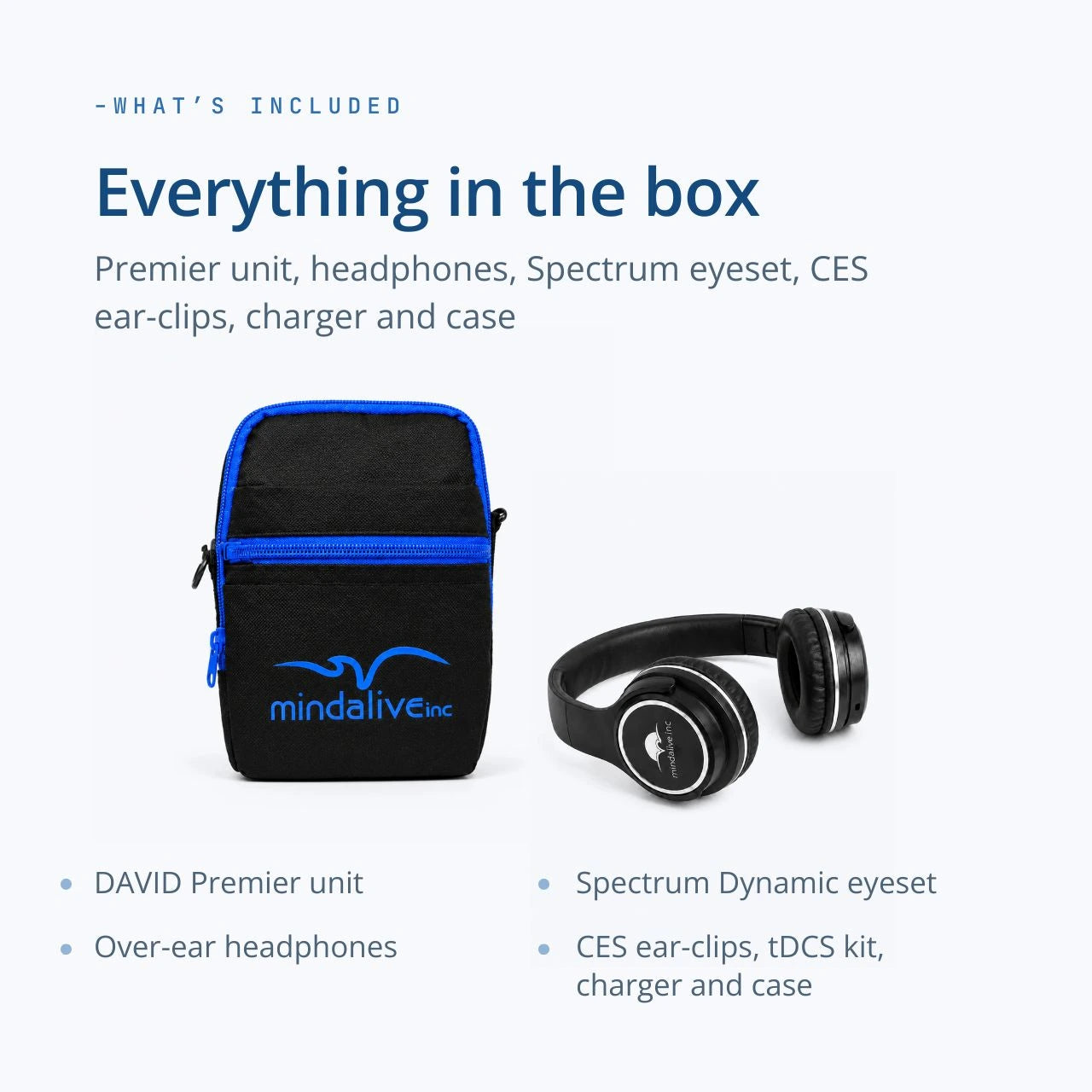
When you unpack the Delight Pro, you’ll typically find:
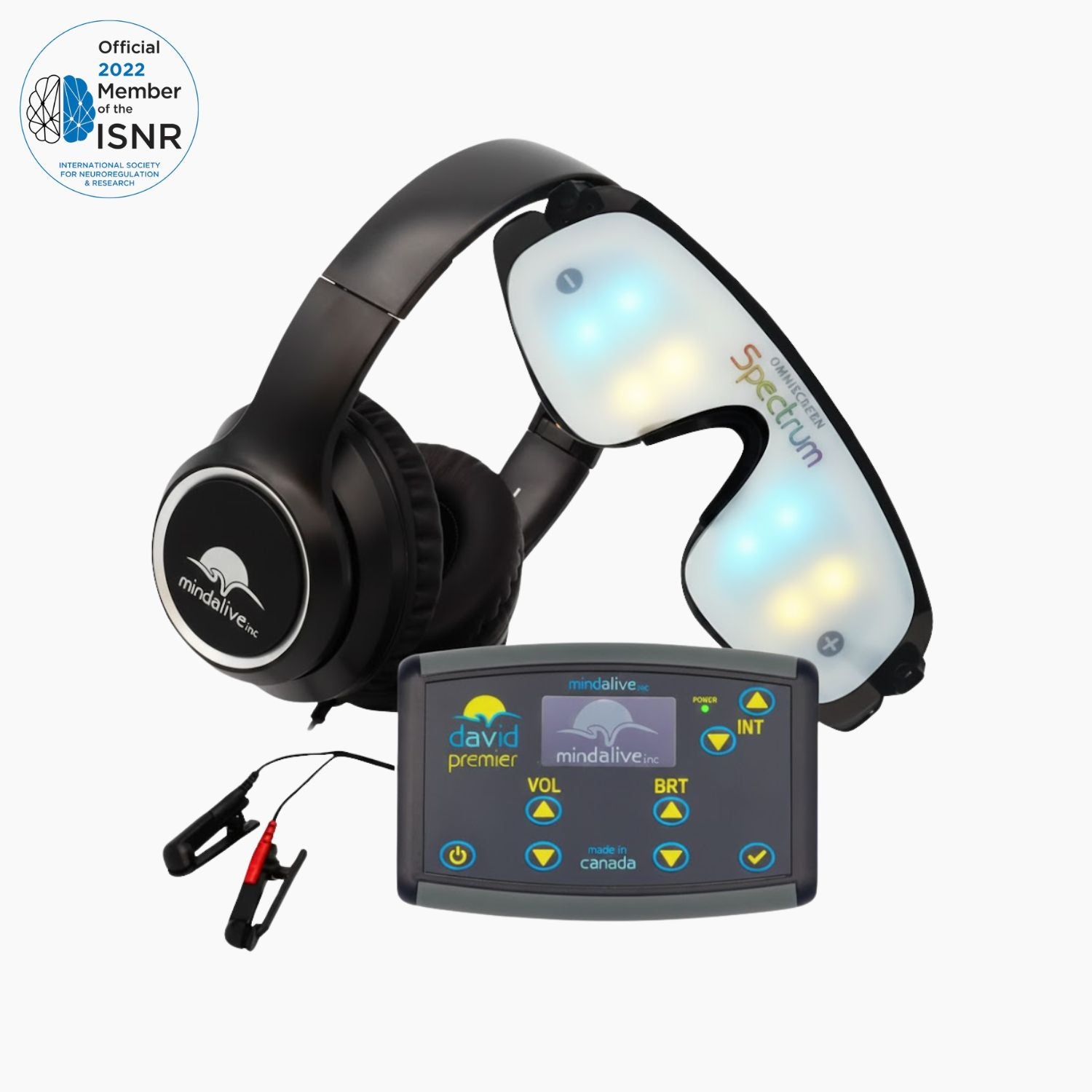
- the DAVID Delight Pro console with pre-programmed sessions
- AVE light-stimulation glasses (eyes-closed use)
- stereo headphones for pulsed sound
- CES ear clips and leads
- a simple, step-by-step user manual and session chart
Sessions are grouped into categories such as:
- Relaxation / Mood
- Sleep / Delta-Boosting Programs
- Alpha / Meditation
- Focus / Study / Cognitive Performance
- Feeling Better / Recovery Support
Each session has a clear name, purpose, and duration. You don’t have to guess which setting to choose: the system has been refined over decades of clinical and home use.
4. Natural Brain Training: How the Delight Pro Fits into Daily Life

The DAVID Delight Pro is not a device you use once and then forget about. It’s designed for regular, gentle brain training, usually in 20–40 minute sessions, several times per week.
Typical real-life patterns might look like:
- a relaxation or alpha session after work to unwind and break the stress cycle
- a sleep program in the evening to help quiet racing thoughts
- a focus session before deep work, studying, or creative projects
- a mood-support session during emotionally demanding periods
5. DAVID Delight Pro vs. Simpler Devices
MindAlive also produces devices that focus on AVE only. So when does the Pro version make sense?
Choose a simpler AVE-only device if you:
- mainly want help with relaxation, meditation, or gentle focus
- prefer fewer options and the simplest possible operation
- do not feel the need for CES or more advanced pairing of protocols
Choose the DAVID Delight Pro if you:
- want both AVE and CES in one system
- have a mix of goals (sleep, stress, mood, cognitive performance)
- like having multiple targeted programs and the ability to grow into them over time
- are a practitioner or “biohacker” who wants maximum flexibility in one device
Because the Delight Pro is versatile, many users find they can “grow with it” over years, rather than outgrowing it as their needs become more specific.
6. How a Typical Session Feels
Experiences vary, but many Delight Pro users report sensations like:
- a gentle “wave” of relaxation moving across the body
- less mental chatter and more space between thoughts
- a feeling of being alert but not wired (for focus sessions)
- heavy eyelids and increased yawning during sleep programs
- a subtle uplift in mood after certain combinations of AVE + CES
Sessions are usually done with eyes closed, in a comfortable chair or lying down. Most people find them deeply pleasant — like a guided meditation with an extra layer of neurological support.
7. Safety and Who Should Be Cautious
The Delight Pro is designed as a wellness-oriented, non-pharmaceutical tool, but there are important safety considerations:
- If you have a history of photosensitive epilepsy or seizures, consult a healthcare professional before using AVE (flickering lights).
- If you are pregnant, have a serious cardiac condition, implanted electronic medical devices, or significant neurological or psychiatric conditions, speak with a physician before using CES.
- Do not use AVE while driving, operating machinery, or in situations where drowsiness could be dangerous.
- Begin with shorter sessions and moderate intensity to see how your body responds.
The Delight Pro manual provides clear guidelines for safe use, recommended frequencies, and who should seek medical guidance first.
8. DAVID Delight Pro vs. Neurofeedback and Other Brain Tech
People often wonder how the Delight Pro compares to home neurofeedback, binaural beats, or simple meditation apps.
Compared to home neurofeedback
- No EEG setup: you don’t need to place electrodes or worry about signal quality.
- Immediate state changes: many users feel the effect during the very first sessions.
- Less tinkering: you select a protocol; the device does the rest.
Compared to binaural beats or audio apps
- Multi-sensory: you get both light and sound, plus optional CES.
- Structured programs: sessions are designed with specific goals and durations.
- Clinical heritage: AVE + CES have been used by practitioners for decades, not just in consumer apps.
Many users still pair the Delight Pro with meditation, therapy, or coaching — but find that the device helps them access calm and clarity more reliably.
Want to see if the Delight Pro is right for you?
Explore full specifications, session categories, and what’s included with the DAVID Delight Pro on the product page.
View DAVID Delight Pro Details9. Building a Routine with the DAVID Delight Pro
To get the most from the Delight Pro, consistency matters more than intensity. Here’s a simple framework:
Week 1–2: Getting Acquainted
- Use 3–4 sessions per week.
- Alternate between relaxation and sleep (or your primary goal category).
- Keep a short note after each session: mood, energy, sleep that night.
Week 3–4: Targeted Support
- Add focus sessions before work or study blocks.
- Continue using evening sessions to wind down.
- If appropriate and cleared, experiment with AVE + CES combinations for deeper support.
Beyond Week 4: Fine-Tuning
- Adjust frequency (e.g., 3–6 sessions per week) based on how you feel.
- Rotate in mood or recovery sessions during stressful periods.
- Use the device more intensively during challenging weeks; less during stable periods.
10. Who the DAVID Delight Pro Is (and Isn’t) For
The Delight Pro is ideal if you:
- want a drug-free, non-invasive way to support your nervous system
- are looking for a long-term tool, not a one-time gadget
- value structured protocols created by a company with decades of experience
- prefer to use one device for multiple goals: stress, sleep, mood, and performance
The Delight Pro may not be the best fit if you:
- want a “magic switch” that solves everything with zero effort
- are unwilling to set aside 20–40 minutes a few times per week
- have complex medical issues and need tightly supervised interventions
In those cases, working with a medical or mental health professional — possibly combining the Delight Pro with other treatments — is often the best path.
11. Common Questions About the DAVID Delight Pro
“How long before I notice results?”
Some users feel calmer, sleepier, or clearer after their first session. For more stable changes (e.g., better stress resilience or sleep), it’s common to use the device regularly for several weeks.
“Can I use it every day?”
Many people do, especially during demanding periods. Others use it 3–5 times per week. The manual offers guidelines for frequency and how to adjust if you feel over- or understimulated.
“Is the Delight Pro a medical device?”
It is designed as a wellness and performance tool, not as a replacement for medical treatment. Always follow the instructions and consult your healthcare provider about specific conditions.
“Can more than one person use the same device?”
Yes. Families or partners often share one device, using different sessions based on their needs. Just make sure each person follows the safety guidelines and starts gently.
Ready to explore structured, natural brain training?
The Pro combines AVE and CES in one system — giving you a practical, long-term way to care for your brain and nervous system at home.
Shop DAVID Delight Pro