

Why Theta Waves Are Essential for Better Sleep
Yrian Brugman
Brainwaves · Sleep Science
A research-informed, accessible look at why theta waves play a crucial role in falling asleep and transitioning into deeper rest.
Written for anyone interested in improving sleep quality through relaxation, meditation, and natural brainwave support.
Why Theta Waves
When people struggle with sleep, they usually describe one of two problems: either they can’t fall asleep, or they fall asleep but don't feel rested. In both cases, one of the most overlooked factors is the brain’s ability to naturally produce theta waves during the transition from wakefulness to sleep.
Theta waves (4–7 Hz) are the bridge between conscious awareness and deep rest. Without a smooth theta transition, the brain struggles to shift into restorative sleep cycles. In this guide, you’ll learn why theta waves are essential for sleep, what they do in the brain, and how to encourage healthier theta activity before bed.
1. What Exactly Are Theta Waves?
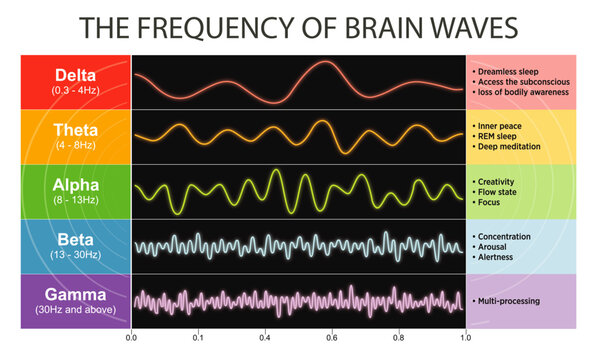
Theta brainwaves are slow, rhythmic electrical patterns between 4 and 7 Hz. They emerge when the brain begins to relax, turn inward, and disengage from the outside world. You naturally enter theta waves every time you fall asleep or enter a deep meditative state.
Typical situations where theta appears include:
- the first minutes of falling asleep
- early-stage sleep (before deep delta sleep)
- dreamlike mental drifting
- eyes-closed relaxation sessions
- meditation and breath-focused practices
In short: theta waves represent the mind’s shift away from active thinking and into restorative processing.
2. Why Theta Waves Are Crucial for Falling Asleep
Sleep does not begin instantly. It unfolds through a series of predictable neurological transitions. Theta waves are the first and most important step in this journey.
Here’s what theta waves do in the moments before sleep:
- Calm the mind by reducing high-beta “thinking” activity
- Decrease stress arousal so the nervous system can downshift
- Loosen thought connections (allowing drifting, imagery, dreamlike sensations)
- Support emotional processing that prepares the brain for deeper rest
- Guide the transition to delta, the slowest and deepest sleep wave
When theta activity is weak or disrupted, people often experience:
- racing thoughts
- difficulty winding down
- lying awake despite being tired
- light or fragmented sleep
- poor sleep quality even after enough hours in bed
Supporting healthy theta waves makes it easier for the brain to enter sleep smoothly rather than “fighting” the transition.
3. What Happens in the Brain During the Theta Sleep Stage?
During the theta transition into sleep, several critical processes begin:
- Sensory shutdown — the brain stops prioritizing external stimuli
- Memory integration — experiences from the day begin sorting
- Emotional processing — the amygdala and hippocampus recalibrate
- Muscle relaxation — reduced tension as motor output slows
- Cognitive quieting — decreased prefrontal activation
These are the foundations of restorative sleep. Without theta, the brain cannot reliably reach deep sleep (delta), which is responsible for physical recovery, immunity, and hormonal regulation.
4. Signs You’re Slipping Into Theta Before Sleep
Most people experience subtle signals that theta waves are rising:
- imagery drifting behind closed eyes
- feeling heavy or floating
- thoughts becoming less linear
- a sense of warmth or “melting” into the pillow
- reduced awareness of the room
- brief dreamlike flashes
These sensations are normal — they mean your brain is shifting into the first true sleep stage.
5. How to Encourage Theta Waves Before Bed
If falling asleep feels difficult, the goal is not to “force sleep,” but to help the brain naturally produce more theta waves. Below are the most effective techniques supported by both research and practice.
1. Slow, Controlled Breathing
Breathing techniques like 4–7–8 breathing or extended exhale breathing reduce high-beta activity and trigger the physiological relaxation response.
2. Eyes-Closed Meditation
Simple breath-focused meditation increases alpha and theta activity within minutes.
3. Light Stretching or Gentle Yoga
Releases physical tension and reduces arousal, supporting natural theta transitions.
4. Reduce Screens for 60 Minutes Before Bed
Bright screens stimulate alertness and delay sleep wave patterns.
5. Warm Light and Calm Atmosphere
Dim lighting signals to the brain that it is safe to downshift.
6. Journaling or Thought Dumping
Externalizing thoughts clears mental clutter, making it easier to drift toward theta.
7. Soft Ambient Music (60–80 BPM)
Helps stabilize attention while lowering arousal, a known pathway into theta frequency.
6. Theta Waves vs. Delta Waves: Which One Helps Sleep?
Theta and delta play different — but equally important — roles:
- Theta (4–7 Hz): helps you fall asleep and quiet the brain
- Delta (0.5–4 Hz): is responsible for deep, restorative sleep
Without theta, your brain cannot easily descend into delta. Without delta, sleep is not refreshing.
A smooth transition through theta is therefore essential for high-quality rest.
7. Why Stress Blocks Theta (and Sleep)
When you’re stressed, the brain is dominated by high-beta activity: fast, alert, problem-solving frequencies. These wave patterns are incompatible with theta.
If stress remains high at night, you may experience:
- trouble falling asleep
- waking up repeatedly
- restless, shallow sleep
- overanalysis while lying in bed
Supporting theta waves is effectively supporting stress reduction.
8. Can Technology Help Encourage Theta for Sleep?
Many people use non-invasive neurotechnologies to guide the brain toward theta when relaxation struggles to happen naturally.
1. Audio-Visual Entrainment (AVE)
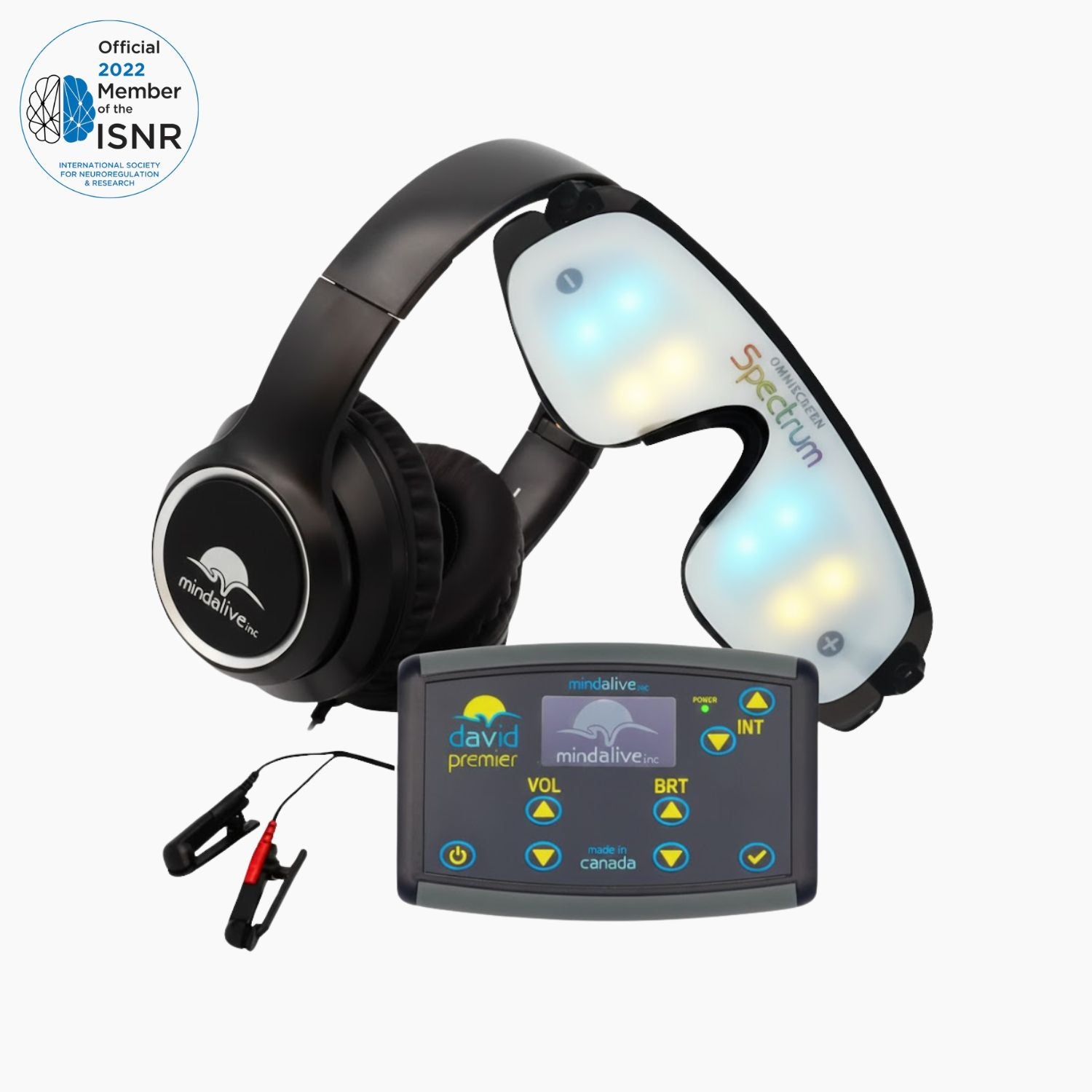
AVE uses pulsed light and sound to guide the brain into calming frequencies. Sleep-focused programs often blend alpha and theta rhythms to help users unwind before bed.
Scientific overview: Scientific Studies on DAVID Devices
2. CES (Cranial Electrotherapy Stimulation)
CES reduces stress baseline and may decrease emotional hyperarousal — one of the main barriers to theta-based sleep transitions.
3. Neurofeedback
Neurofeedback trains individuals to reduce overactive beta waves and support alpha/theta balance, useful for chronic sleep difficulties.
Deep dive: Neurofeedback at Home
4. Combined AVE + CES Systems
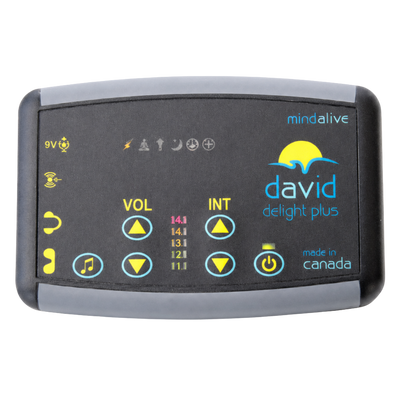
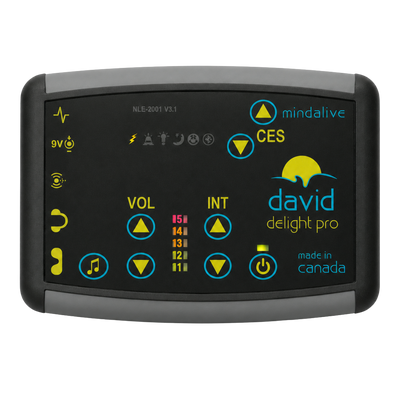
Systems like the DAVID Delight series include relaxation sessions designed to help the brain shift downward into theta and toward deeper rest.
Compare models: Find Your DAVID
Explore a main system: DAVID Delight Pro
9. A Simple Pre-Sleep Theta Routine (10–15 Minutes)
Here is a practical routine you can try tonight:
- Dim lights and put your phone away.
- Sit comfortably or lie on your bed.
- Take five slow breaths, each exhale longer than the inhale.
- Close your eyes and scan your body from head to toe.
- Notice the imagery or colors that arise naturally behind your eyelids.
- Let thoughts drift. Do not analyze or organize.
- Optional: play soft ambient music or use an alpha/theta AVE session.
The goal is not to “force” sleep — but to create the conditions where theta emerges and sleep follows naturally.
Support Your Natural Sleep Rhythms
If you're curious about calming brainwave states and guided relaxation, explore the DAVID systems below.
Learn About AVE Systems