

Brainwave stimulation at home (Full guide)
Yrian Brugman
Brainwaves · Neurotechnology
An accessible, science-based introduction to brainwave stimulation at home — how it works, why people use it, and what results you can expect.
Written for anyone interested in improving focus, sleep, mood, and cognitive balance using safe, non-invasive tools.
Why Brainwave Stimulation at Home?
In the last decade, more people have become curious about ways to support their mental wellbeing without medication. From stress to sleep to focus challenges, the nervous system plays a central role—yet most of us never actively train it.
That’s where brainwave stimulation at home comes in. Modern neurotechnology makes it possible to gently guide the brain into calmer, clearer, or more focused states using safe, non-invasive methods. The result: more control over your mental state, without relying solely on willpower.

1. What Is Brainwave Stimulation?
Brainwave stimulation is the process of influencing the brain’s electrical activity through rhythmic sensory input. The goal is to encourage specific brainwave frequencies associated with the mental state you want—such as relaxation, focus, or sleep.
The most common at-home stimulation methods are:
- Audio-Visual Entrainment (AVE) — rhythmic light + sound pulses
- Cranial Electrotherapy Stimulation (CES) — gentle microcurrents on the earlobes
- Binaural beats — auditory tones used with headphones
- Neurofeedback — real-time training using EEG
These methods have decades of research behind them and are widely used in both wellness and clinical settings.
2. How Brainwave Stimulation Works (The Simple Explanation)
Your brain operates through electrical rhythms called brainwaves. Each frequency range corresponds to a mental state:
- Beta (13–30 Hz): alert, problem-solving, active thinking
- Alpha (8–12 Hz): relaxed, calm, mentally clear
- Theta (4–7 Hz): deep relaxation, creativity, sleep transition
- Delta (0.5–4 Hz): restorative deep sleep
Brainwave stimulation uses rhythmic sensory signals to gently nudge your brain toward these desired frequencies. When the brain receives repeated patterns (flashing lights, pulsed tones, or microcurrent rhythms), it tends to synchronize to them. This is called entrainment.
3. Benefits of Brainwave Stimulation at Home
People use home-based stimulation tools for many reasons. The most common benefits include:
- Lower stress levels and reduced mental tension
- Easier sleep onset and deeper rest
- Improved focus for work or study
- Better mood and emotional regulation
- Enhanced creativity during alpha/theta states
- Reduced anxiety through nervous system balancing
Because entrainment is non-invasive, many people appreciate it as a natural tool they can use any time.
4. Types of At-Home Brainwave Stimulation
1. Audio-Visual Entrainment (AVE)
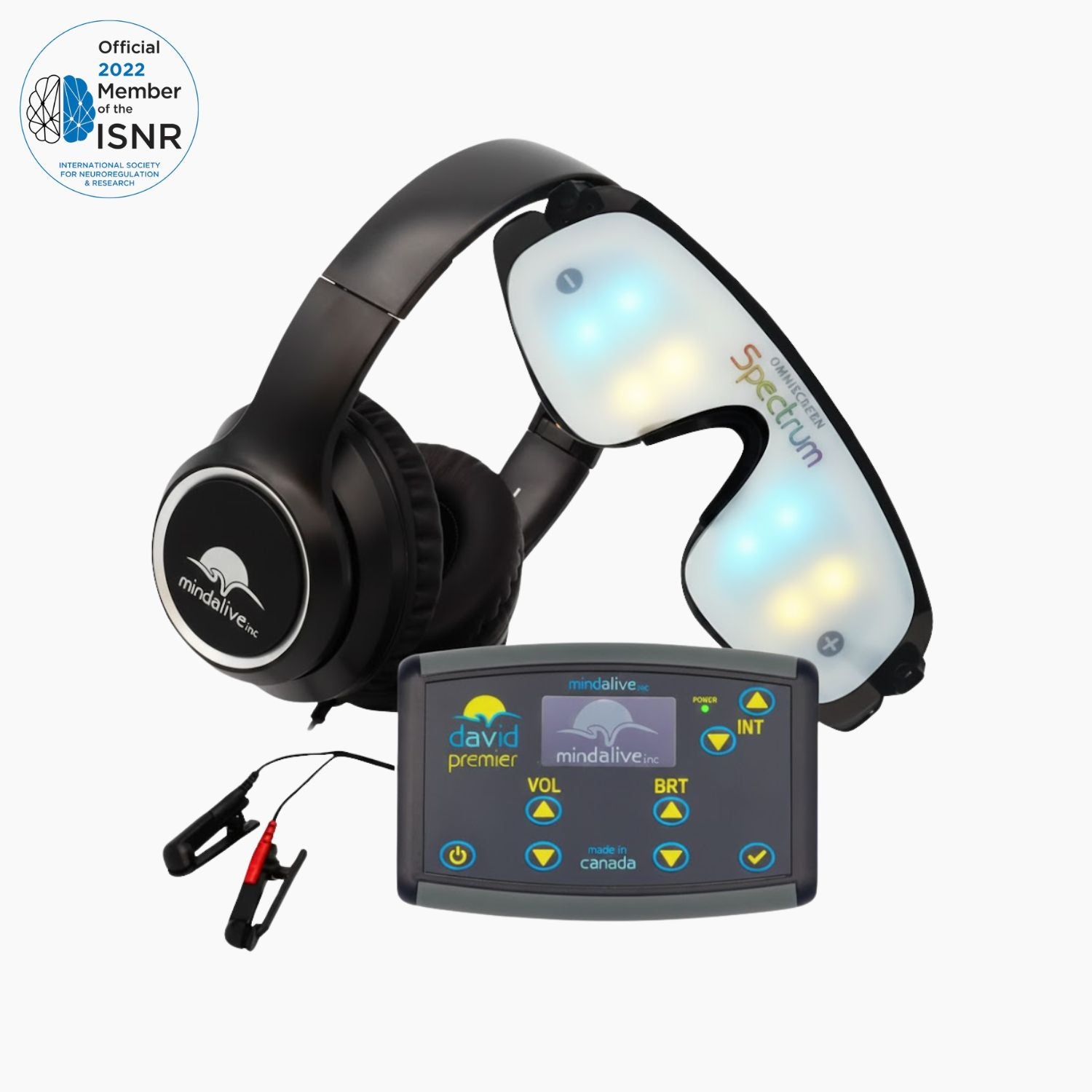
AVE uses synchronized flashes of light (through optional closed-eye glasses) and pulsed sound. This dual input has been shown to quickly shift brainwave activity into the targeted frequency range.
Common uses: sleep, anxiety, depression, focus, meditation
Research overview: Scientific Studies on DAVID Devices
2. Cranial Electrotherapy Stimulation (CES)
CES delivers ultra-low electrical currents (microcurrents) through the earlobes to calm the nervous system. It’s FDA-cleared in the U.S. for anxiety, insomnia, and depression.
Common uses: stress reduction, emotional regulation, sleep support
3. Neurofeedback at Home
Neurofeedback uses an EEG sensor to teach you how to adjust your own brainwaves. It’s the most “active” form of training and often used for ADHD, anxiety, sleep problems, and cognitive performance.
More info: Neurofeedback at Home
4. Combined AVE + CES Systems
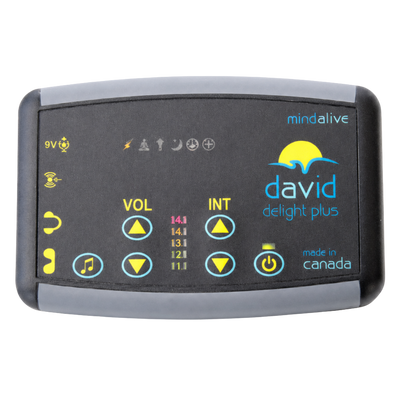
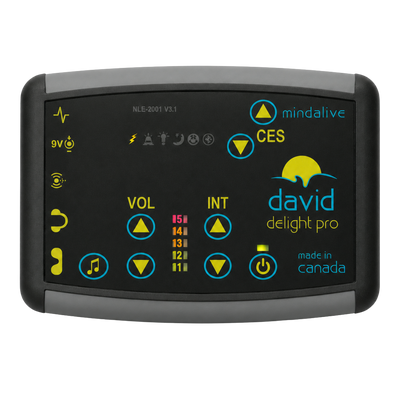
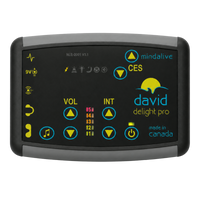
Some devices, such as the DAVID Delight Pro, combine AVE and CES in one system for a broader range of mental health and performance benefits.
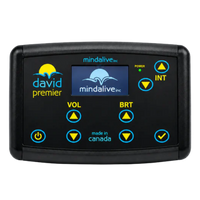
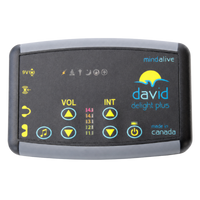
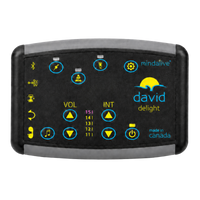
Compare models: Find Your DAVID
5. What the Research Shows
Decades of studies support the use of AVE, CES, and neurofeedback for:
- reducing anxiety (Kirsch et al., CES studies)
- improving sleep latency (time to fall asleep)
- elevating mood through alpha/theta stimulation
- enhancing cognitive performance and attention
- supporting emotional processing
While results vary individually, the consistency across the literature is strong: entrainment reliably shifts brainwave patterns in predictable ways.
6. Who Is At-Home Brainwave Stimulation For?
This technology is ideal for people who want:
- a non-pharmaceutical approach to stress or sleep
- support for focus, productivity, or learning
- an easier entry into meditation
- natural tools for mood balancing
- structured relaxation after long work days
It’s also popular among therapists, coaches, and wellness practitioners who use it during sessions.
7. What Does a Session Feel Like?
Most users describe sessions as soothing and immersive:
- a sense of calm spreading through the body
- thoughts slowing or drifting
- warmth, heaviness, or lightness sensations
- dreamlike imagery during alpha/theta sessions
- a clear, refreshed mind afterward
There is no “right way” to feel — the brain responds naturally.
8. A Simple 12-Minute At-Home Brainwave Routine
Want to try brainwave stimulation at home? Here’s an easy routine:
- Turn off bright lights and silence notifications.
- Sit or lie down comfortably.
- Put on AVE glasses or headphones (if using them).
- Choose a session: alpha for calm, theta for sleep, beta for focus.
- Breathe slowly and let the rhythmic pulses guide your mind.
- After the session, rest for 1–2 minutes before standing.
Many people report improvements after just a few sessions — and clearer results after 2–4 weeks.
Explore At-Home Brainwave Stimulation
Curious about how AVE and CES can support your sleep, focus, and mental clarity?
Discover the DAVID Delight Pro