

Neurofeedback at Home: Everything You Need to Know
Yrian Brugman
Brain Training · Home Neurotechnology
Trusted by clinicians, therapists, and thousands of home users worldwide
A complete guide to what at-home neurofeedback really does, who it helps, how it works, and how modern AVE and CES systems can offer a more accessible, structured, and science-based alternative for everyday brain support.
Used by therapists and wellness professionals to support focus, calm, and cognitive performance.
Neurofeedback has been around since the 1960s — originally developed in research labs to help people learn how to influence their own brainwaves. Today, a new generation of “at-home neurofeedback” devices promises to bring that same idea directly into people’s living rooms.
Home systems range from simple EEG headbands with meditation apps, to full laptop-based setups that look more like a portable clinic. Marketing claims can be bold: better focus, fewer ADHD symptoms, faster recovery after burnout, calmer sleep — all by training your own brain.
Some people do very well with neurofeedback. Others spend a lot of money and time with modest results. The difference usually comes down to how the technology is used, how good the signal is, and whether the method fits the person’s goals and lifestyle.
This guide will walk you through:
- what neurofeedback actually is (without the hype)
- how at-home systems work on a practical level
- the difference between neurofeedback and brainwave entrainment
- where the science is strong — and where it’s still debated
- how AVE and CES can be a simpler, more structured alternative
- how to build a realistic home brain-training routine
1. Neurofeedback 101: The Core Concept
Neurofeedback is a form of EEG-based biofeedback. Instead of tracking heart rate, muscle tension, or breathing, it tracks the electrical rhythms of your brain. The idea is simple:
- measure brainwaves in real time
- show the brain how it’s performing (through sound, visuals, or games)
- reward more helpful patterns and discourage less helpful ones
Over many repetitions, the brain learns to spend more time in those “rewarded” patterns — just like you can learn a sport or musical skill through practice and feedback.
Brainwave Bands in Everyday Language
Neurofeedback systems typically monitor the same frequency bands used in neuroscience:
- Delta (0.5–4 Hz) – deep, dreamless sleep and physical repair
- Theta (4–7 Hz) – imagination, internal focus, drowsiness
- Alpha (8–12 Hz) – relaxed wakefulness, “eyes-closed calm”
- Beta (13–30 Hz) – concentration, problem-solving, active thinking
- Gamma (30–80 Hz+) – high-level integration, insight, complex processing
A protocol might, for example, aim to:
- decrease slow theta while increasing mid-beta for better focus
- raise alpha for calm, present-moment awareness
- reduce “excess” fast beta linked to anxious hyper-alertness
2. What Can Neurofeedback Help With?
In clinical settings, neurofeedback has been explored for a wide range of challenges, including:
- attention and self-regulation (e.g., ADHD)
- anxiety and stress-related symptoms
- sleep onset and maintenance problems
- post-concussion or brain injury recovery support
- mood regulation and emotional resilience
Some of the strongest research focuses on ADHD in children and adolescents, where several meta-analyses suggest that carefully supervised neurofeedback can produce meaningful improvements in inattention and impulsivity for many clients over time.
At the same time, more recent critical reviews point out that not all studies show clear advantages over high-quality sham or control conditions. In other words, neurofeedback is promising — but it is not a miracle cure, and quality matters enormously.
For home users, the question usually isn’t “Does neurofeedback work in theory?” but rather: “Will this specific home system, used by me in my real life, produce worthwhile change?”
3. From Clinic to Living Room: The Rise of At-Home Systems
Traditional neurofeedback requires:
- a clinician trained in EEG and protocols
- a multi-channel amplifier and gel-based electrodes
- specialized software and interpretation
- 20–40+ sessions in a clinic
This can be effective but costly and time-intensive. That’s why a new generation of home neurofeedback devices has emerged. They aim to deliver a simpler version of the same idea through:
- dry sensors or comfortable fabric headbands
- Bluetooth connection to an app
- pre-set training programs for focus, calm, or sleep
- visualizations or games that respond to your brain activity
4. How a Home Neurofeedback Session Actually Works
While brands differ, most at-home sessions follow a similar flow:
Step 1: Setup and Signal Check
- You place the headset or sensors on your head (and sometimes ears).
- The app checks signal quality and may ask you to adjust placement.
- Once the contact is good, baseline activity is briefly recorded.
Step 2: Choose a Training Goal
- Focus / productivity
- Relaxation and stress relief
- Sleep preparation
- Meditation / mindfulness support
Step 3: Feedback in Real Time
- You might watch a movie that plays smoothly when your brain is in the target range — and dims or pauses when it drifts away.
- Or you might play a simple game: a rocket flies higher, a landscape brightens, or music becomes richer as your brain produces the desired pattern.
Step 4: Review
- At the end, you’ll see graphs or scores for the session.
- Over time, you can track trends: more “calm minutes,” better focus scores, etc.
The feedback is designed so you don’t have to “try really hard.” Instead, you notice what internal states are associated with better feedback and gently shift toward those sensations.
5. Signal Quality: The Invisible Dealbreaker
EEG is delicate. Eye blinks, jaw clenching, muscle tension, cable movement — they all show up as noise. Clinical systems use multiple channels, strong shielding, and trained technicians to manage this. Home systems have to keep things simple.
As a result, home EEG often has:
- fewer sensors (sometimes just 1–4)
- more motion artifacts when you shift or frown
- simpler filtering and analysis
- more reliance on generic “engagement” or “calm” metrics
That doesn’t mean home neurofeedback can’t work. It means you’re trading some precision for comfort and ease of use. For broad goals like “more time in calm focus,” that trade-off may be completely acceptable. For complex clinical cases, clinician-guided systems are still usually recommended.
6. Strengths and Limitations of At-Home Neurofeedback
Potential Strengths
- Non-invasive and drug-free: no medication, no surgery, no external currents.
- Supports self-awareness: you develop a feel for your own mental states.
- Flexible scheduling: train at home instead of commuting to a clinic.
- Good for habits: you can build a consistent routine more easily.
- Can complement therapy: use sessions between psychotherapy or coaching appointments.
Key Limitations
- Less personalization: pre-set protocols are not tailored to your unique brain map.
- Variable evidence per device: some brands have research; others rely mainly on marketing stories.
- Requires patience: benefits often accumulate over weeks, not days.
- Subtle effects: changes can be real but not always dramatic.
- Not a standalone cure: lifestyle, sleep, nutrition, and stress management still matter.
7. Types of Home Neurofeedback Devices
Most consumer systems fall into a few categories:
1. Meditation Headbands
- Lightweight EEG headbands aimed at stress reduction and mindfulness.
- Often focus on alpha/theta balance and heart-rate variability.
- Apps include guided meditations and relaxation metrics.
2. Training Systems with Games or Missions
- More structured programs that look like a “course” for your brain.
- May include performance scores, missions, and weekly goals.
- Sometimes bundled with remote coaching or telehealth support.
3. Semi-Clinical Laptop Systems
- Use sticky electrodes and conductive paste.
- Offer more protocol flexibility and multi-site training.
- Often rented or purchased as part of a supervised program.
4. Hybrid Systems (Neurofeedback + Entrainment)
- Combine EEG training with light/sound entrainment.
- Aim to blend “teaching” (feedback) with “guiding” (entrainment).
8. Neurofeedback vs Brainwave Entrainment (AVE): Two Different Paths
Neurofeedback and entrainment are often mentioned in the same breath, but they are fundamentally different approaches.
Neurofeedback (EEG-Based Learning)
- Measures your brainwaves in real time.
- Uses feedback to reward more efficient patterns.
- Relies on learning and plasticity.
- Changes build over multiple sessions.
Audio-Visual Entrainment (AVE)
- Uses rhythmic light flashes (eyes closed) and sound pulses.
- Does not measure brainwaves; it sends in a carefully tuned rhythm.
- Leverages the brain’s frequency-following response to guide activity.
- Effects are often felt immediately — e.g., profound relaxation or clearer focus.
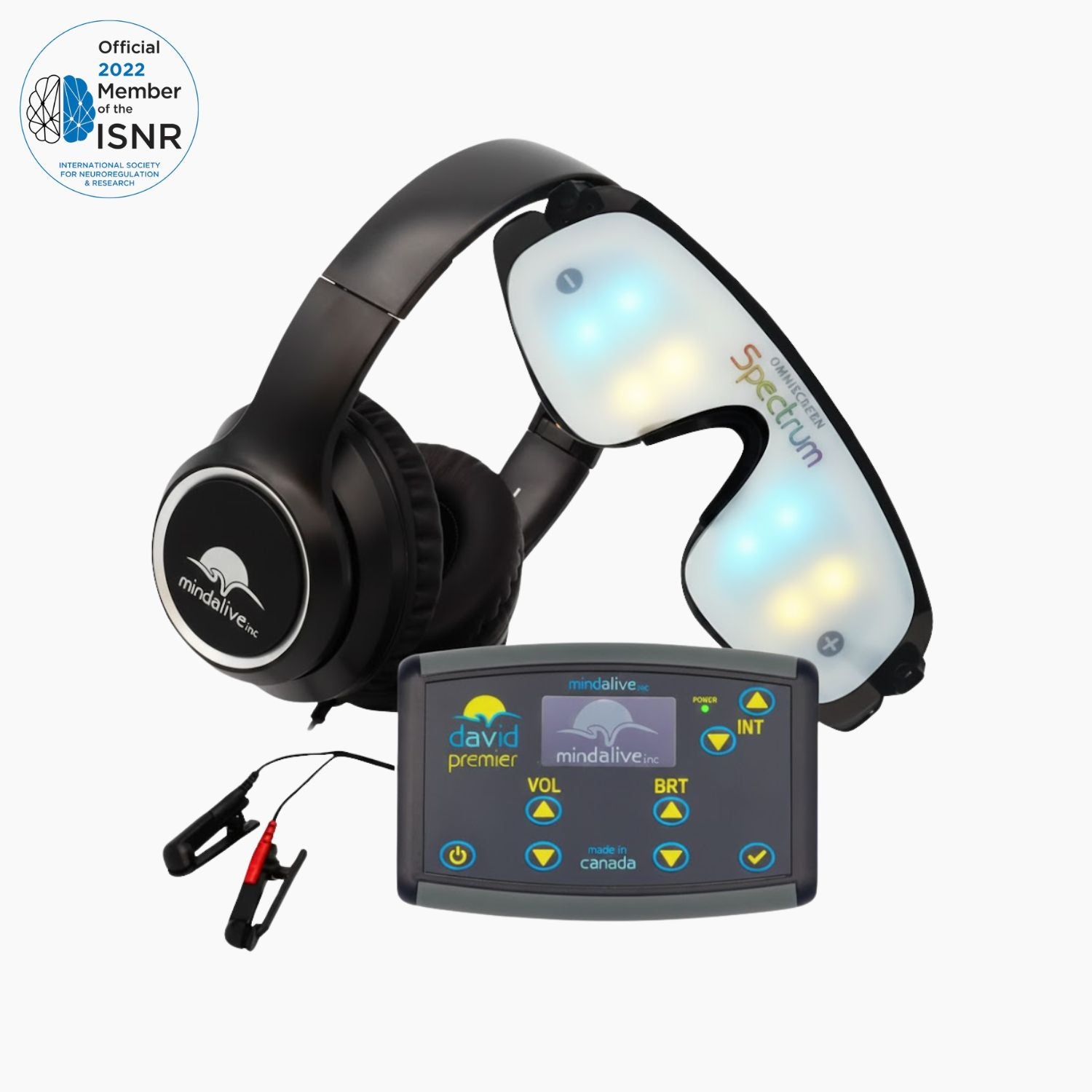
Both can be powerful. For many people, however, AVE is easier to start with because there is no electrode placement or signal quality management required. You simply put on AVE glasses and headphones, select a session, and press start.
Looking for a simpler alternative to home EEG?
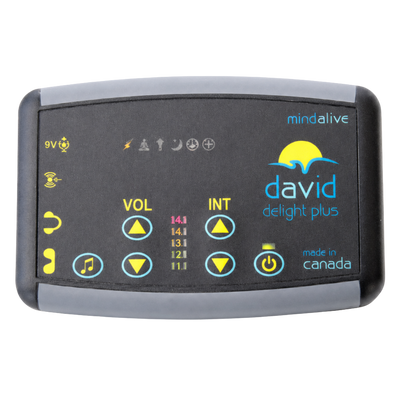
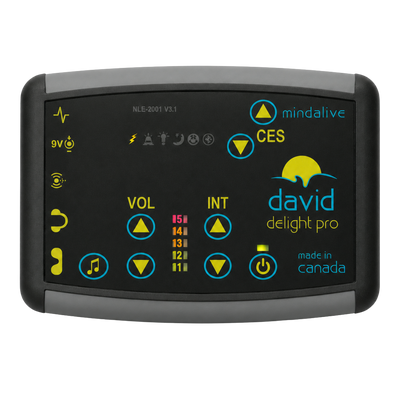
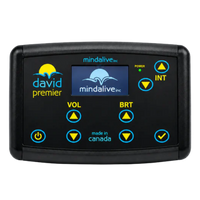
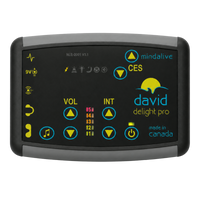
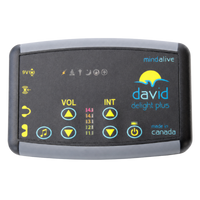
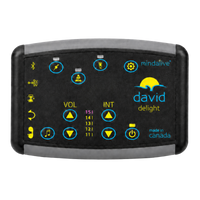
MindAlive’s DAVID Delight and Delight Pro use rhythmic light and sound to gently guide your brain into focused, calm, or restorative states — no EEG setup required.
Find Your DAVID9. CES: Creating a Calmer Baseline for Any Brain Training
Cranial Electrotherapy Stimulation (CES) uses tiny pulsed microcurrents delivered via ear clips. These currents are extremely low — typically below the level of conscious sensation — and are designed to support healthy neurochemical balance.
CES is often used to:
- reduce stress and racing thoughts
- support mood and emotional regulation
- improve sleep onset and sleep quality
Why is this relevant for neurofeedback at home?
Because brain training works best on a stable foundation. If you’re chronically overstimulated, on edge, or exhausted, it’s much harder to sit still, engage with feedback, and notice subtle shifts.
10. Evidence and Controversies: What Does the Science Say?
The neurofeedback field is both promising and controversial — which is exactly why home users need a realistic overview.
Where Evidence Is Stronger
- ADHD (especially in children): several meta-analyses suggest that well-conducted neurofeedback can improve inattention and impulsivity for many clients, with effects that may persist months after training ends.
- Some anxiety and stress-related complaints: training calmer, more coherent patterns may support better regulation.
- Sleep onset: protocols targeting hyperarousal can sometimes help people wind down more effectively.
Where Debate Is Ongoing
- How much of the benefit comes from specific brain training vs. nonspecific factors like expectation, therapist attention, and structured relaxation.
- Which protocols are truly superior to high-quality sham or active control conditions.
- How results from clinical, multi-channel systems translate to simplified home devices.
Meanwhile, AVE and CES have their own growing evidence base, especially for stress reduction, mood support, and sleep. Neither approach is a magic bullet — but both belong to a broader category of non-pharmaceutical neuromodulation tools that can support mental health and performance when used wisely.
11. When AVE + CES May Be a Better Fit Than Home Neurofeedback
Home neurofeedback is most appealing if you:
- enjoy data and graphs
- are comfortable with a learning curve
- plan to train consistently for 8–12+ weeks
AVE + CES may be a better primary option if you:
- want clear effects from the very first session
- prefer short, structured protocols (20–30 minutes, 3–5x per week)
- don’t want to deal with EEG placement, signal artifacts, or settings
- need gentle support for sleep, resilience, and day-to-day stress management
Not sure if you need neurofeedback or entrainment?
Take our 1-minute assessment to see whether your nervous system is more overstimulated or understimulated — and get personalized device recommendations.
Take the Brainwave Assessment12. Safety and Who Should Be Cautious
Both neurofeedback and AVE/CES are generally well tolerated, but there are important safety considerations.
General Guidelines
- Start with shorter sessions (15–20 minutes) and moderate intensity.
- Stop or reduce frequency if you notice persistent headaches, irritability, or fatigue.
- Do not use AVE with flashing lights if you have a history of photosensitive epilepsy (unless cleared by a medical professional).
- If you are pregnant, have a serious psychiatric or neurological condition, or have implanted electronic medical devices, consult your healthcare provider before starting CES.
Children and Teens
- Home neurofeedback for children should ideally be done under professional guidance.
- Keep sessions short, playful, and age-appropriate.
- Monitor sleep and mood changes closely, and adjust protocols if needed.
13. How to Choose a Home Neurofeedback or Entrainment System
Green Flags
- Clear explanation of the technology and what it does and does not claim to do.
- Access to educational materials, support, or coaching.
- Transparent information about session length, frequency, and realistic timelines.
- Return policy or trial period so you can test fit and response.
Red Flags
- Overly grandiose promises (“cures everything,” “permanent changes in a week”).
- No mention of possible side effects or the need to adjust protocols.
- Hard pressure sales tactics or multi-level-marketing style recruiting.
- Very high cost with little explanation of what justifies the price.
14. A 30-Day Starter Plan for Home Brain Training
Whether you use home neurofeedback, AVE, CES, or a combination, consistency is more important than intensity. Here’s a realistic 30-day framework:
Week 1: Explore and Observe
- 3 sessions per week (neurofeedback, AVE, or both).
- Keep a brief log: time of day, session type, how you felt before and after.
- Focus on getting comfortable with the hardware and routine.
Week 2: Focus on One Primary Goal
- Choose a main target: focus, stress reduction, or sleep.
- Use 2–3 sessions per week directly aimed at that goal.
- Begin pairing sessions with real-life tasks (e.g., focus session before deep work).
Week 3: Fine-Tune Timing and Intensity
- Notice if you feel better with morning or evening sessions.
- Adjust duration (e.g., 20 vs. 30 minutes) based on how refreshed or tired you feel afterward.
- If using CES, consider adding it after a stressful day to support sleep.
Week 4: Evaluate and Adjust
- Look at concrete markers: less procrastination, fewer 2 a.m. wakeups, easier transitions into work.
- Decide whether to keep your current protocol, add a second goal, or experiment with a different program.
- If the impact is minimal, consider consulting a professional or trying a different technology (e.g., switching from home EEG to AVE + CES).
Ready to go beyond guesswork?
Use MindAlive’s structured AVE and CES sessions to build a predictable brain-care routine — for focus, mood, and sleep — in just 20 minutes a day.
Explore MindAlive Devices15. Everyday Use Cases: Students, Professionals, Parents, and Beyond
For Students
- Use focus-oriented AVE or neurofeedback before study blocks.
- Run a calming or sleep-prep session in the evening before exams.
- Pair training with proven strategies like spaced repetition and active recall.
For Busy Professionals
- Short clarity sessions in the morning instead of extra caffeine.
- Midday reset break with AVE to reduce decision fatigue.
- CES in the evening to let go of work stress and support deeper sleep.
For Parents and Caregivers
- Use sessions as a personal “reset” after demanding days.
- For children, explore professional guidance first before DIY approaches.
For Older Adults
- Gentle, relaxing protocols to support sleep, mood, and mental sharpness.
- Combine with walking, social engagement, and cognitive activities for best results.
16. Frequently Asked Questions
“Does home neurofeedback really work?”
It can, especially when used consistently and combined with good sleep, stress management, and realistic expectations. Results are usually gradual rather than dramatic “light switch” changes.
“Is AVE a form of neurofeedback?”
No. AVE does not measure your brainwaves. It leads the brain using rhythmic light and sound, while neurofeedback teaches the brain using its own monitored activity.
“Can I combine neurofeedback with AVE and CES?”
Yes. Many clinicians and home users do. A common pattern is to use CES or AVE to support relaxation and stability, and neurofeedback for longer-term learning.
“Will I become dependent on these devices?”
They are not chemically addictive. Many people find that their baseline resilience and self-awareness improve over time — and they use the devices as tools, not crutches.
“How long before I notice anything?”
Some feel a difference in state (calmer, clearer, sleepier) after the very first AVE or CES session. With neurofeedback, it’s common to need 10–20+ sessions to see more stable changes. Every brain is different.
Experience the next generation of home brain training
Neurofeedback teaches your brain. MindAlive’s AVE and CES systems help guide it — naturally, gently, and with structured protocols you can use for years.
Explore MindAlive Devices