Science & evidence Evidence base

35+ years of independent research 30+ peer-reviewed studies behind DAVID

For more than three decades, MindAlive's DAVID devices have been studied worldwide. Independent research confirms that Audio-Visual Entrainment (AVE) is safe, drug-free, and effective in supporting learning, cognition, mental health, pain relief, and sleep. DAVID's clinical evidence base spans 35+ years of independent research across psychiatry, neurology, sleep medicine, and rehabilitation. Use this overview for patient education, protocol decisions, and reimbursement conversations.

Drug-freeNon-invasivePeer-reviewed
35+
Years of research
30+
Independent studies
0
Reported side effects
How DAVID works

Three modalities, one device

DAVID devices combine three independent, drug-free technologies. Each has its own evidence base — together they give you a single tool to support cognition, mood, pain, and sleep.

Modality 1
AVE

Audio-Visual Entrainment

Rhythmic light pulses through glasses combined with synchronized tones guide your brain toward specific frequency states — alert beta, calm alpha, deep theta, or restorative delta.

How
LED glasses + headphones deliver matched frequency pulses.
Feels like
Like deep relaxation, similar to guided meditation.
Devices
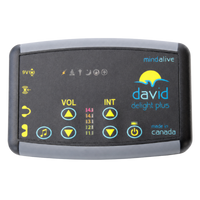
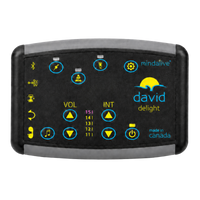
All DAVID devices
Best for
FocusSleepAnxietyADHDMemoryMoodLearning
Modality 2
CES

Cranio-Electro Stimulation

A gentle micro-current delivered through ear-clip electrodes. Studied since the 1970s for anxiety, depression, and insomnia — FDA-cleared as a medical device category in the US.

How
Soft current via two ear-clip electrodes.
Feels like
Imperceptible to mildly tingling.
Devices
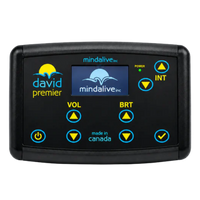
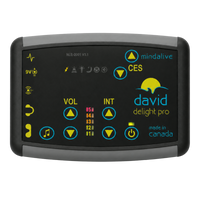
DAVID Premier · Delight Pro · Oasis Pro
Best for
AnxietyDepressionInsomniaStressPain
Modality 3
MET

Micro-current ElectroTherapy

Targeted micro-current applied to specific points (forehead, mastoids, or body) to support muscle relaxation, tension headaches, and chronic pain conditions like fibromyalgia.

How
Conductive pads on target site.
Feels like
Mild tingling or warmth at the contact site.
Devices
DAVID Premier · Oasis Pro
Best for
Chronic painTension headachesFibromyalgiaMuscle tension
What the research shows

Benefits backed by evidence

Each DAVID program targets a specific brain-wave state and condition. Here are the five most-studied areas — with the studies, what was measured, and which program supports them. Use this overview during intake to match patient goals to specific protocols. Each category links a published finding to a frequency range and the AVE/CES/MET modality that produced it.

Learning & Development

AVE helps the brain shift into focus and learning states — useful for dyslexia, ADHD, and accelerated study. Beta and SMR entrainment protocols support attention regulation in pediatric and learning-disorder populations.
AVE
  • Soualhi & Dekkiche, 2025 Combining AVE with multi-sensory training improved reading skills in children with dyslexia.
  • Joyce & Siever, 2000 School-aged children with attention difficulties: teachers and parents reported better focus and calmer behavior.
  • Naeeimi et al., 2013 Children with high-functioning autism showed improvements in executive function.
  • Atsu, 2003 College students retained information faster and reported less fatigue.
Recommended

Support memory & focus

DAVID devices include pre-set programs for learning, concentration, and memory enhancement. Beta-band protocols (15–22 Hz) for attention training, ready-to-use in session.

Find your deviceView protocols

Memory & Cognitive Function

Theta-band entrainment supports memory consolidation and may slow age-related cognitive decline. Theta (4–7 Hz) and gamma-cross-frequency coupling show benefits in episodic memory and Hsp70-mediated neuroprotection.
AVE
  • Fabian et al., 2004 AVE-style photo-acoustic stimulation increased protective Hsp70 proteins, linked to stress resilience.
  • Roberts et al., 2018 Entrainment boosted theta brainwaves and improved episodic memory.
  • Palmquist, 2014 Seniors showed measurable improvements in memory recall.
  • Budzynski et al., 2007 Long-term AVE was linked to sharper cognition and reduced age-related decline.
Recommended

Sharper memory, every day

DAVID's theta and alpha protocols are designed for memory recall and cognitive longevity. Use 6 Hz theta protocols 3×/week for cognitive maintenance in older patients.

Find your deviceView protocols

Mental Health

Combined AVE + CES reduces anxiety, depression, and seasonal mood disorders — without medication. FDA-cleared CES (Class II) plus AVE alpha-induction shows clinically meaningful effect sizes in anxiety and major depressive disorder.
AVECES
  • Pigott & Dawe, 2009 AVE combined with mindfulness supported wellness in early addiction recovery.
  • Al-Salihy, 2025 Two case studies showed AVE reduced symptoms of pseudobulbar affect.
  • Berg & Siever, 2004 Depressed community-dwelling seniors reported improved mood after AVE protocol.
  • Berg & Siever, 2009 Controlled study on SAD showed symptom reduction comparable to bright-light therapy.
Recommended

Manage stress & anxiety naturally

From seasonal depression to everyday stress, AVE offers a safe, drug-free approach to mental well-being. Adjunct to CBT and exposure therapy. CES protocols billable in many jurisdictions.

Find your deviceView protocols

Pain & Physical Health

Micro-current and entrainment reduce chronic pain intensity, including fibromyalgia and migraine. MET applied to mastoids/forehead combined with AVE shows pain-rating reductions across multiple trials.
AVEMET
  • Gagnon & Boersma, 1992 Repetitive AVE sessions helped manage long-term pain.
  • Berg et al., 1999 AVE combined with nutritional support reduced fibromyalgia pain intensity.
  • Horowitz & Telch, 2007 Lab studies showed lower pain ratings during AVE exposure.
Recommended

Drug-free pain support

Designed for chronic pain, tension headaches, and fibromyalgia — used daily or as needed. MET + theta-AVE combination shows synergistic effect for fibromyalgia patients.

Find your deviceView protocols

Sleep & Relaxation

Delta-frequency AVE helps you fall asleep faster and stay asleep longer — without grogginess. Delta-band entrainment (1–4 Hz) shifts vasomotor activity and improves sleep efficiency in older adults.
AVECES
  • Thomas & Siever, 1989 AVE influenced vasomotor and skeletomotor activity, supporting relaxation.
  • Berg & Siever, 2004 Seniors experienced improved sleep quality and fewer awakenings.
Recommended

Sleep deeper, wake refreshed

Pre-programmed sleep and relaxation sessions guide you into deep, restorative rest. Recommend 20-min delta protocol at bedtime for insomnia and shift-work disruption.

Find your deviceView protocols
Study overview

Every study at a glance

Filter by modality or search by keyword. Each entry links a published study to its condition, finding, and the DAVID modality (AVE, CES, or MET) used.

Condition Study Key finding Modality
Physiology Thomas & Siever, 1989 Early documentation that AVE produces measurable changes in muscle tension and peripheral blood-flow. AVE
Chronic pain Gagnon & Boersma, 1992 AVE applied to chronic pain patients reduced subjective pain ratings and supported deeper relaxation. AVE
Dissociation Leonard, Telch & Harrington, 1999 Established the experimental paradigm for measuring AVE-related dissociation and state shifts. AVE
Fibromyalgia Berg, Mueller, Seibel & Siever, 1999 AVE combined with nutritional support improved fibromyalgia pain and cognitive clarity. AVE
Chronic fatigue Trudeau, 1999 18 Hz beta AVE improved attention and concentration measures in CFS patients. AVE
ADHD / Behavior Joyce & Siever, 2000 Daily AVE in school setting reduced behavior incidents and improved engagement. AVE
Anxiety Leonard, Telch & Harrington, 2000 Documented fear-response profile to induced dissociation states — informs AVE safety profile. AVE
Education Joyce, 2001 Report to Minnesota Dept. of Education on AVE in special-ed classrooms — improved attention and behavior. AVE
Learning Atsu, 2003 College students using AVE showed accelerated learning and improved retention vs. traditional study. AVE
Stress biology Fabian et al., 2004 AVE-style photo-acoustic stimulation increased stress-protective Hsp70 protein in saliva. AVE
Depression (seniors) Berg & Siever, 2004 AVE in depressed community-dwelling seniors at fall-risk produced mood and balance improvements. AVE
Anxiety / exposure Powers, Smits & Telch, 2004 Placebo-controlled trial on safety-behaviour utilisation in exposure therapy — informs anxiety protocols. AVE
Social anxiety Smits et al., 2006 Videotape feedback enhances exposure-based treatment for social anxiety — supporting research. AVE
Pain perception Horowitz & Telch, 2007 Experimental investigation: induced dissociation states altered pain perception and tolerance. AVE
Cognitive decline Budzynski, Budzynski & Tang, 2007 Brain-brightening protocols documented for cognitive decline and ageing populations. AVE
Phobias Wolitzky-Taylor et al., 2008 Meta-analysis of psychological treatments for specific phobias — informs AVE-adjunct anxiety protocols. AVE
Seasonal mood (SAD) Berg & Siever, 2009 Morning AVE produced improvement in SAD comparable to standard bright-light therapy. AVE
Memory Wuchrer, 2009 University study examining AVE's effects on memory recall and concentration tasks. AVE
Addiction recovery Pigott & Dawe, 2009 AVE/neurotherapy combined with mindfulness supported wellness in early addiction recovery. AVECES
Academic worry Wolitzky-Taylor & Telch, 2010 Randomized controlled trial of self-administered interventions for pathological worry in students. AVE
Autism Naeeimi et al., 2013 Audio-visual stimulation improved executive-function tasks in children with high-functioning autism. AVE
Memory (seniors) Palmquist, 2014 AVE brain-brightening protocols improved memory in middle-aged and older adults. AVE
Auditory processing Impey & Knott, 2015 Pilot study of tDCS effects on auditory discrimination — informs CES-adjacent applications. CES
Mechanism Impey et al., 2017 Mechanistic investigation of NMDA receptor involvement in transcranial stimulation responses. CES
Episodic memory Roberts, Clarke, Addante & Ranganath, 2018 Entrainment increased theta oscillations and improved episodic-memory tasks. AVE
Alzheimer's (prodromal) He et al., 2021 Feasibility trial: gamma-frequency sensory stimulation tolerated and beneficial in prodromal Alzheimer's. AVE
Dyslexia Soualhi & Dekkiche, 2025 Combined AVE + multi-sensory (VAKT) intervention improved dyslexia symptoms in school-age students. AVE
Pseudobulbar affect Al-Salihy, 2025 Two case studies showed AVE therapy reduced symptoms of pseudobulbar affect. AVE
No studies match those filters.
50 studies · indexed by indicationSee the full evidence library
Browse library
Conclusion

Safe, effective, evidence-based A clinical tool with three decades of data

Across more than three decades, independent studies confirm that DAVID devices are safe and effective. They have shown benefits in learning, cognition, anxiety, depression, pain, and sleep — consistently, and without harmful side effects. DAVID's evidence base spans 35+ years of independent research across psychiatry, neurology, pain medicine, and sleep. Meaningful effect sizes for the target indication, drug-free administration, and zero serious adverse events reported.

01 · SAFETY
No reported serious side effects across 35+ years of independent studies.
02 · EFFICACY
Measurable improvements in cognition, mood, pain, and sleep — across age groups.
03 · ACCESSIBILITY
Drug-free, non-invasive, home-use. No prescription needed in most countries.

DAVID devices are not intended to diagnose, treat, cure, or prevent any disease. Always consult a qualified healthcare provider for medical advice.