

1978
Graduates NAIT in Telecommunications
Earned his C.E.T. from the Northern Alberta Institute of Technology — laying the engineering foundation for everything that follows.

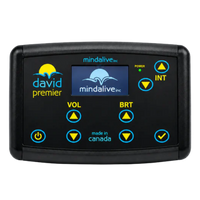
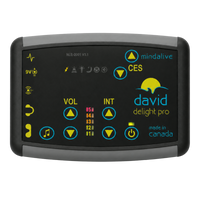
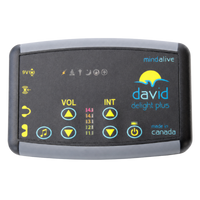
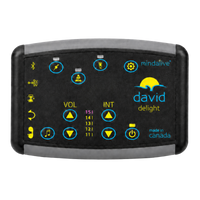
Light, sound and microcurrent entrainment. From a 10-session starter to our 51-protocol flagship.
Compare all devices →From the first alpha-rhythm studies to today's gamma research.
From in-home neurofeedback practices to university research labs.
Register →From two-week sleep changes to decade-long daily practices.
 Dave Siever · Edmonton, Alberta
Dave Siever is the inventor of the DAVID system — the world's first high-quality brainwave entrainment device. A telecommunications engineer by training, he began designing biofeedback and stimulation equipment for the University of Alberta's Faculty of Dentistry in 1980.
In 1985 he built DAVID 1, originally to help acting students overcome stage fright. Four decades later he is still designing — every Mind Alive product, from the Delight series to the Premier, traces back to that first prototype.
From a stage-fright study at the University of Alberta to a global practitioner network — the milestones that shaped what DAVID is today.
Earned his C.E.T. from the Northern Alberta Institute of Technology — laying the engineering foundation for everything that follows.
Hired as design technologist in the Faculty of Dentistry. Begins building TENS stimulators, biofeedback devices, gnathodynamometers, and EMG spectral analysis equipment for Dr. Norman Thomas's TMJ research lab.
Joins as assistant teaching staff for the Basic Human Physiology course — and later, in 1987–88, the graduate-year Advanced Myofacial Pain and TMJ Diagnostic & Treatment courses.
The Digital Audio Visual Integration Device — the world's first high-quality brainwave entrainment device using paced light and tone. Originally commissioned by the Faculty of Arts to help acting students overcome stage fright.
Publishes alongside Dr. Norman Thomas at the 4th European Congress of Hypnosis on the effects of audio-visual stimulation.
Runs an AVE study with the lab's most difficult TMJ patients. Sees elimination of masseter muscle tension on EMG, pain reduction, and hand-warming — sympathetic-tone signs he had never seen any other intervention produce. Decides to dedicate his career to the field.
First commercial DAVID products reach therapists, neurofeedback clinics, and home users in North America.
Compact, battery-powered devices make AVE truly portable — the predecessor to today's Delight range.
Integration of AVE + CES into a single compact unit. Becomes the most-shipped DAVID device worldwide and the platform for the current Pro and Premier models.
Dave continues to develop new AVE, CES, tDCS, and biofeedback technologies — including research into how audio-visual stimulation affects cerebrospinal fluid circulation, with implications for Alzheimer's, Parkinson's, and sports concussion treatment.
To my complete astonishment, I had never seen anything else eliminate masseter muscle tension as measured with EMG, plus pain reduction, plus hand-warming — all from light and sound. That's when I knew.
I got involved in AVE when I was designing a research lab to diagnose and treat TMJ dysfunction at the Faculty of Dentistry, University of Alberta, with Dr. Norman Thomas. An instructor from Performing Arts commissioned me to design an AVE system to help his students overcome stage fright. I was extremely busy building a biofeedback lab, performing TMJ studies, and teaching Basic Human Physiology — and honestly, I wondered whether AVE was just a new-age fad.
I built the system anyway. He was pleased with the results, but I didn't fully buy in until 1988, when I ran a study with our most difficult TMJ patients. To my complete astonishment, I had never seen anything else eliminate masseter muscle tension as measured with EMG, alongside pain reduction and hand-warming — a clear sign of sympathetic reduction. That's when I went looking.
I scoured the University library and discovered that photic and auditory driving had been studied since 1943 — Adrian & Matthews, then W. Gray Walters in the 50s exposing thousands of subjects to varied frequencies. Dr. William Kroger noticed radar operators being entrained into trance states from old 'blip'-style radars, and partnered with Sidney Schneider to build the first commercial photic stimulator in 1955. The science had been there all along.
In the decades since, close to 100 clinical studies have been published on AVE — over two dozen on our DAVID products alone. We've shipped to over 70 schools running ADHD and behavioral protocols, and our devices are being used to reduce PTSD in VA centers across the US. I'm still designing. The future of this field — especially what we're learning about audio-visual stimulation and cerebrospinal fluid circulation — is the most exciting it's ever been.
A short film by Dave Siever about the science, the journey, and the strange beauty of training your own brain.
Watch the video →