

HFO binaural beats: A new and more effective method
Mind Alive
Brain Optimization · Cognitive Enhancement
Recommended by psychologist D. Matto and 100+ other clinicians
A new and more effective way of HFO binaural beats— how high-frequency sound stimulation really works, what the research says, and why modern AVE and CES systems offer a deeper, more reliable path to focus, clarity, and mental performance.
Used by sleep therapists and wellness professionals worldwide to restore deep, natural rest.
For years, people have turned to HFO (High-Frequency Oscillation) binaural beats hoping to “upgrade” their brain — to think faster, focus longer, and unlock higher states of awareness. Some report small boosts. Others feel nothing at all. The reason is simple: audio alone is a blunt tool for something as complex as the human brain.
Today, we understand much more about how the brain responds to rhythm, light, and gentle microcurrent stimulation. This has led to a new generation of tools — such as MindAlive’s Audio-Visual Entrainment (AVE) and Cranial Electrotherapy Stimulation (CES) — that take the core idea behind HFO binaural beats and make it stronger, clearer, and more consistent.
This article will walk you through:
- what binaural beats and HFO actually do in the brain
- why high-frequency audio alone often underdelivers
- how multi-sensory entrainment (light + sound) changes the game
- how AVE and CES from MindAlive can achieve what HFO binaural beats promise — but more reliably
- how to build a safe, practical routine for cognitive enhancement
1. Binaural Beats 101: The Basic Idea
Before we talk about HFO (the high-frequency version), it helps to understand what binaural beats are at the most basic level.
Binaural beats occur when you listen to two slightly different tones, one in each ear. For example:
- left ear hears 300 Hz
- right ear hears 310 Hz
Your brain doesn’t just hear two tones. It also perceives a third, pulsing beat at the difference between them — in this case, 10 Hz. This is the “binaural beat.”
The key idea behind brainwave entrainment is that your brain’s electrical activity tends to drift toward, or “follow,” this frequency. This process is called the frequency following response, and it’s one of the foundational mechanisms behind many forms of audio and light-based brain stimulation.
Brainwave Bands in Simple Terms
Each rhythm in your brain is associated with different mental states:
- Delta (0.5–4 Hz) — deep, dreamless sleep and physical restoration
- Theta (4–7 Hz) — creativity, meditation, memory consolidation
- Alpha (8–12 Hz) — relaxed wakefulness, present-moment awareness
- Beta (13–30 Hz) — active thinking, problem-solving, concentration
- Gamma (30–80 Hz+) — integration, insight, higher-order processing
Classic binaural beats target delta, theta, or alpha. HFO binaural beats move into much faster territory, aiming at beta, gamma, and beyond to enhance alertness and cognitive performance.
2. What Makes HFO Binaural Beats “High-Frequency”?
HFO stands for High-Frequency Oscillations. In neuroscience, this term is often used to describe very fast brainwave activity in the range of:
- upper beta and gamma (30–80 Hz)
- “ripple” bands (80–250 Hz)
- “fast ripple” bands (above ~250 Hz)
These fast rhythms have been linked to:
- rapid information processing
- binding different brain regions into a unified experience
- moments of insight and high-level problem-solving
HFO binaural beats try to influence these faster bands by using small frequency differences in the higher audio range. For example, you might have:
- left ear: 440 Hz
- right ear: 470 Hz
- perceived binaural beat: 30 Hz (in the gamma range)
On paper, this looks like a clean solution: stimulate high frequencies → get more high-frequency brain activity → think faster and better. In reality, the picture is more complicated.
3. How the Brain Really Responds to High-Frequency Beats
The brain is constantly bombarded with information — internal and external. For a rhythm to pull the brain into sync, it needs to be:
- clear — strong enough compared to background noise
- consistent — repeating long enough for the brain to lock on
- meaningful — processed by multiple brain areas, not just one
High-frequency binaural beats run into several challenges:
- Many people have reduced sensitivity to very fast auditory modulation.
- The beat becomes less “distinct” as the frequency difference grows.
- High-frequency neural processes are often localized and complex.
That means the signal the brain receives from HFO binaural beats is relatively subtle. Some individuals are highly responsive and feel a strong effect. Others notice almost nothing. In research studies, this leads to mixed results.
4. Strengths and Limitations of HFO Binaural Beats
It’s important to be balanced. HFO binaural beats are neither magic nor useless. They sit somewhere in the middle: a promising concept with clear limitations.
Potential Strengths
- Accessible: you only need stereo headphones and an audio track.
- Non-invasive and generally safe at moderate volumes.
- Some users report increased alertness, motivation, or mental “brightness.”
- May complement other practices like meditation or focused work.
Key Limitations
- Single-sense stimulation: only the auditory system is engaged.
- Weak entrainment at high frequencies: the brain may not clearly “lock on.”
- Strong individual differences: what works for one person may do nothing for another.
- Placebo vulnerability: expectations alone can shape how the experience is perceived.
If you’ve tried HFO binaural beats and felt “underwhelmed,” you’re not alone. The underlying idea — high-frequency entrainment — is sound. The delivery method just isn’t powerful enough on its own.
5. A More Advanced Approach: Audio-Visual Entrainment (AVE)
To truly influence brain rhythms, especially in the higher ranges, the brain needs a stronger, more coordinated signal. This is where Audio-Visual Entrainment (AVE) comes in.
AVE uses:
- goggles with gentle light pulses (eyes closed)
- headphones with synchronized sound pulses
These are set to very specific frequencies. Light and sound together create a much stronger “rhythmic drive” than sound alone. Instead of only stimulating the auditory cortex, AVE also stimulates:
- the visual cortex
- thalamic relay systems
- widespread cortical networks involved in timing and attention
Why AVE Is So Effective for High-Frequency States
- Multi-sensory input: light + sound → more neurons firing in rhythm.
- Deeper synchronization: brain regions begin to work together more smoothly.
- Targeted protocols: sessions designed specifically for focus, learning, creativity, or relaxation.
Where HFO binaural beats send a subtle signal and hope for a response, AVE actively guides the brain into the desired state.
Want more than just audio?
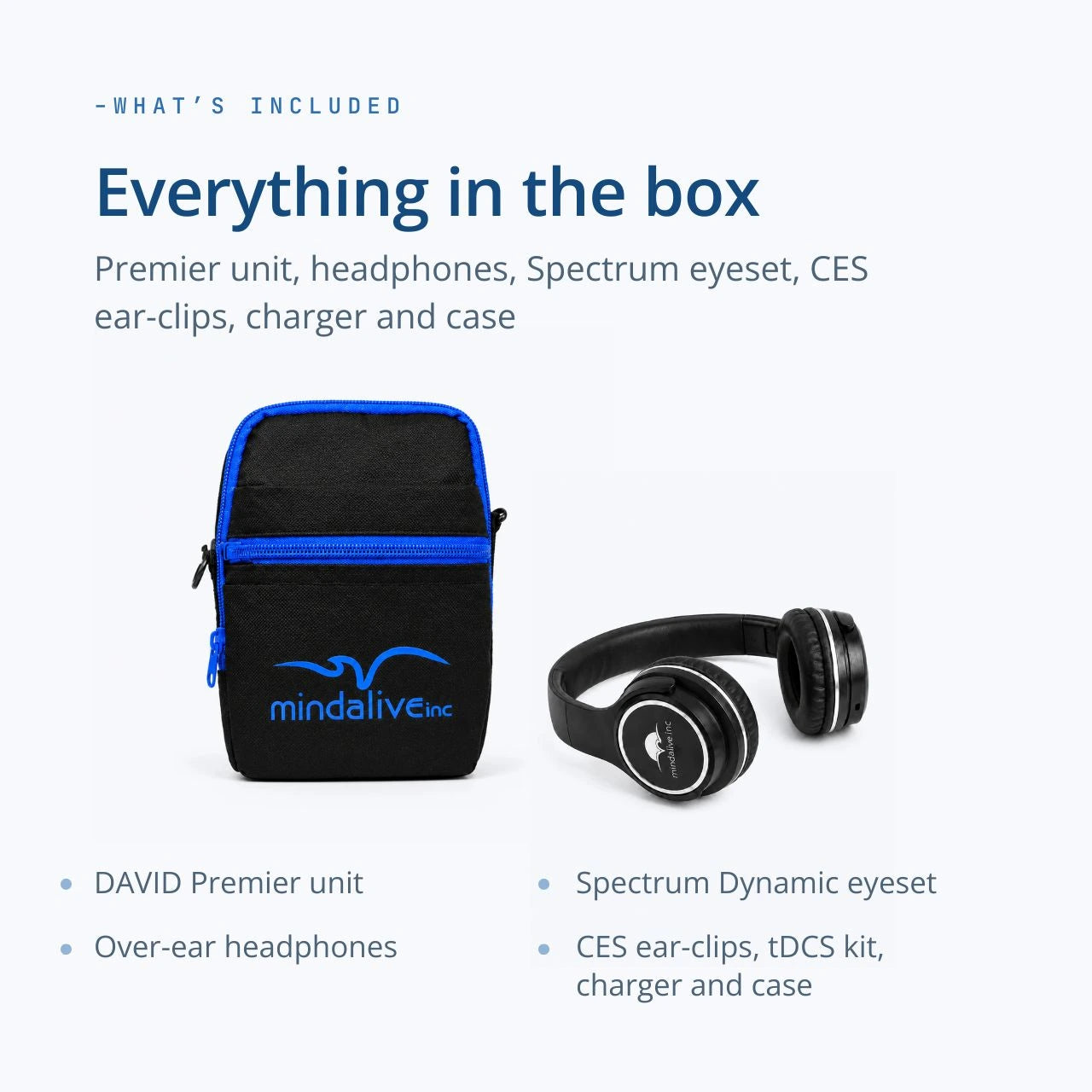
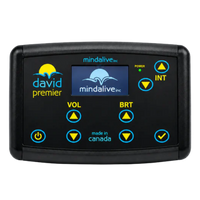
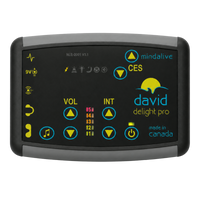
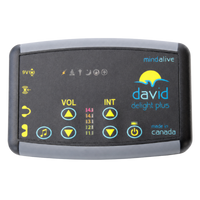
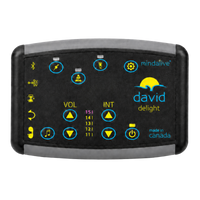
Explore how MindAlive’s DAVID Delight and Delight Plus use light and sound together to create powerful, yet natural, states of focus and clarity.
Find Your DAVID6. CES: Supporting the Chemistry Behind High-Performance States
Brainwaves are only part of the story. Cognitive performance also depends on your neurochemistry — neurotransmitters and hormones like:
- serotonin
- dopamine
- GABA
- cortisol
When stress is high and cortisol is elevated, high-frequency states can feel like anxiety rather than clarity. You may be wired but not productive. This is where Cranial Electrotherapy Stimulation (CES) comes in.
CES uses tiny, pulsed microcurrents delivered via ear clips. These currents are extremely low (microampere range) and are designed to:
- normalize stress-related brain activity
- support healthy serotonin and endorphin levels
- promote a calm, stable baseline from which focus becomes easier
7. MindAlive: Combining AVE + CES as an HFO Upgrade
MindAlive builds on everything HFO binaural beats are trying to do — and then takes it several steps further by combining:
- Audio-Visual Entrainment (AVE) to shape brainwave patterns
- Cranial Electrotherapy Stimulation (CES) to support neurochemical balance
Instead of manually searching for the “perfect” HFO track on YouTube or a meditation app, MindAlive devices offer carefully designed protocols for:
- focus and concentration
- cognitive performance and learning
- stress reduction
- sleep and recovery
How a Typical High-Frequency Session Works
- You select a Focus, Peak Performance, or Study session on your DAVID device.
- You put on the AVE glasses (eyes closed) and headphones.
- Light and sound guide your brain into fast but organized beta/gamma patterns.
- CES (if used) keeps your nervous system calm and balanced during stimulation.
The experience is usually described not as “hyped up,” but as quietly sharp — a state where thoughts feel clear, distractions fade, and work flows more naturally.
8. HFO Binaural Beats vs AVE + CES: A Side-by-Side Look
To make the differences crystal clear, here’s a simple comparison:
-
HFO Binaural Beats
- Only audio, no visual stimulation
- High individual variability
- Limited entrainment strength at very high frequencies
- Often self-experimentation, little structure
- Mostly consumer-created tracks with unknown quality
-
MindAlive AVE + CES
- Light + sound entrainment for stronger, whole-brain effects
- Pre-programmed protocols based on decades of use
- Options for focus, calm, sleep, and recovery in one system
- Non-habit forming, drug-free, and designed for daily use
- Used by clinicians, therapists, and performance professionals
Both are non-invasive and non-pharmaceutical. But AVE + CES provides a more robust, reliable signal — grounded in decades of practical application rather than just theory.
9. Safety Considerations: Doing High-Frequency Stimulation the Smart Way
Most people can safely experiment with audio-based tools like binaural beats. Still, there are a few basic guidelines:
- Keep the volume at a comfortable, moderate level.
- Avoid listening for hours on end without breaks.
- Do not use while driving or operating machinery.
- If you have a history of seizures, neurological conditions, or serious mental health issues, talk to a healthcare professional first.
AVE and CES follow similar safety principles, with the added benefit of:
- structured session lengths (typically 20–40 minutes)
- carefully controlled intensity levels
- well-established use patterns from clinics and practitioners
10. How to Replace HFO Binaural Beats with a MindAlive-Based Routine
If you’ve been experimenting with HFO binaural beats and want something more structured and effective, here’s a simple way to transition:
Step 1: Define Your Primary Goal
- Do you want laser focus for deep work?
- Do you need mental clarity after stress or fatigue?
- Are you looking for a sustainable performance boost for study or creative work?
Your goal will determine which MindAlive sessions you use most frequently (e.g., Focus, Study, Peak Performance).
Step 2: Replace One HFO Session Per Day
- Instead of putting on an HFO binaural track, run a 20–30 minute AVE session.
- Use CES during or after the session if you want extra calm, stable concentration.
- Do this at times when you’d normally need your best focus (e.g., before studying, writing, or planning).
Step 3: Notice Specific Changes
Pay attention to concrete things like:
- How quickly you can get into a “flow” state
- How long you can stay focused without checking your phone
- Whether you feel mentally drained or pleasantly tired afterward
- How clearly you can think the next day
Most users report not just a sharper session, but a shift in how their brain feels over the course of the week.
Ready to go beyond HFO binaural beats?
Take our 1-minute assessment to see whether your nervous system is more overstimulated or understimulated — and get personalized device recommendations.
Take the Brainwave Assessment11. Integrating AVE + CES Into Everyday Life
High-frequency enhancement isn’t just for “biohackers.” It can support many areas of daily life:
For Students
- Use a Focus or Study session before revision.
- Use CES during reading for calm, sustained attention.
- Finish the day with a relaxation or sleep program to recover.
For Professionals
- Use AVE in the morning to clear mental fog.
- Run a short midday clarity session instead of reaching for more caffeine.
- Use CES at the end of a stressful day to reset before going home.
For Creatives and Innovators
- Use slightly slower, mixed-frequency programs to blend focus with imagination.
- Combine with journaling or brainstorming while your brain is in a more fluid state.
In all cases, AVE + CES give you something HFO binaural beats rarely can: a predictable, repeatable effect you can build into real routines.
12. Common Questions About HFO Binaural Beats and MindAlive
“Can I still use HFO binaural beats if I use a MindAlive device?”
Yes. Some people enjoy softer HFO tracks as background audio while working, and reserve AVE + CES for more intentional sessions. Just avoid stacking too many forms of stimulation at once until you know how your nervous system responds.
“Are AVE and CES a replacement for medical or psychological treatment?”
No. They are designed as supportive, wellness-oriented tools. If you have a diagnosed condition or are on medication, always talk to your healthcare provider before making changes or adding new tools.
“Will I become dependent on AVE or CES to focus?”
AVE and CES are non-addictive and non-habit forming. Many users find that over time, their baseline focus and calm improve even on days they don’t use the devices — a sign that their nervous system is learning healthier patterns.
“Is there any advantage to sticking with HFO binaural beats only?”
If HFO binaural beats already give you everything you want — and your results feel strong, consistent, and stable — you may not need anything else. But if your results are subtle, inconsistent, or disappointing, AVE + CES offer a more powerful evolution of the same core idea.
Experience the next generation of brain entrainment
HFO binaural beats introduced the world to the idea of shaping brain activity with rhythm. MindAlive takes that idea to the next level with clinically used Audio-Visual Entrainment and CES — natural, structured, and designed for real-life performance.
Explore MindAlive Devices