

Brainwave Entrainment for Deep Sleep
Yrian BrugmanWritten by MindAlive – 35 years of brainwave entrainment, 5× awarded for innovation in neurotechnology.
Brainwave Entrainment for Deep Sleep
Millions struggle with falling asleep, staying asleep, or waking up feeling unrested — even after 8 hours in bed. For many, the issue isn’t the amount of sleep, but the lack of deep sleep: the slow-wave state where the brain restores itself.
Brainwave entrainment offers a way to guide the brain into the low-frequency rhythms required for deep, restorative sleep — naturally and non-invasively.

Why Deep Sleep Matters
Deep sleep (also known as slow-wave sleep) is essential for:
- hormonal recovery
- memory consolidation
- immune function
- cellular repair
- reducing next-day anxiety
- restoring the nervous system
But stress, screens, light exposure, anxiety and irregular sleep patterns can block the brain from naturally entering deep delta rhythms.
Deep sleep isn’t just about falling asleep — it’s about shifting the brain into the 0.5–3 Hz delta range. That’s where real restoration happens.
How Brainwave Entrainment Helps with Deep Sleep
Brainwave entrainment uses rhythmic stimulation (light, sound or both) to guide the brain into specific frequency ranges.
For deep sleep, the goal is simple: shift the brain toward delta frequencies (0.5–3 Hz).
But not all entrainment methods are strong enough to influence sleep states.
The Most Effective Sleep Frequencies (Table)
| Frequency Range | Wave Type | Effect on Sleep |
|---|---|---|
| 0.5 – 3 Hz | Delta | Deep, restorative slow-wave sleep |
| 3 – 7 Hz | Theta | Relaxation, pre-sleep, dreaminess |
| 8 – 12 Hz | Alpha | Calming the mind, transitioning into sleep |
Most sleep protocols begin in **alpha** to quiet mental activity, move into **theta**, and finally descend toward **delta** as the brain settles.
Why Many People Struggle to Reach Deep Sleep
Your brain should naturally descend into delta, but modern life interferes:
- late-night screen exposure
- high cortisol levels
- anxiety
- poor sleep hygiene
- overactive thinking
- dysregulated circadian rhythm
Most people never reach deep sleep because their brain is too activated to slow down into delta on its own.
Why Audiovisual Entrainment Works Better Than Audio Alone
Binaural beats and sleep sounds can help, but they rely on the brain being calm enough to generate an internal beat — which is rarely the case at night.
Audiovisual entrainment (AVE) is different:
- LED light directly stimulates the visual cortex
- sound pulses reinforce the frequency
- the thalamus synchronizes both signals
- the brain follows the delta rhythm externally
This creates a far stronger and more reliable descent into deep sleep frequencies.
NIH review: Multisensory entrainment produces stronger slow-wave effects.
What Deep Sleep Entrainment Feels Like
Users often experience:
- a heavy, sinking sensation in the body
- a quiet mind with less mental chatter
- reduced nighttime anxiety
- fewer nighttime awakenings
- stronger emotional stability the next day
Why the DAVID Premier Is Used for Deep Sleep
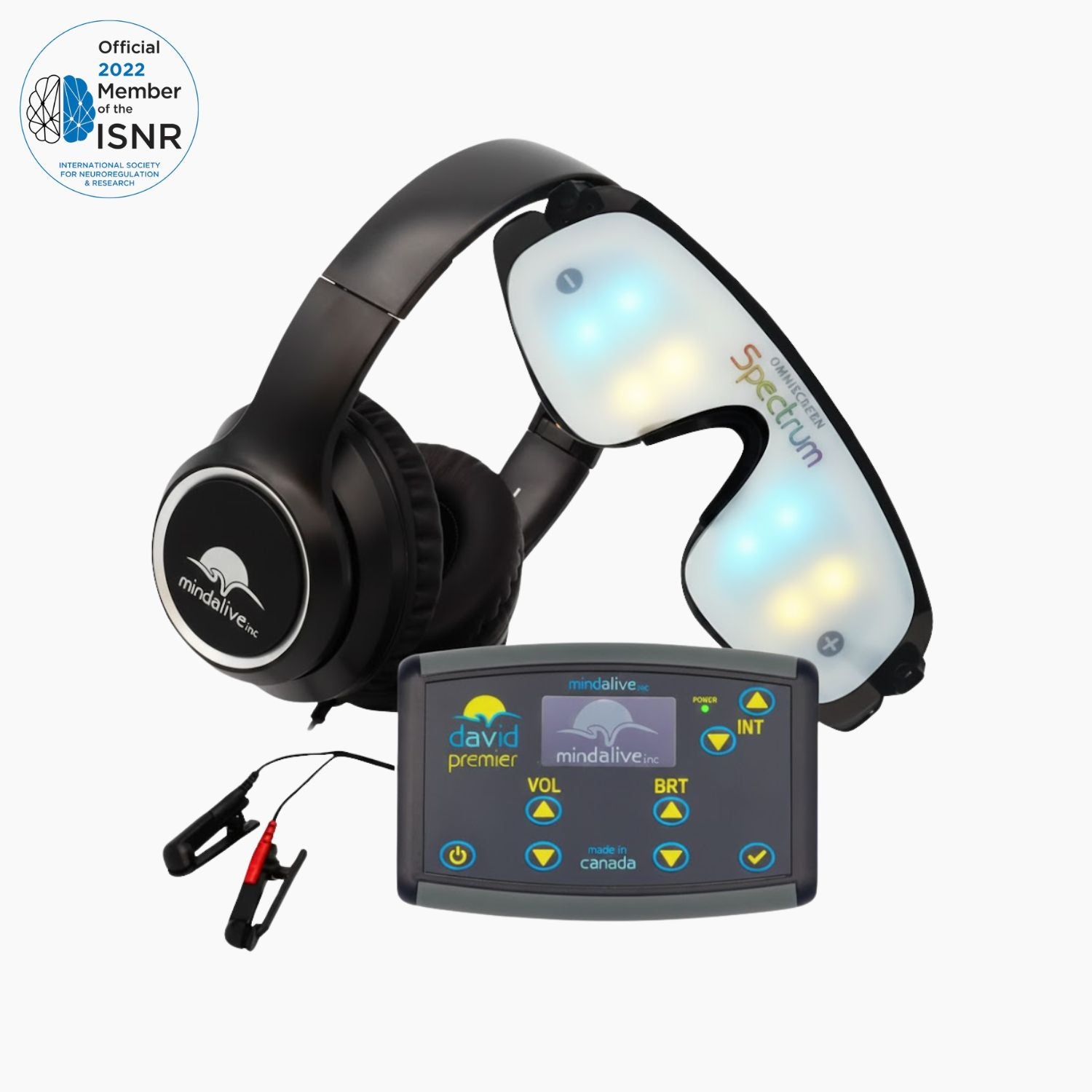
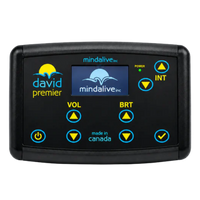
The DAVID Premier includes multiple sleep-specific sessions designed to guide the brain gradually into delta frequencies.
Its sleep mechanisms work because it:
- slows the brain rhythm step-by-step
- reduces sympathetic activation
- activates parasympathetic pathways (rest & digest)
- stabilizes breathing and heart rate
- reduces mind wandering through flicker-distraction
Clinical studies show reductions in insomnia symptoms and improvements in restorative sleep: Scientific Studies on the DAVID Devices
How to Use Brainwave Entrainment for Deeper Sleep
Best practices:
- use a sleep session 30–60 minutes before bed
- dim your room lights during the session
- avoid bright screens afterward
- if you wake up at night, use a short theta/delta program
- use consistently for 2–3 weeks to retrain the sleep cycle
Your Brain Wants Deep Sleep — It Just Needs the Right Frequency
You don’t need heavy sleep medication or complicated routines. With the right entrainment frequencies, your brain can naturally enter the deep restoration it’s missing.
Explore the DAVID Premier