

The Best Meditation Gadgets of 2026
Mind Alive
A comparison of the main meditation tech devices on the market — AVE systems, EEG headbands, vagal vibration tools and HRV biofeedback. What each actually does, where the research is strong, and which one fits your goals.
Why meditation tech devices have exploded
Meditation tech devices have gone from niche hobbyist curiosities to a multi-billion-dollar consumer category in less than a decade. The trigger is simple: more adults are reporting chronic stress, insomnia, and attention problems than at any point in modern history — and traditional meditation, while powerful, requires years of practice before results become reliable.
Hardware shortcuts the learning curve. A good device can put a first-time user into a measurable alpha or theta state in under twenty minutes — states that can take months of daily silent sitting to access on demand. For a deeper look at the underlying neuroscience, see our explainer on Audio-Visual Entrainment.
The challenge for the buyer is that the category has grown faster than the quality standards. Devices marketed with similar language can work through wildly different mechanisms, with very different evidence bases. This guide cuts through that.
The main categories of meditation technology
Before comparing individual devices, it's worth understanding the four distinct technology families they belong to. Each does something fundamentally different.
1. Audio-Visual Entrainment (AVE)
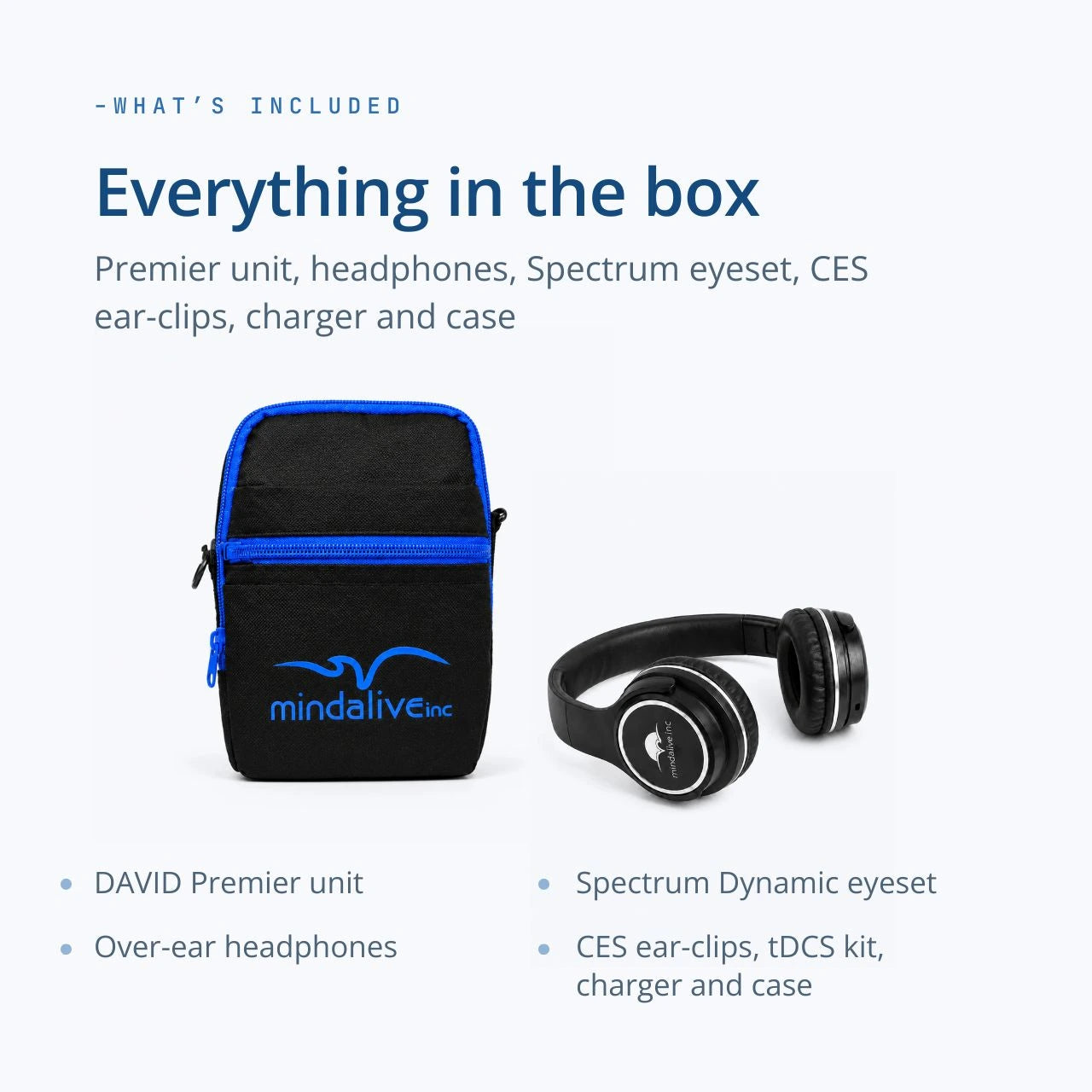
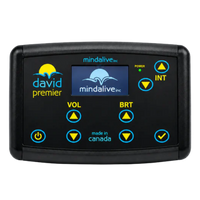
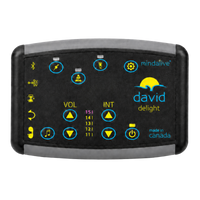
AVE devices — like the DAVID Premier — deliver precisely timed light pulses through a Ganzfeld eyeset combined with matched isochronic tones through headphones. The brain synchronizes to the rhythm via the Frequency Following Response, actively driving alpha, theta or beta states on demand. This is the most direct form of state-change technology available outside a clinical lab.
2. EEG biofeedback headbands
Consumer EEG devices (Muse, Flowtime, Crown) use dry electrodes to read your brain's electrical activity and provide real-time feedback — usually through audio cues. They train awareness of your state rather than producing it. Excellent for learning what your own mind is doing. Less effective for directly changing it.
3. Vagal / vibrational devices
Tools like Apollo Neuro and Sensate use low-frequency vibration applied to the body or chest to stimulate the vagus nerve. The goal is parasympathetic activation — calming the nervous system from the bottom up. Evidence is emerging but smaller than AVE's.
4. HRV / breath biofeedback
Devices like HeartMath Inner Balance measure heart rate variability and coach the user toward "coherent" breathing patterns. Useful for stress-response training and directly grounded in decades of cardiology research.
Comparison: the main meditation tech devices
The table below compares the most commonly bought meditation devices on the market — mechanism, best use case, evidence strength, and price. Strength of evidence is rated on a simple Low / Moderate / Strong scale based on peer-reviewed publications and independent replication.
| Device | Category & mechanism | Best for | Evidence | Price (USD) |
|---|---|---|---|---|
| DAVID Premier | AVE + CES + tDCS — pulsed light, isochronic tones, microcurrent, direct-current stimulation | Sleep, anxiety, focus, meditation deepening, PTSD adjunct | Strong (35+ years, 47+ publications) | $994.99 |
| Muse S (3rd Gen) | EEG biofeedback — real-time audio cues from frontal dry electrodes | Meditation awareness training, sleep tracking | Moderate | ~$400 |
| Apollo Neuro | Vagal vibration — wrist/ankle worn, low-frequency mechanical pulses | Background stress and sleep support | Moderate (emerging) | ~$349 |
| Sensate 2 | Infrasonic chest vibration — bone-conducted low-frequency stimulation | Vagal tone, anxiety relief in short sessions | Low-to-moderate | ~$299 |
| HeartMath Inner Balance | HRV biofeedback — ear-clip or finger sensor, coherence coaching | Stress-response training, breath coherence | Strong for HRV outcomes | ~$129 |
| Core Meditation Trainer | Haptic feedback + guided audio — handheld device with vibration cues | Meditation onboarding for beginners | Low (limited independent research) | ~$199 |
Two observations jump out from the table. First, AVE devices operate on a different axis than the rest: they actively induce brain states rather than measuring, coaching, or calming the body. Second, the evidence bases are very unequal — most newer consumer devices still have relatively thin peer-reviewed records compared with AVE and HRV biofeedback, which have been studied since the 1970s.
What is your actual goal?
"Meditating more" is not a goal. Better sleep, less anxiety, faster focus onset, deeper creative states — each of these points toward a different device category. Write the goal down before comparing features.
Do you want feedback or state change?
EEG headbands and HRV trackers teach awareness through real-time feedback. AVE and vagal devices actively change what's happening inside your nervous system. Both are valid — they're solving different problems.
How strong is the evidence?
Ask for peer-reviewed references. Decades-old mechanisms like AVE, CES and HRV biofeedback have hundreds of studies. Newer consumer categories may have ten or fewer — with most funded by the manufacturer. Weight your money accordingly.
What the research actually shows
Across meditation tech categories, the strongest clinical datasets belong to AVE, CES and HRV biofeedback — in that order. A comprehensive 2008 meta-analysis by Huang and Charyton reviewed 20 brainwave entrainment studies and found consistent, measurable improvements in anxiety, cognition, pain and mood. The effect sizes clustered higher for protocols combining audio and visual stimulation than for audio-only approaches. The Mind Alive research library catalogues the specific outcomes.
EEG headbands have a smaller but growing evidence base, largely focused on meditation teaching rather than clinical outcome measures. Vagal vibration devices have promising but smaller studies — often funded by the devices' makers and in need of independent replication. For the category, the peer-reviewed story is still being written.
Reduction in anxiety symptoms (STAI scale)
73%Siever, D. (2012). Audio-visual entrainment as a treatment modality. Journal of Neurotherapy.
Improvement in sleep onset and quality (PSQI)
68%Berg, K. & Siever, D. (2009). A controlled comparison of audio-visual entrainment for insomnia.
Enhancement in cognitive performance scores
61%Budzynski, T.H. et al. (2001). Academic performance enhancement with photic stimulation.
Clinicians reporting measurable patient improvement
81%Mind Alive practitioner survey, 2022 (n=1,047 clinicians across 32 countries).
"The question isn't which meditation device is newest or most expensive. It's which one has a mechanism that actually matches what your nervous system needs — and enough evidence behind it to trust."
— Dave Siever, M.Sc., Founder of Mind Alive Inc.
Building a sustainable practice
Owning a device is not the same as using one. The users who see the largest gains treat their device like a daily habit — 15 to 20 minutes, same time of day, ideally for at least four weeks before evaluating results.
Session 1: Immediate shift
With AVE, most users report a clear quieting within the first 20-minute session. With EEG headbands, the first session mostly reveals how much mental noise is actually there. Both are valuable starting points.
Week 1–2: Sleep and anxiety improvement
Daily practice brings the first measurable gains. Sleep onset improves, baseline anxiety drops, and users describe "finally being able to exhale."
Week 3–4: Sustained cognitive benefits
Focus sharpens, emotional regulation improves, and the chronic "switched-on" feeling starts to recede. See clinical applications for the specific protocols used across anxiety, insomnia and attention.
Long-term: Lasting neuroplasticity
After 8–12 weeks of consistent use, users typically find they access calmer states more easily even without the device. Meditation tech is most effective as scaffolding that's gradually internalized — not as a permanent crutch.

Is a meditation device right for you?
If you want something more measurable than a meditation app — and you want results faster than years of silent practice — a meditation tech device is worth considering. The right choice depends entirely on your goal: state change (AVE), awareness training (EEG), vagal calm (vibration), or stress-response coherence (HRV).
There are real contraindications for some categories. People with photosensitive epilepsy, active cardiac devices (pacemakers, ICDs), certain neurological conditions, or during pregnancy should consult a healthcare provider before using any device that combines light stimulation or electrical input — especially AVE, CES or tDCS systems. Also see our comparison of binaural beats and related audio protocols if you're considering audio-only options first.
For most healthy adults with chronic stress, insomnia or focus challenges, the evidence points toward AVE as the category with the strongest, most replicated outcomes — and the one where the effect is genuinely on your brain, not just on your experience of it.
Frequently Asked Questions
What's the difference between AVE and EEG-biofeedback meditation devices?
AVE devices actively drive your brain toward a target state using timed light and sound pulses. EEG headbands read your brain's activity and give you feedback on what it's doing. AVE changes state; EEG teaches awareness of state. Many serious users eventually use both for different purposes.
Do I need a meditation device if I already meditate?
Not strictly — but most experienced meditators who try AVE report that it helps them reach deeper states faster on days when their practice is shallow (stress, poor sleep, scattered focus). Think of it as meditation scaffolding rather than a replacement.
Which meditation device has the strongest research behind it?
Measured by peer-reviewed publications, independent replication and years studied, Audio-Visual Entrainment (AVE) has the strongest track record in the meditation-tech category. HRV biofeedback is a close second for stress-related outcomes specifically.
Are meditation tech devices safe?
For healthy adults, all major meditation devices are generally safe at recommended use. People with photosensitive epilepsy, active cardiac devices (pacemakers, ICDs), certain neurological conditions, or during pregnancy should consult a clinician before use — especially before using AVE, CES or tDCS products.
How fast will I notice effects?
Most users notice a clear relaxation effect in the first session of any well-designed AVE or HRV protocol. Meaningful improvements in sleep, anxiety or focus usually appear within one to two weeks of daily 15–20 minute sessions. Long-term trait-level changes typically require 8–12 weeks.
Can meditation tech replace therapy or medication?
No. These devices are tools, not treatments. They can complement therapy, meditation, exercise and good sleep hygiene, but should not replace professional care for diagnosed mental-health conditions. Discuss use with your clinician if you're being treated for any condition.
References
- Adrian, E.D. & Matthews, B.H.C. (1934). The Berger rhythm: Potential changes from the occipital lobes in man. Brain, 57(4), 355–385.
- Siever, D. (2012). Audio-visual entrainment as a treatment for stress, anxiety and sleep disorders. Journal of Neurotherapy, 14(3), 1–28.
- Huang, T.L. & Charyton, C. (2008). A comprehensive review of the psychological effects of brainwave entrainment. Alternative Therapies in Health and Medicine, 14(5), 38–50.
- Berg, K. & Siever, D. (2009). A controlled comparison of audio-visual entrainment for treating seasonal affective disorder and insomnia. Journal of Neurotherapy, 13(3).
- Budzynski, T.H., Jordy, J., Budzynski, H.K., Tang, H., & Claypoole, K. (2001). Academic performance enhancement with photic stimulation. Journal of Neurotherapy, 4(2).
- McCraty, R. & Zayas, M.A. (2014). Cardiac coherence, self-regulation, autonomic stability, and psychosocial well-being. Frontiers in Psychology, 5, 1090.
- Cahn, B.R. & Polich, J. (2006). Meditation states and traits: EEG, ERP, and neuroimaging studies. Psychological Bulletin, 132(2), 180–211.