

What Are Delta Brain Waves? Defining Delta Brain Waves
Mind AliveWritten by MindAlive – 35 years of brainwave entrainment, 5× awarded for innovation in neurotechnology.
What Are Delta Brain Waves?
Delta brain waves are the slowest measurable brain rhythms, most prominent in deep, dreamless sleep. They’re closely linked to physical restoration, immune function, and the “offline” processing your brain does when you’re completely at rest.
Understanding delta activity helps explain why truly deep sleep feels so different from light dozing—and why technologies like audio-visual entrainment (AVE) and cranial electrotherapy stimulation (CES) often target delta to support recovery, mood, and brain health.
Key Takeaways
- Delta waves are the slowest brain waves, typically ranging from about 0.5–4 Hz.
- They dominate during deep, non-REM sleep and are associated with physical restoration and tissue repair.
- Healthy delta activity supports growth hormone release, immune function, and feeling refreshed upon waking.
- Too little delta can be linked to non-restorative sleep, fatigue, and brain fog; too much delta during waking can relate to inattention and sluggishness.
- Brainwave entrainment and CES/AVE systems can gently encourage delta-dominant states as part of structured sleep and relaxation protocols.
Brain Waves 101: The Spectrum of Neural Rhythms
Your brain is always producing electrical activity. When measured with EEG, this activity appears as bands of frequencies known as brain waves: delta, theta, alpha, beta, and gamma. Each band is associated with different states of consciousness and cognitive functions.
Delta sits at the slowest end of this spectrum and is most clearly seen when you’re deeply asleep and disconnected from the outside world.
| Brain Wave Band | Frequency (Hz) | Common State |
|---|---|---|
| Delta | ~0.5–4 Hz | Deep sleep, unconscious processing |
| Theta | ~4–8 Hz | Drowsy, light sleep, hypnagogic imagery |
| Alpha | ~8–12 Hz | Relaxed wakefulness, calm focus |
| Beta | ~13–30 Hz | Active thinking, problem-solving |
| Gamma | ~30–80 Hz+ | High-level integration, binding of information |
Defining Delta Brain Waves
Delta waves are high-amplitude, low-frequency oscillations. The “slow” pace means that the cortex is firing in a very synchronized way—large groups of neurons rhythmically turning “on” and “off” together.
Core Characteristics of Delta Waves
- Frequency: Roughly 0.5–4 cycles per second (Hz).
- State: Deep, dreamless (slow-wave) sleep and certain meditative or unconscious states.
- Location: Often prominent over frontal areas in deep sleep, though patterns vary person to person.
- Function: Recovery, cellular repair, immune support, and clearing metabolic waste from the brain.
Delta and Deep Sleep (Slow-Wave Sleep)
During slow-wave sleep, your brain downshifts into dominant delta activity. This is when:
- Growth hormone is released to support tissue repair and muscle recovery.
- The glymphatic system becomes more active, helping clear metabolic by-products.
- Immune regulation and inflammatory balance are supported.
- You build the “feeling” of being truly rested the next day.
In short: no delta, no deep recovery. You might sleep for eight hours, but without enough slow-wave, delta-rich sleep, you may still wake up exhausted.
Healthy vs. Dysregulated Delta Activity
Like all brainwave bands, delta is neither “good” nor “bad” on its own. Context and timing matter.
| Delta Pattern | Where & When | Possible Experience |
|---|---|---|
| Healthy delta | Dominant at night during deep non-REM sleep | Refreshed on waking, good physical recovery |
| Low delta at night | Fragmented or shallow sleep | Waking tired, soreness, more stress reactivity |
| Excess delta while awake | Frontally or diffusely during daytime | Brain fog, sluggishness, difficulty sustaining attention |
| Asymmetric delta | More on one side than the other | May be associated with localized dysfunction or past injury (clinical interpretation required) |
How Delta Waves Relate to Mood, Stress, and Cognition
Although delta is most tied to physical recovery, its quality also echoes into mood and cognitive performance:
- Mood regulation: Deep, delta-rich sleep helps stabilize emotional circuits, lowering irritability and improving resilience.
- Stress buffering: Good slow-wave sleep supports the HPA axis (stress system), so stressors feel more manageable.
- Memory & learning: While REM and other stages matter too, deep sleep supports consolidation and overall cognitive maintenance.
- Attention & clarity: Adequate delta at night reduces the “sleep debt” that fuels daytime inattention and brain fog.
Can You Train or Influence Delta Brain Waves?
You cannot consciously “decide” to go into delta while awake in the same way you can decide to focus or relax. But you can influence the likelihood and quality of delta via:
- Sleep hygiene (timing, light exposure, environment)
- Relaxation practices (breathing, mindfulness, progressive relaxation)
- Brainwave entrainment (e.g., AVE and audio protocols targeting delta or pre-delta ranges)
- Supportive neuromodulation tools (such as CES used before bedtime)
Delta Brain Waves & Brainwave Entrainment
Brainwave entrainment uses rhythmic sensory stimulation—usually light and sound—to encourage the brain to “follow” external frequencies. When those frequencies are in the delta or pre-delta range, the aim is to support deeper relaxation and sleep onset.
How Entrainment Toward Delta Works
- Visual stimulation (AVE): Gentle, pulsing light through closed eyes at low frequencies, often combined with breathing cues and calming soundscapes.
- Auditory entrainment: Low-frequency modulations (e.g., binaural beats or isochronic tones) targeting the 1–4 Hz range or stepping down towards it.
- Combined protocols: Multi-stage sessions that begin in alpha/theta to quiet the mind, then gradually slow toward delta frequencies as you become drowsy.
Why Sessions Don’t Sit Entirely in Delta
Many well-designed sleep protocols do not hold you at pure delta for the entire session. Instead they:
- Start faster (alpha/theta) to calm racing thoughts.
- Gently descend into the delta range once you’re relaxed.
- Allow you to fall asleep naturally, with the session finishing in the background.
Creating a Delta-Friendly Lifestyle
Technologies like AVE and CES are most effective when combined with basic sleep and lifestyle habits that support delta.
Sleep Hygiene Fundamentals
- Keep a consistent bedtime and wake time—even on weekends.
- Dim lights and reduce screen exposure 60–90 minutes before bed.
- Keep your bedroom cool, dark, and quiet.
- Avoid heavy meals, alcohol, or intense exercise too close to bedtime.
Pre-Sleep Wind-Down Routine
- 5–10 minutes of slow, nasal breathing or simple meditation.
- A short journaling practice to “empty” your mind of to-dos.
- Optional AVE or CES session to prime the brain for delta-dominant sleep.
| Strategy | Delta-Relevant Benefit | Example |
|---|---|---|
| Light control | Supports melatonin release and deep sleep onset | Warm, dim lighting after 20:30; blackout curtains |
| Relaxation training | Reduces cortical “overdrive” blocking deep sleep | Guided body scan before bed |
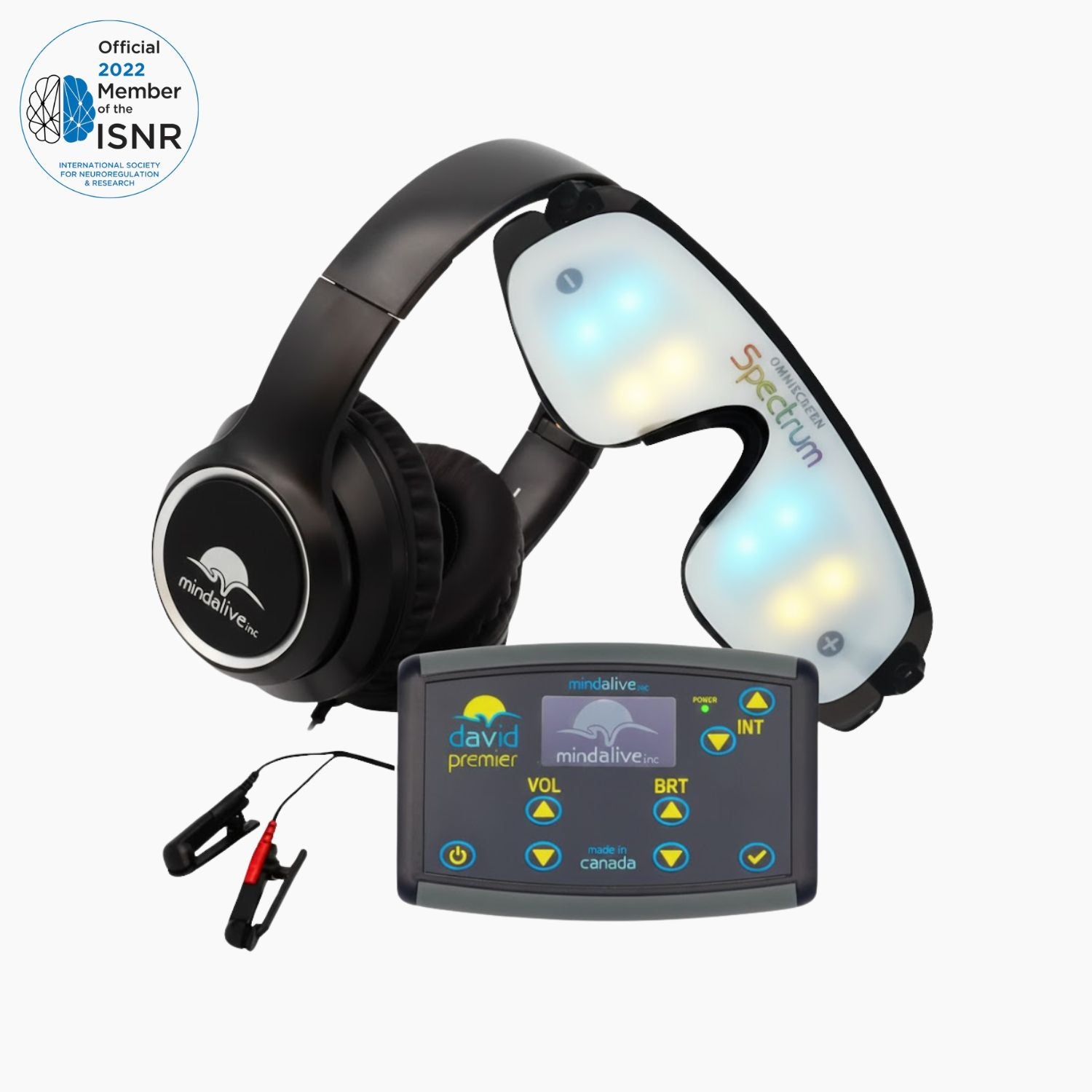
| Delta-oriented entrainment | Gently nudges brain rhythms toward slow-wave ranges | Delta AVE session on a DAVID device |
| Consistent schedule | Stabilizes circadian rhythm and sleep architecture | Similar bedtime/waketime seven days a week |
Common Misconceptions About Delta Brain Waves
Myth 1: “More Delta Is Always Better”
Delta is powerful—but only in the right context. Excess delta during daytime can be associated with sluggishness, difficulty focusing, or, in clinical settings, possible brain dysfunction. The goal is appropriate delta at night, not flooding your waking day with slow waves.
Myth 2: “If I Listen to Delta Tones While Working, I’ll Be Ultra-Relaxed and Productive”
Delta states are closer to deep sleep than productive focus. For work, light alpha or low-beta support calm concentration; delta is better reserved for pre-sleep and recovery.
Myth 3: “One Delta Session Will Fix My Sleep Forever”
Delta support is cumulative. Just like training your body, training healthier sleep architecture and brain rhythms takes repetition—several weeks of consistent practice, not a single session.
FAQ
What exactly are delta brain waves?
Delta waves are slow brain rhythms in the ~0.5–4 Hz range, most prominent in deep, non-REM sleep and associated with physical recovery and restoration.
When are delta waves most active?
They are most active during deep, dreamless sleep (slow-wave sleep). Short bursts can also appear in certain meditative or unconscious states, but their primary “home” is nighttime deep sleep.
Can I consciously stay awake and be in delta?
Not in a practical way. Sustained, dominant delta is strongly linked to sleep. Some people may approach borderline states in very deep meditation, but for daily life, delta is mainly a sleep rhythm.
Can brainwave entrainment really help with delta?
Entrainment cannot force your brain to do something it’s incapable of, but it can gently guide it toward states (like theta/delta) that are already biologically natural, especially when combined with good sleep hygiene and relaxation techniques.
Is focusing on delta waves safe?
Supporting healthy delta through sleep, relaxation, and moderate use of entrainment or CES is generally safe for most people. However, anyone with neurological or psychiatric conditions, or implanted medical devices, should consult a clinician before starting neuromodulation.