

Brainwave Entrainment Audio: What Is It?
Yrian BrugmanWritten by MindAlive – 35 years of brainwave entrainment, 5× awarded for innovation in neurotechnology.
What It Is, How It Works & Why Results Vary
Brainwave entrainment audio has become one of the most accessible ways people try to influence their mental state. From binaural beats and isochronic tones to pulsed soundtracks online — audio entrainment is everywhere.
But if you’ve ever wondered *whether audio entrainment actually works*, *how it compares to other methods*, or *when it is most effective*, you’re in the right place.

What Is Brainwave Entrainment Audio?
Brainwave entrainment audio refers to sound-based rhythms designed to *influence your brainwaves*. Examples include:
- Binaural beats – two tones in each ear that create a perceived beat
- Isochronic tones – distinct, repeating pulses of sound at a specific frequency
- Monaural beats – tones combined before reaching the ears
Each method attempts to guide the brain into a target frequency — from relaxation to focus or sleep.
How Audio Entrainment Works
Audio entrainment uses rhythmic sound patterns to trigger a phenomenon called the Frequency-Following Response (FFR), where the brain begins to mirror the rhythm it detects.
For example:
- A 10 Hz pulse may encourage the brain toward alpha rhythms (8–12 Hz → calm focus)
- A 5 Hz pulse may encourage theta rhythms (4–7 Hz → deep relaxation)
But there’s a catch: audio entrainment engages only one sensory channel — hearing — and this limits how strong the entrainment can be.
Audio-only methods can help you relax, but they are generally weaker than multisensory entrainment.
Types of Brainwave Entrainment Audio (Quick Comparison)
| Audio Method | How It Works | Strength | Best For |
|---|---|---|---|
| Binaural Beats | Two tones, one per ear → brain perceives difference | Weak | Relaxation, light meditation |
| Isochronic Tones | Distinct rhythmic pulses of sound | Moderate | Relaxation, low-level focus |
| Monaural Beats | Tones mixed before output → beat enters directly | Moderate | Mild entrainment, background mood support |
Where Audio Entrainment Succeeds
Audio entrainment can be effective when:
- You are already relatively calm
- You want a mild shift (e.g., light relaxation)
- You are familiar with rhythm entrainment
- You use headphones in a quiet environment
In these cases, audio can gently guide brain activity into lower-frequency states — especially for alpha and theta rhythms.
Where Audio Entrainment Struggles
It becomes inconsistent when the nervous system is elevated or under stress. That’s because:
- audio engages only auditory pathways
- noise in the environment weakens the signal
- the brain may not be receptive under stress or exhaustion
Audio entrainment is strongest when your nervous system is calm — but that’s precisely when you may not need it.
Research on Audio Entrainment
Review articles — including NIH overviews — show that **multisensory entrainment (light + sound)** produces stronger and more consistent changes in brainwave patterns than sound alone.
Source: NIH Brainwave Entrainment Review
Best Practices for Brainwave Entrainment Audio
If you use audio entrainment, follow these tips to boost effectiveness:
- Use **headphones** for binaural beats
- Choose quiet environments
- Pair with relaxation techniques (breathing, light stretching)
- Use regularly, not just once
- Avoid distractions
This alone can improve mild stress and support calm states, but deeper neurological shifts require a stronger stimulus.
When to Consider Multisensory Entrainment
Audio is a good introduction, but the brain responds much more strongly when visual pathways are involved — especially for:
- anxiety reduction
- deep sleep entrainment
- persistent focus improvement
- strong emotional regulation
This is why many clinicians and practitioners prefer audiovisual entrainment (AVE) for consistent results.
Why the DAVID Premier Is a Powerful Next Step
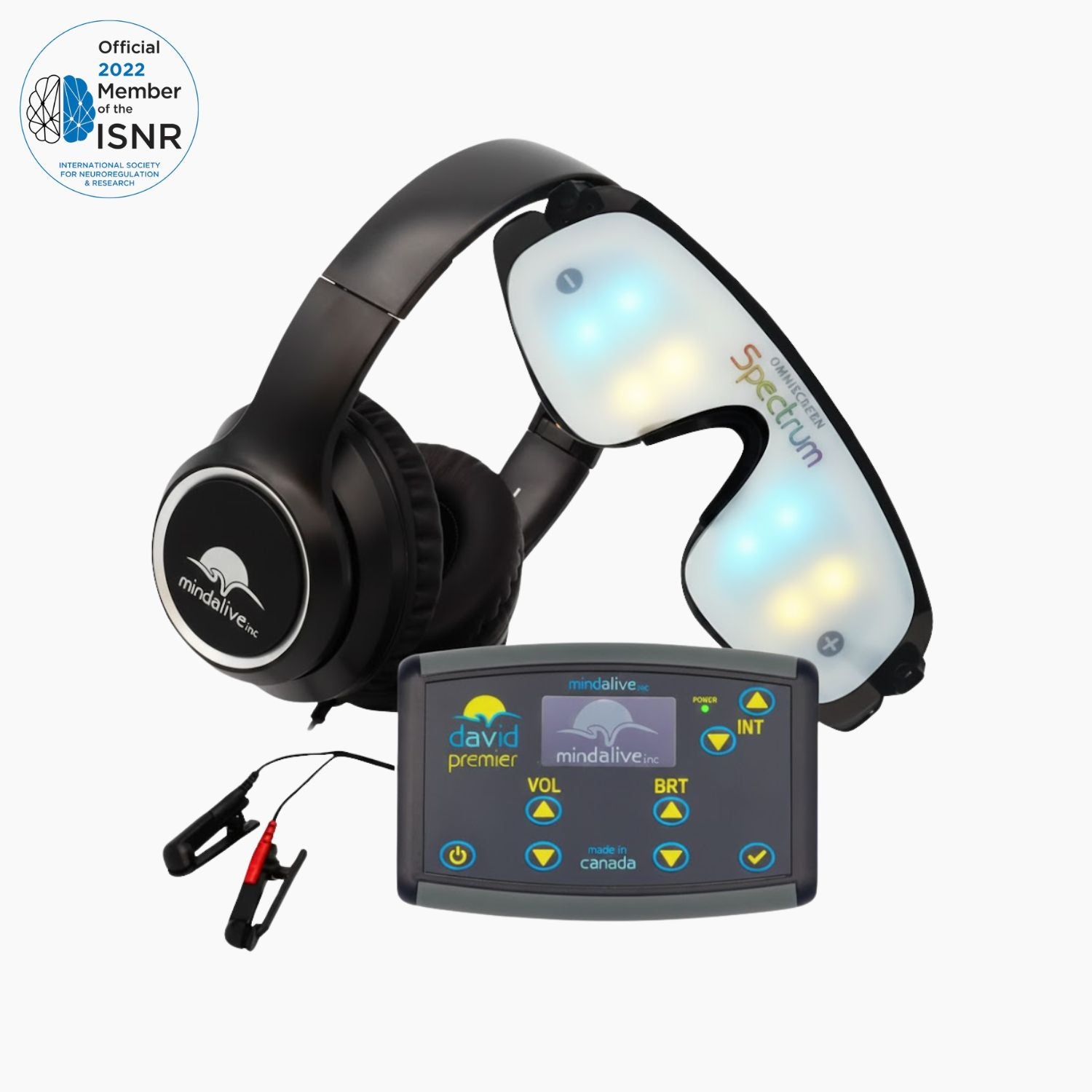
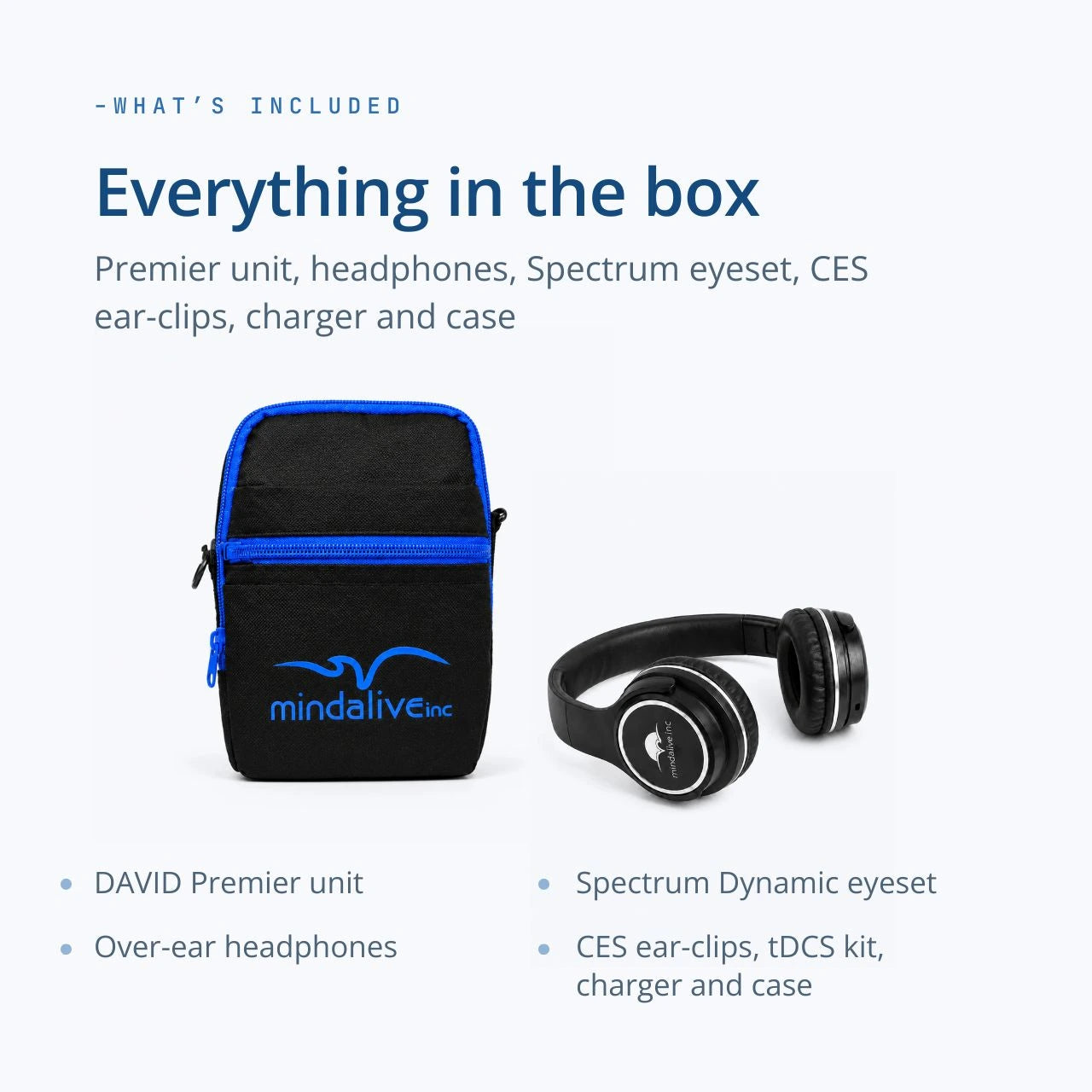
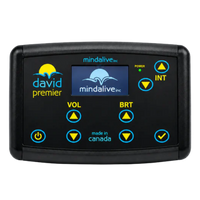
The DAVID Premier combines rhythmic LED stimulation with pulsed audio — addressing both sensory channels at once:
- engages the visual cortex
- reinforces the signal through auditory pulses
- activates thalamic frequency-following pathways
- supports stronger, consistent entrainment
Its effectiveness is supported by multiple independent studies showing measurable changes in brainwave activity: Scientific Studies on DAVID Devices.
Audio Entrainment Is a Good Start — But Your Brain Can Do More
Brainwave entrainment audio can relax you and help you unwind. But if you want deeper shifts in sleep, focus, anxiety or emotional balance, a stronger multisensory method is more effective.
Explore the DAVID Premier