

Everything About DAVID Delight Pro
Mind AliveWritten by MindAlive – 35 years of brainwave entrainment, innovation in AVE & CES technology.
DAVID Delight Pro - Full Guide
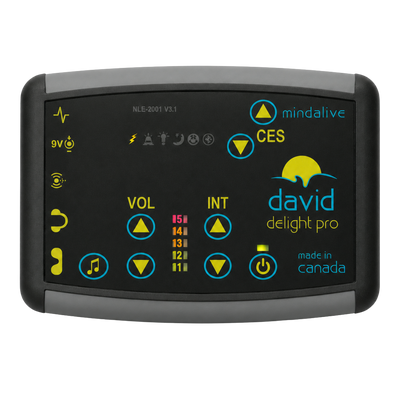
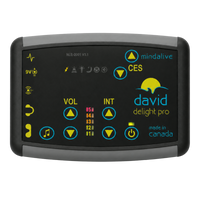
DAVID Delight Pro is a compact, multi-modal neuromodulation system that combines Audio-Visual Entrainment (AVE) with Cranial Electrotherapy Stimulation (CES). In practical terms, that means you get rhythmic light & sound sessions plus gentle microcurrent stimulation in one device—designed to support relaxation, mood, focus, and sleep.
This guide walks you through what DAVID Delight Pro is, how it works, and how to decide if it’s the right device for your goals. We’ll also compare it with other DAVID models, outline typical use cases, and share best practices for safe, effective sessions.
Key Takeaways
- DAVID Delight Pro combines AVE (light & sound) and CES (microcurrent) in a single, portable system.
- Pre-set sessions target common goals such as relaxation, sleep support, mood regulation, and mental focus.
- The AVE component uses specific frequencies and patterns to gently guide brainwave activity.
- The CES component adds low-level electrical stimulation through earclips to further support calm and balance.
- Best results usually come from consistent, protocol-based use over several weeks—not just a single session.
What Is DAVID Delight Pro?
DAVID Delight Pro is part of the DAVID (Digital Audio-Visual Integration Device) family. It sits in the middle of the range: more powerful than AVE-only models, but simpler and more compact than full flagship systems.
It’s designed as a practical daily-use device for people who want:
- Support with stress and anxiety regulation.
- Help in winding down and improving sleep onset and sleep quality.
- Sessions that promote focus, mental clarity, and cognitive performance.
- A non-pharmaceutical, non-invasive way to support their nervous system.
Core Modalities Inside DAVID Delight Pro
- AVE (Audio-Visual Entrainment): Glasses with LEDs plus headphones deliver rhythmic light and sound patterns designed to gently guide brainwaves toward specific states (relaxed, focused, drowsy, etc.).
- CES (Cranial Electrotherapy Stimulation): Earclip electrodes provide very low-level electrical stimulation intended to support mood, calmness, and sleep.
The key advantage is that these two modalities can be used together, turning each session into a multi-sensory, neuromodulation “routine” rather than a single stimulus.
How DAVID Delight Pro Works
DAVID Delight Pro uses carefully chosen frequencies, intensities, and session structures to influence brain activity and the autonomic nervous system.
Audio-Visual Entrainment (AVE)
AVE works by presenting flickering lights and pulsed tones at specific frequencies. When these stimuli are repeated rhythmically, the brain tends to follow—or “entrain” to—the pattern. Over time, this can help guide the user into more relaxed, focused, or sleepy states, depending on the session.
- Relaxation sessions use slower frequencies and softer patterns to ease the brain away from high arousal states.
- Focus sessions use slightly faster, more stable rhythms that support engaged, yet calm mental activity.
- Sleep sessions are often structured to progressively downshift from waking rhythms toward drowsy and early-sleep ranges.
Cranial Electrotherapy Stimulation (CES)
The CES component of DAVID Delight Pro uses microcurrent delivered via earclips. The intensity is very low—low enough that many users only feel a faint tingling sensation, if anything at all. Sessions are typically set for a duration that fits well into an evening wind-down or daytime relaxation break.
Combined with AVE, CES may help:
- Reduce feelings of internal “overdrive” or mental noise.
- Support a calmer emotional baseline over time.
- Reinforce the brain’s transition into more restorative states.
Typical Use Cases for DAVID Delight Pro
While individual experiences vary, DAVID Delight Pro is frequently used for a handful of practical goals. Think in terms of “routines” rather than one-off sessions.
1. Stress & Anxiety Management
Many users run a relaxation or CES-supported session after work, during a midday break, or whenever they feel overwhelmed. Over time, this can become a structured ritual to help “decompress” the nervous system.
2. Sleep & Pre-Bed Wind-Down
Evening sessions are a common use case: users put on the glasses and earclips 30–60 minutes before bed, run a session tailored to sleep onset, then move directly into their bedtime routine. The goal is to disengage from mental rumination and ease into sleep with less internal resistance.
3. Focus, Performance & Cognitive Support
During the day, people often use focus-oriented AVE sessions—with or without CES—for study, creative work, or important tasks. The aim is a state of calm alertness: enough energy to concentrate, but not so much that anxiety or distraction takes over.
4. Mood & Resilience
By repeatedly guiding the brain and nervous system toward calmer states, DAVID Delight Pro can become part of a broader mood-support strategy that may also include therapy, lifestyle changes, and skills like mindfulness.
DAVID Delight Pro Compared to Other DAVID Models
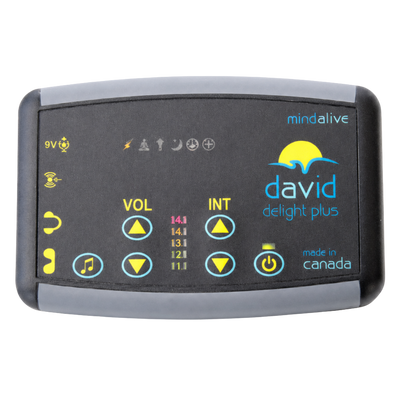
The DAVID family includes several devices with overlapping, but distinct, feature sets. The table below gives a simplified overview of where DAVID Delight Pro fits.
| Device | Modalities | Typical Use | Best For |
|---|---|---|---|
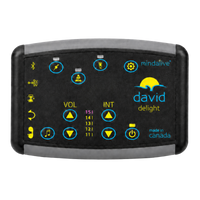
| DAVID Delight | AVE (light & sound) | Relaxation, basic focus and sleep support | Users who want simple AVE-only sessions |
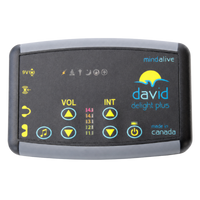
| DAVID Delight Plus | AVE (expanded presets) | More targeted sessions for mood, focus, and sleep | Users who want a richer AVE library without CES |
| DAVID Delight Pro | AVE + CES | Combined light/sound entrainment and microcurrent sessions | Users who want both AVE and CES in one compact device |
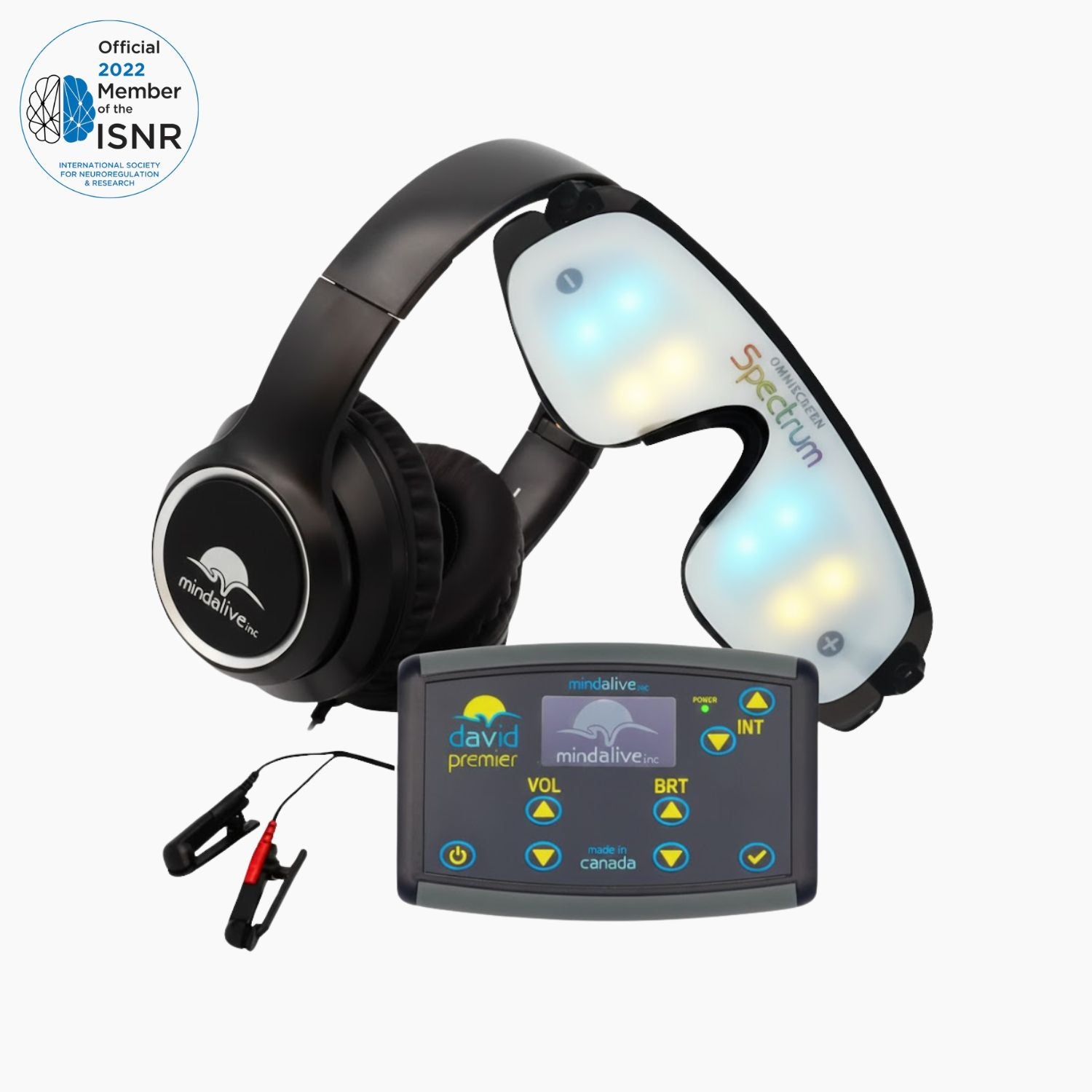
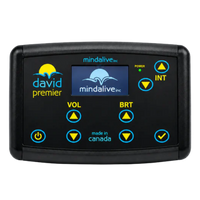
| DAVID Premier | AVE + microcurrent (expanded) | Larger session library and more configuration options | Users seeking the most advanced, customizable system |
How to Use DAVID Delight Pro: Step-by-Step
1. Set Up the Hardware
- Connect the light glasses and headphones to the device.
- Attach the CES earclips according to the manual, ensuring good contact.
- Check batteries or power source before your first session.
2. Choose the Right Session
- Identify your primary goal for the day: Relax, Sleep, Mood, or Focus.
- Select the pre-set session that best matches that goal.
- When in doubt, start with the gentler, beginner-friendly options before moving to stronger protocols.
3. Create the Right Environment
- Use a comfortable chair or bed where you can sit or lie safely.
- Silence notifications and let others know you’re unavailable for the session duration.
- Dim the room if possible—this helps the light from the glasses stand out more clearly.
4. Run the Session
- Put on the glasses and headphones, then attach the CES earclips.
- Start the session and close your eyes to allow the light patterns to work effectively.
- Simply observe your experience without trying to “force” anything to happen.
5. After the Session
- Take 3–5 minutes to transition back into your day—no need to jump up immediately.
- Note how you feel physically and mentally; many users track their sessions and effects in a simple journal.
- Adjust timing and session choice over the next week based on how you respond.
Session Frequency and Consistency
For most goals, consistency beats intensity. Short, regular DAVID Delight Pro sessions often outperform long, sporadic ones.
| Goal | Suggested Frequency | When to Use |
|---|---|---|
| Stress & anxiety | 3–7 sessions per week | Late afternoon, after work, or whenever you need to reset |
| Sleep support | Most evenings | 30–60 minutes before bedtime as part of a wind-down routine |
| Focus & performance | 3–5 sessions per week | Before important work, study, or creative tasks |
| Mood & resilience | 3–7 sessions per week | At regular times to build a stable nervous system rhythm |
Safety Considerations for DAVID Delight Pro
DAVID Delight Pro is non-invasive and designed for comfort, but it still needs to be used responsibly.
- Follow all contraindications listed in the manual (for example, implanted electronic devices, certain medical conditions, or photosensitive epilepsy).
- Do not use DAVID Delight Pro while driving or operating machinery.
- If you experience headaches, nausea, agitation, or eye discomfort, stop the session and try a gentler protocol or shorter duration next time.
- Consult your healthcare provider before starting if you have significant medical or psychiatric conditions or are pregnant.
Maximizing Results with DAVID Delight Pro
DAVID Delight Pro is most effective when you treat it as part of a broader, intentional routine for brain and nervous system health.
| Complementary Strategy | Why It Helps | How to Combine with DAVID Delight Pro |
|---|---|---|
| Sleep hygiene | Improves baseline sleep so sessions have more to build on. | Run a sleep session in the evening, then go straight into a consistent bedtime routine. |
| Mindfulness & breathwork | Supports autonomic regulation and emotional resilience. | Use a relaxation session, then do 5–10 minutes of calm breathing or meditation. |
| Physical activity | Helps discharge stress and improve mood and cognition. | Pair a focus or mood session with a regular walking or exercise schedule. |
| Therapy & coaching | Applies mental and emotional skills learned during sessions. | Use DAVID Delight Pro as a support tool alongside professional guidance. |
Is DAVID Delight Pro Right for You?
Consider DAVID Delight Pro if you:
- Want both AVE and CES in one device—without managing multiple systems.
- Are looking for non-pharmaceutical support for stress, sleep, and mood regulation.
- Prefer pre-set, guided sessions rather than building complex protocols yourself.
- Are willing to use the device consistently over several weeks to fairly evaluate its impact.
If you’d like a simpler AVE-only system, a different DAVID model may be a better fit. If you want the broadest possible library and maximum configurability, a higher-end system could be worth exploring. Delight Pro sits in the sweet spot for many users: powerful, but still straightforward.
See DAVID Delight Pro details →FAQ: DAVID Delight Pro
Does DAVID Delight Pro replace therapy or medication?
No. DAVID Delight Pro is a supportive wellness tool. It does not replace therapy, medication, or professional medical care. Always consult your healthcare provider before changing prescribed treatments.
How long does it take to notice changes?
Some people notice immediate shifts in how calm or focused they feel after a session. For most, it’s better to think in terms of weeks: evaluate after 3–6 weeks of consistent use rather than after one or two sessions.
Can I use AVE without CES, or CES without AVE?
Yes. DAVID Delight Pro allows for flexible use; you can run AVE-only, CES-only, or combined AVE+CES sessions depending on your comfort level and goals.
Is Delight Pro suitable for children or teenagers?
Use with younger users should always be discussed with a qualified healthcare professional. If approved, start with gentle, shorter sessions and monitor responses closely.
What if I’m sensitive to light or prone to headaches?
Start with lower-intensity light settings, shorter sessions, or AVE-only or CES-only use. If discomfort persists, stop using the device and seek guidance from a professional.