What Is Lucid Dreaming? Explained
Mind AliveBinaural Beats Lucid Dreaming: Enhance Dream Control
How targeted sound frequencies can support awareness and control inside your dreams.
Lucid dreaming—recognizing that you’re dreaming while still in the dream—offers a unique playground for creativity, emotional processing, and self-discovery. One of the most popular tools for supporting lucid dreaming today is binaural beats: carefully tuned audio frequencies designed to influence brainwave patterns.
By listening to binaural beats in specific bands (especially theta and delta ranges), many people find it easier to reach the edge between waking and sleep, notice dream cues, and stabilize lucidity once it appears. In this guide, we’ll look at how binaural beats work, how they relate to brainwaves, and how you can combine them with practical lucid dreaming techniques.
Key Takeaways
Key Takeaways
- Binaural beats use slightly different tones in each ear to encourage the brain to follow a target frequency.
- Theta (≈4–8 Hz) and low delta (≈0.5–4 Hz) ranges are most often explored for lucid dreaming and dream depth.
- Regular use can support more frequent lucidity, stronger dream recall, and better awareness of dream cues.
- Binaural beats work best when paired with core lucid dreaming skills like dream journaling, reality checks, and timing strategies (e.g., Wake Back to Bed).
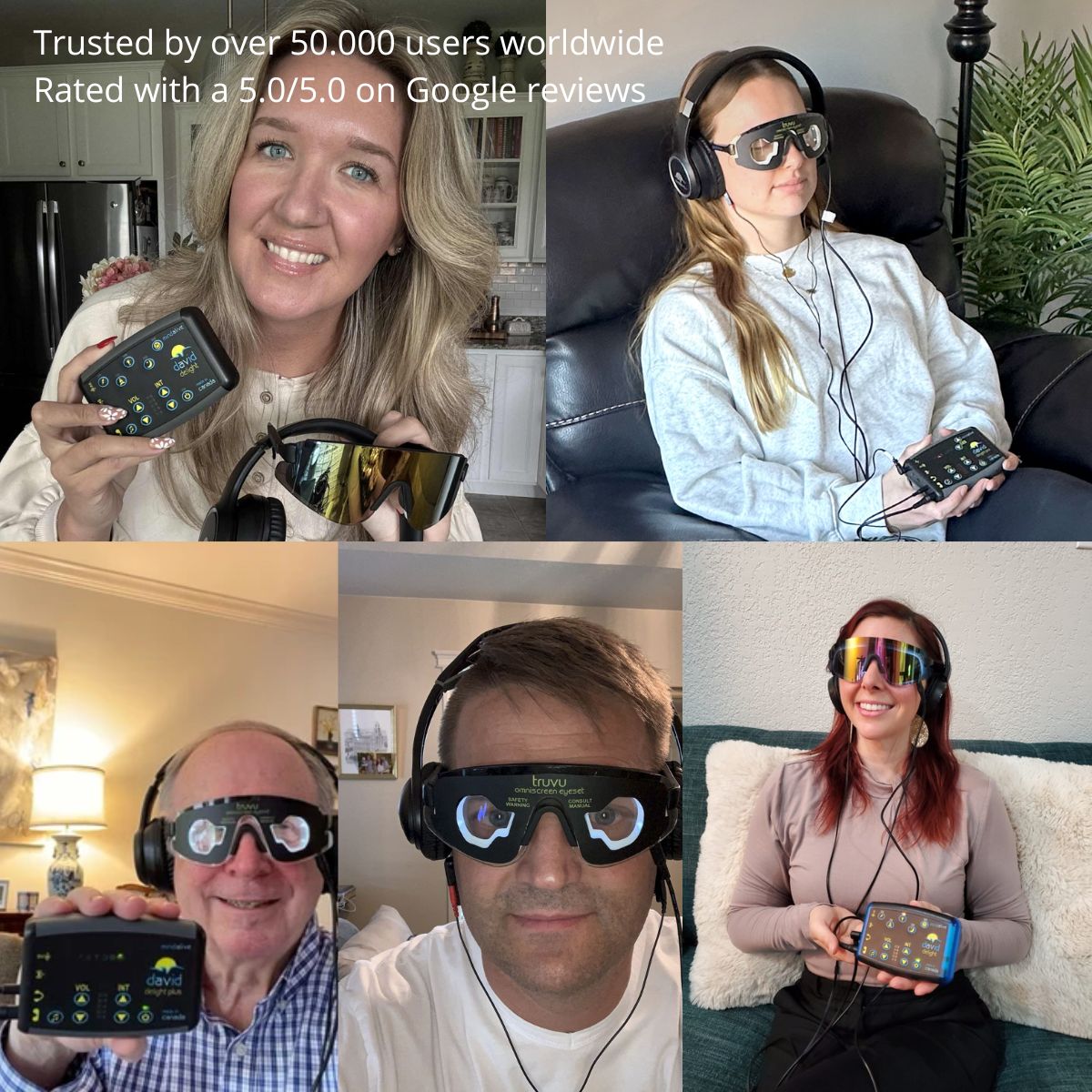
- Structured AVE systems such as DAVID devices can complement binaural beats by guiding the brain into lucid-friendly states with light and sound.
The Science of Binaural Beats
Binaural beats rely on a simple but powerful audio principle. When you listen to two slightly different pure tones—one in each ear—your brain doesn’t just hear two tones. It also perceives a third, “phantom” beat at the difference between them. For example, 200 Hz in one ear and 206 Hz in the other produce a 6 Hz binaural beat.
This perceived beat can encourage your brain’s electrical activity to resonate near that frequency, a process called brainwave entrainment. By choosing beats in specific ranges, we can gently nudge the brain toward states associated with relaxation, hypnagogia, and dream-like processing.
Brainwaves and States of Consciousness
Different frequency bands tend to be associated with different mental states:
| Brainwave Type | Frequency Range | Common Associations |
|---|---|---|
| Gamma | 30+ Hz | High-level processing, binding, peak focus |
| Beta | ≈12–30 Hz | Wakeful thinking, problem-solving, external focus |
| Alpha | ≈8–12 Hz | Relaxation, reflective awareness, creativity |
| Theta | ≈4–8 Hz | Light sleep, hypnagogia, dreaming, meditative imagery |
| Delta | ≈0.5–4 Hz | Deep sleep, physical restoration, unconscious processing |
Lucid dreaming usually occurs in REM sleep, where brain activity can include elements of theta, alpha, and sometimes beta. Binaural beats targeting theta and low alpha may help you hover at the edge of sleep long enough to recognize that you’re dreaming, or to re-enter a dream consciously during Wake-Back-To-Bed (WBTB) attempts.
The Connection Between Binaural Beats and Lucid Dreaming
How exactly might binaural beats support lucid dreams? There are a few leading hypotheses:
- State priming: Theta-range beats can promote a hypnagogic, dream-like state where imagery, memories, and emotions become more fluid—and where lucidity is more likely to arise.
- Enhanced coherence: By encouraging the brain to follow a specific rhythm, binaural beats may support more coherent neural firing patterns, which some theorize could help maintain awareness as you cross the sleep threshold.
- Relaxation + focus: Many people find that binaural beats make it easier to relax physically while keeping a gently focused mind—an ideal combination for lucid dreaming techniques that require “mind awake, body asleep.”
Benefits of Using Binaural Beats for Lucid Dreaming
Increased Self-Awareness and Dream Control
Lucid dreaming is fundamentally about metacognition: recognizing your own mental state while it’s happening. Binaural beats can help by:
- Promoting states where inner imagery becomes vivid and easier to observe.
- Helping you stay calm and non-reactive when you notice dream oddities.
- Supporting smoother transitions between waking, hypnagogia, and REM.
Over time, this can translate into more frequent moments of “Wait… this is a dream” and more stable control once you’re lucid.
Enhanced Creativity and Problem-Solving
Lucid dreams provide a sandbox where you can:
- Rehearse challenging conversations or scenarios.
- Explore creative ideas visually and kinesthetically.
- Interact with symbolic dream figures to gain perspective on waking issues.
Using binaural beats to help you reach and stabilize lucidity means you have more opportunities to leverage that dream “lab” for creativity and problem-solving.
Practical Techniques: How to Use Binaural Beats for Lucid Dreams
1. Choose the Right Frequency Range
For lucid dreaming support, most people experiment with:
- Theta (≈4–8 Hz): Supports hypnagogia, light sleep, and dream imagery.
- Low delta (≈1–3 Hz): Can deepen sleep and dream immersion; more useful when combined with WBTB approaches.
- Alpha (≈8–12 Hz) as a warm-up: Good for pre-sleep relaxation before switching to a theta track.
Always use stereo headphones for true binaural beats, and keep the volume at a comfortable, non-fatiguing level.
2. Create a Lucid-Friendly Sleep Environment
Your environment can make or break your results:
- Keep the room dark, cool, and quiet (earplugs or white noise if necessary).
- Reduce screens and bright light for at least 30–60 minutes before bed.
- Have your headphones and player ready to go so you don’t fully “wake up” while setting things up.
3. Combine with Core Lucid Dreaming Skills
Binaural beats are much more effective when combined with the fundamentals:
- Dream journaling: Record dreams as soon as you wake to strengthen recall and spot patterns.
- Reality checks: Test reality during the day (e.g., counting fingers, reading text twice) so the habit carries into dreams.
- Wake Back to Bed (WBTB): Wake after 4–6 hours of sleep, listen to a short theta/alpha track while staying drowsy, then return to bed with the intention to become lucid.
- MILD / affirmations: Mentally repeat phrases like “Next time I’m dreaming, I’ll realize I’m dreaming.”
Dream Recall: The Foundation of Lucidity
You can’t stabilize what you don’t remember. Strong dream recall is a core prerequisite for consistent lucid dreaming.
Why Dream Recall Matters
- It trains you to notice recurring themes, characters, and “dream signs.”
- It increases emotional investment in your dreams, which boosts motivation.
- It gives you feedback on whether your techniques—including binaural beats—are changing your dream life over time.
How Binaural Beats Fit In
Binaural beats themselves don’t automatically guarantee better recall, but they can:
- Encourage lighter awakenings out of REM (especially with WBTB), making recall easier.
- Support a calmer, more reflective pre-sleep mindset—ideal for setting dream recall intentions.
- Be paired with affirmations like “When I wake up, I’ll remember my dreams clearly.”
Common Challenges and How to Handle Them
Skepticism and High Expectations
It’s easy to hope binaural beats will be a “one-button lucid dream” solution. In reality, they’re one tool among many. Helpful, yes—but not magic. If you’re skeptical, take a pragmatic approach:
- Give yourself a specific trial period (e.g., 2–4 weeks) and track results in a journal.
- Pair binaural beats with at least one solid lucid dreaming technique (WBTB, MILD, reality checks).
- Compare dream recall, lucidity frequency, and dream vividness with and without the beats.
Discomfort, Headaches, or Restlessness
If you feel uncomfortable using binaural beats:
- Turn the volume down—many tracks are far more effective at low, subtle levels.
- Try different sound textures (pure tones vs. music vs. nature sounds).
- Limit exposure at first (e.g., 10–20 minutes during WBTB instead of all night).
Plateaus and Inconsistent Results
Lucid dreaming tends to come in waves. If you hit a plateau:
- Rotate between frequencies (e.g., different theta values) or switch to alpha for pre-sleep and theta only during WBTB.
- Refresh your daytime habits—stronger reality checks and mindfulness often bring lucidity back.
- Consider taking a short break from audio to avoid over-associating success with a single tool.
Safety and Limitations
Binaural beats are generally well tolerated, but there are some important considerations:
- People with a history of seizures, epilepsy, or serious neurological conditions should speak with a healthcare professional before using any rhythmic audio or light-based entrainment.
- If you notice persistent headaches, dizziness, or agitation, stop using the tracks and reassess.
- Avoid using binaural beats while driving or operating machinery; they are designed to change your mental state.
And finally, remember: lucid dreaming and binaural beats are not a substitute for addressing significant mental health concerns with a qualified professional.
Beyond Lucid Dreams: Personal Growth with Binaural Beats
Once you’re comfortable working with binaural beats for dream work, you can extend their use to other domains:
- Stress management: Alpha and theta beats can support deep relaxation and decompression after long days.
- Meditation: Binaural beats can help you reach meditative states more quickly and consistently.
- Focus blocks: Beta and SMR-range beats may be useful for concentration, studying, or creative sessions.
Lucid dreaming then becomes part of a wider toolkit for self-regulation, creativity, and self-knowledge.
Conclusion
Used thoughtfully, binaural beats can be a powerful ally in lucid dreaming work. They don’t replace the fundamentals—dream journaling, reality checks, timing strategies—but they can make those fundamentals easier to apply by nudging your brain into lucid-friendly states.
By experimenting with frequencies, refining your sleep environment, and pairing audio support with solid lucid dreaming techniques, you can gradually increase your dream awareness, control, and recall. Along the way, you’re not just “hacking sleep”—you’re engaging in a deeper exploration of consciousness and your own inner world.
If you like the idea of structured, hardware-based support alongside audio, Mind Alive’s AVE/CES systems are worth exploring. Devices such as the classic DAVID Delight Pro have helped many users prepare their brains for relaxation, focus, and sleep. And if you’re looking for the newest evolution of that platform, DAVID Premier is the next step: a more recent and more capable successor to the Delight Pro, with additional sessions, expanded categories, and more possibilities for tailoring your mind-state training—including the wind-down periods that are so important for lucid dreaming.
FAQ
What are binaural beats in simple terms?
Binaural beats occur when you listen to two slightly different tones—one in each ear. Your brain perceives a third “beat” at the difference between them, which can gently steer your brainwaves toward that frequency.
Which frequencies are best for lucid dreaming?
Theta (around 4–8 Hz) is most commonly used for lucid dreaming support, sometimes combined with alpha (8–12 Hz) for relaxation and light delta (1–3 Hz) for deeper sleep immersion. Exact preferences vary by person, so some experimentation is useful.
Do binaural beats guarantee lucid dreams?
No. They can support the right conditions for lucidity, but you still need core skills like dream recall, reality checks, and intention-setting. Think of binaural beats as an amplifier for good technique, not a replacement.
When should I listen to binaural beats for best results?
Many people have success using them during Wake-Back-To-Bed (after 4–6 hours of sleep) or in the 20–40 minutes before going to sleep, paired with lucid dreaming intentions and affirmations.
How does DAVID Premier compare to older devices like DAVID Delight Pro?
DAVID Delight Pro is a well-known AVE platform with proven relaxation, focus, and sleep sessions. DAVID Premier is the newer, more advanced version, offering a larger session library, more categories (including refined relaxation and sleep protocols), and more options overall. If you’re deciding where to start today, Premier gives you everything Delight Pro offered and then extends it with extra sessions and possibilities.