

The Brainwaves Behind Anxiety
Yrian BrugmanWhy Your Nervous System Won’t Switch Off
Anxiety doesn’t always look like panic. For many people it looks like overthinking, restlessness, shallow breathing, a tight chest, fast heartbeats, irritability, insomnia, or a constant sense that something is “off” — even on calm days. They try therapy, journaling, breathing exercises, supplements, and medication. Some improve, but many still feel like their system never truly settles.
A missing piece is rarely explained in plain language: anxiety is often a rhythm problem in the brain, not only a thought problem in the mind. Brainwaves shape how easily the nervous system can return to safety. When they stay locked in high-alert patterns, anxiety becomes a baseline rather than an occasional response.
Why Anxiety Keeps Returning (Even When Life Is “Fine”)
The brain constantly shifts between states: alert focus, calm focus, relaxation, and deep recovery. These states are supported by different brainwave patterns. When the nervous system is conditioned by stress, trauma, overload, or prolonged uncertainty, it can stay in faster patterns associated with vigilance.
That’s why you can have a good day and still feel anxious. Your environment may be safe — but your brain’s rhythm is still running a “threat-ready” program.
Anxiety often isn’t a choice.
It’s a nervous system that hasn’t relearned how to downshift.
When the Brain Stays in High-Frequency Mode, the Body Reacts
High-frequency brain activity is useful when you’re solving problems, driving, or responding to danger. But when it becomes chronic, the body starts acting as if danger is always nearby.
- breathing becomes shallower
- muscles stay tense
- sleep becomes lighter
- heart rate becomes more reactive
- the mind becomes more “sticky” to worst-case thinking
Over time, this creates a loop: bodily arousal triggers worry, worry increases arousal, and the system reinforces itself. That’s why “just think positively” rarely works. The body is already signaling threat.
Why Medication Helps — and Why Many Still Don’t Feel Calm
Medication can be essential. SSRIs, SNRIs, beta-blockers, and short-term anxiolytics can reduce intensity, stabilize mood, and give people room to function. That matters.
But a common experience sounds like:
“My anxiety is reduced, but my body still feels tense.”
“I’m more stable, but I’m not relaxed.”
“My thoughts are quieter, but I still feel wired.”
A practical way to understand this is: medication can change chemistry, but it doesn’t always retrain rhythm. Many people still need a direct way to guide brainwave patterns out of high alert and into calmer states — consistently, safely, and repeatably.
Why People Feel Like They’ve Tried Everything
People with persistent anxiety usually aren’t passive. They work hard. They try:
- therapy and CBT tools
- breathwork, meditation, vagal techniques
- exercise, cold exposure, lifestyle changes
- sleep protocols and supplements
- binaural beats and relaxation audio
These can all help — but many don’t directly influence the brainwave patterns that determine whether the nervous system can downshift at all.
The Brainwave Pattern Anxiety Often Reflects
Anxiety is not “one brainwave.” But many people with persistent anxiety show signs of an over-activated system: too much time in fast, vigilant patterns and too little time in calmer rhythms.
| Brainwave Pattern | What it supports | When it becomes a problem | How it feels |
|---|---|---|---|
| High Beta (fast alert rhythm) | Urgency, problem-solving, vigilance | Becomes chronic and “stuck” | Restlessness, racing thoughts, tension |
| Low Beta (focused engagement) | Healthy focus and task execution | Gets overridden by high-alert activity | Hard to concentrate, easily overwhelmed |
| Alpha (calm readiness) | Relaxed focus, downshift signal | Too little alpha time, especially in evenings | Hard to relax, trouble switching off |
| Theta (deeper relaxation) | Recovery, emotional processing, sleep entry | Disrupted by hyperarousal | Light sleep, night waking, emotional sensitivity |
The goal isn’t to “eliminate” fast rhythms. The goal is flexibility — the ability to shift out of high alert when the moment doesn’t require it.
Why Binaural Beats Often Don’t Move the Needle Enough
Audio-only tools can help some people, especially with mild tension. But persistent anxiety tends to require a stronger, more consistent signal. Binaural beats rely on subtle auditory illusions and are highly variable between people and sessions.
When a nervous system is deeply conditioned into hyperarousal, subtle cues often aren’t enough to produce a repeatable shift. What helps more reliably is a structured, multimodal approach — something the brain can follow without effort.
A Clearer Approach: Structured Brainwave Entrainment
The brain has a natural frequency-following response: it can synchronize with rhythmic external inputs. When light and sound stimulation are combined and structured into goal-based protocols, the signal becomes clearer — and the nervous system can downshift more predictably.
This can support:
- reducing baseline arousal
- improving sleep quality (which directly reduces anxiety load)
- building daily “downshift capacity”
- helping the body feel safe enough to relax
The DAVID Premier: Helping the Nervous System Relearn Calm
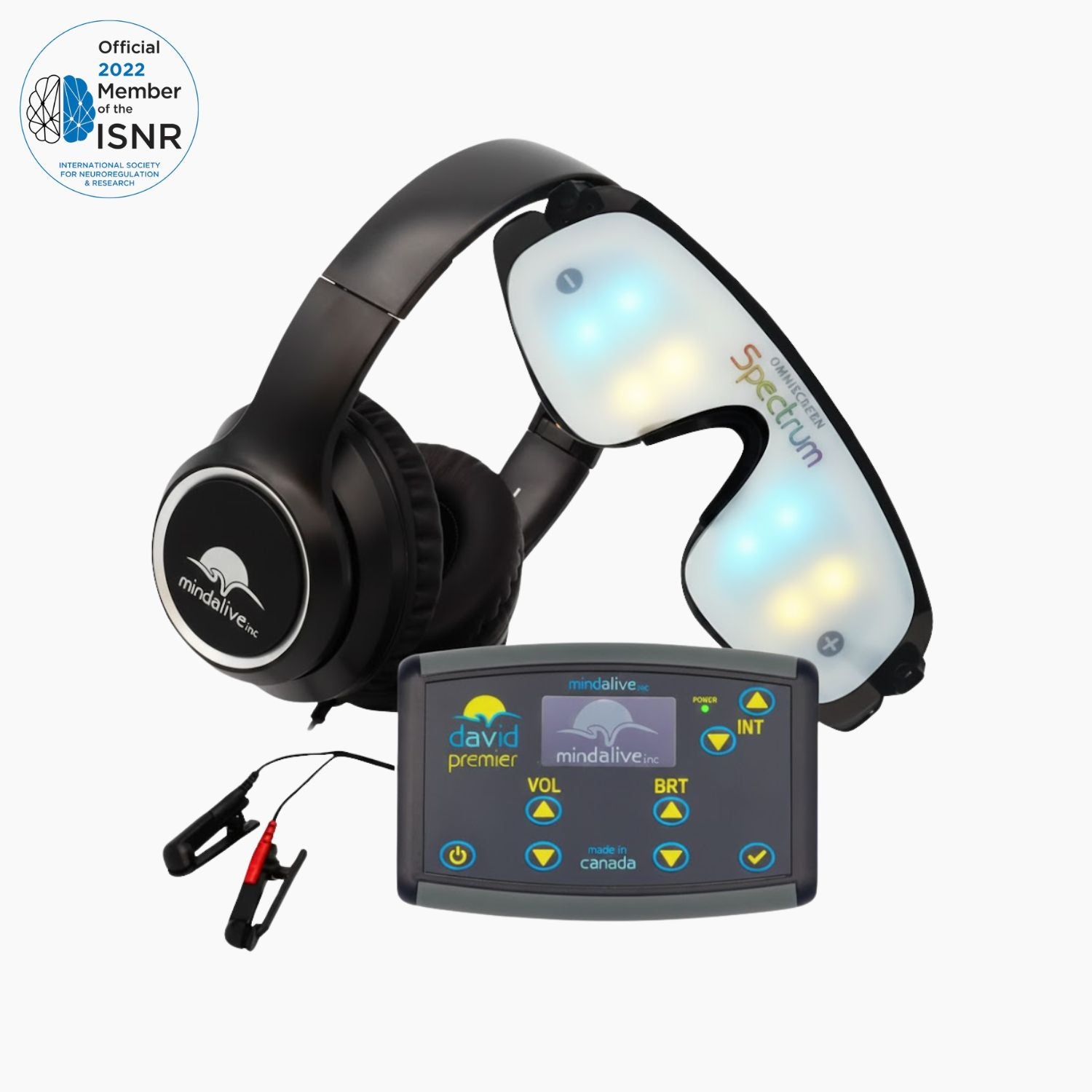
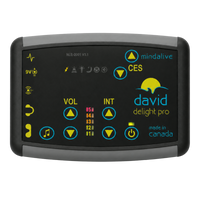
The DAVID Premier is designed to guide brainwaves through synchronized light and sound stimulation, with optional CES support, using structured sessions for stress regulation, sleep support, focus, and mood stability.
It doesn’t replace therapy or medication. It supports the physiological foundation that makes those tools work better: a nervous system that can downshift out of high alert.
For people who feel like they’ve tried everything, the difference is often simple: instead of forcing calm with effort, they finally get a signal their brain can follow.
Explore DAVID Premier