

The Complete Guide to Brainwave Synchronization
Yrian BrugmanWritten by MindAlive – 35 years of brainwave entrainment, 5× awarded for innovation in neurotechnology.
You're personal guide to balance starts here
Every thought, emotion and mental state is powered by electrical rhythms in your brain called brainwaves. When these rhythms fall out of balance — due to stress, poor sleep, anxiety or overwhelm — you feel mentally scattered, fatigued or unable to focus.
Brainwave synchronization is the process of bringing these rhythms back into harmony so your brain works smoothly again.

What Is Brainwave Synchronization?
It’s the alignment of neural oscillations across different parts of the brain. In simple terms: multiple brain regions begin “playing in the same rhythm.”
When your brainwaves synchronize, thinking becomes clearer, the mind becomes quieter, and stress pathways relax automatically.
Synchronization can occur naturally — during meditation, deep sleep or flow states — but technology can accelerate and strengthen the process.
Why Synchronization Matters for Mental Health
When the brain is desynchronized, people often experience:
- racing thoughts
- difficulty focusing
- poor sleep quality
- increased anxiety
- mental fatigue
- emotional volatility
Synchronization brings coherence and calmness back into the system, allowing the mind to function optimally.
How Synchronization Works (Simple Explanation)
Synchronization happens when rhythmic sensory input causes large groups of neurons to fire together at the same pace — a phenomenon called entrainment.
Technologies like audiovisual entrainment (AVE) use rhythmic pulses of light and sound to trigger this effect, guiding the brain into stable, harmonic frequencies.
The Five Main Brainwave States (Table)
Below is an easy reference table showing how synchronized brainwaves relate to different mental states.
| Brainwave | Frequency Range | Mental State (When Synchronized) |
|---|---|---|
| Delta | 0.5 – 4 Hz | Deep sleep, healing, restoration |
| Theta | 4 – 7 Hz | Meditation, creativity, emotional release |
| Alpha | 8 – 12 Hz | Relaxed alertness, stress reduction |
| Beta | 13 – 30 Hz | Focus, thinking, cognitive performance |
| Gamma | 30 – 100 Hz | High-level insight, processing, peak performance |
Why Synchronization Often Fails Without Support
The brain does try to synchronize on its own — but stress, screens, poor sleep and pressure disrupt this natural process.
Most people live in a chronically desynchronized state without realizing it.
This is why meditation apps or binaural beats feel inconsistent. They rely on the brain to already be calm and receptive — which most people are not.
What Actually Creates Strong Synchronization?
The strongest synchronization occurs when the brain is guided by clear, rhythmic external input. Research shows that:
- sound entrains moderately
- light entrains strongly
- light + sound together entrain the brain most powerfully
This combined method is called audiovisual entrainment (AVE) — the foundation of MindAlive devices.
Evidence: The NIH on Synchronization & Entrainment
The NIH review found that multisensory brainwave entrainment leads to stronger synchronization and greater improvements in:
- stress reduction
- focus
- sleep depth
- cognitive processing
- emotional balance
How the DAVID Premier Creates Brainwave Synchronization
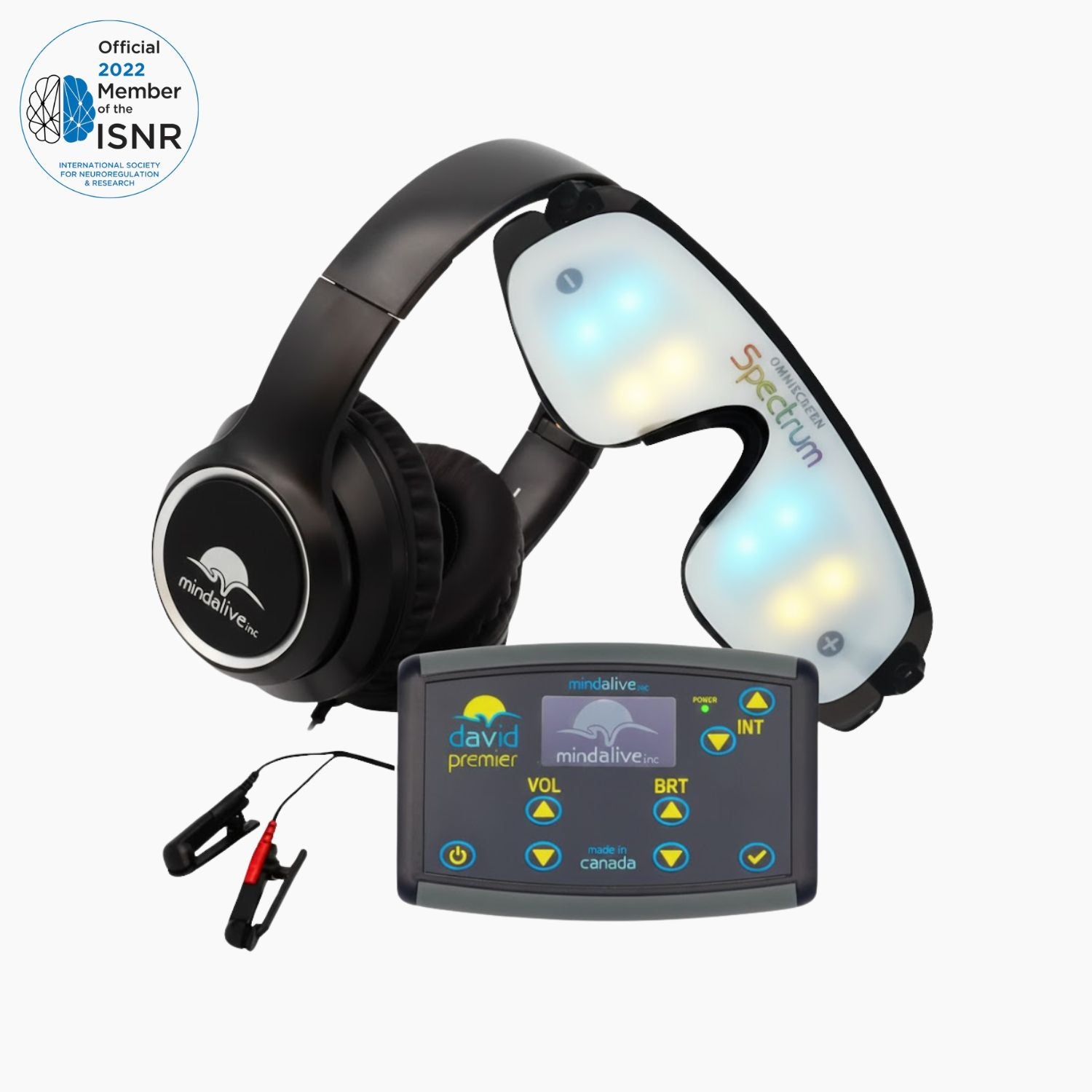
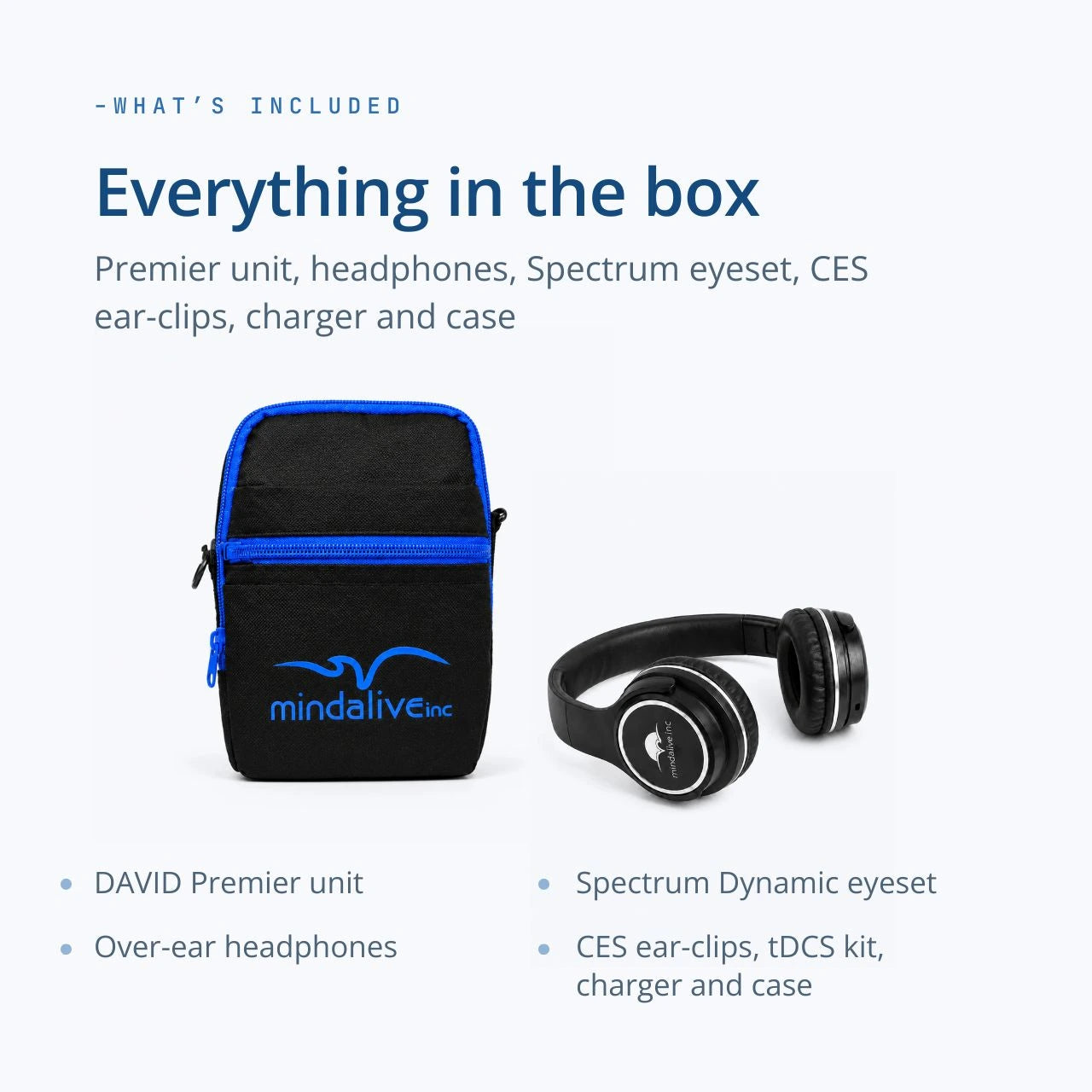
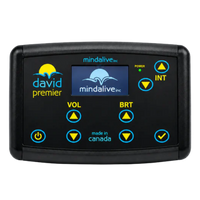
The DAVID Premier combines flashing LED light with pulsed audio to guide the brain into synchronized, healthy rhythms. This stimulates:
- the visual cortex
- the auditory cortex
- the thalamus (rhythm coordination center)
- the corpus callosum (left/right hemisphere harmonization)
- brainstem networks
Together, these systems begin firing in a unified pattern — the core of brainwave synchronization.
Dozens of studies confirm this effect: Scientific Studies on the DAVID Devices.

What People Typically Feel During Synchronization
Users often describe sensations such as:
- a quiet mind
- a gentle shift into calm
- better focus without effort
- a warm or floating feeling
- deeper emotional regulation
- more stable energy throughout the day
Your Brain Wants to Synchronize — It Just Needs the Right Signal
When the brain receives strong, rhythmic stimulation, synchronization becomes easy, predictable and consistent.
This is why AVE is used by therapists, clinicians and high-performing professionals across the world.
Start Synchronizing Your Brain the Right Way
If you want calmer thoughts, better sleep, emotional clarity and stronger cognitive function, brainwave synchronization may be the missing step.
Explore the DAVID Premier