



The science of calm
Why the modern mind struggles to switch off, and how light and sound may help it find calm
We're wired for alertness. Here's what the research says about guiding the brain back toward rest, gently and without medication.
It's a quiet complaint you hear almost everywhere now: the day is finally over, the lights are off, and the mind simply won't follow. For a lot of people, "switching off" has quietly become the hardest part of the day.
It isn't a character flaw, and it usually isn't a lack of trying. It's biology. The nervous system is built to keep us alert, and modern life keeps that alert system switched on far longer than it was ever designed to be.
The brain doesn't have a simple "off" switch
Your brain moves between states all day, from alert and focused to calm and reflective to deeply rested. Those states show up as different patterns of electrical activity, or brainwaves: faster when you're "on," slower as you wind down.
The problem is that a nervous system stuck on high alert struggles to make that shift on command. Willpower doesn't move brainwaves. But, as researchers have explored for decades, rhythmic light and sound can gently nudge them.
Willpower doesn't move brainwaves. Rhythmic light and sound can guide them.
How light and sound guide the brain
The method is called audio-visual entrainment (AVE). The idea is simple: present the brain with a steady rhythm of soft light and sound, and brainwave activity tends to fall into step with that rhythm, a little like how a slow, even breath can settle a racing heart.
It isn't new. The principle has been studied since the 1980s, and it's the foundation of a small, quiet device category that's been used in clinics and homes ever since.
The device built around it
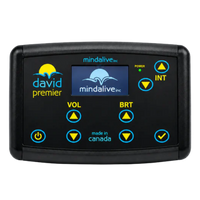
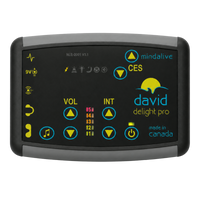
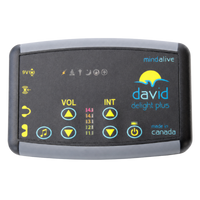
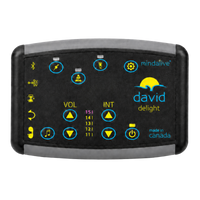
One of the most established devices built on this principle is DAVID, made by Mind Alive, a company researching brain entrainment since 1981.
A DAVID is about the size of a paperback. You put on a pair of light-and-sound glasses and headphones, choose a session, and sit back for a few quiet minutes. Gentle pulses of light and tone do the rest. The more advanced models add CES, a barely-perceptible microcurrent also used in clinical settings. Every session is drug-free, and designed to support calm, focus and better sleep, naturally.
What a session actually feels like
There is nothing to learn and nothing to force. You sit down, close your eyes, and soft pulses of light begin to move behind your eyelids while a matching tone plays through the headphones. Within a minute or two, most people feel their attention stop racing and start to settle.
Some drift close to sleep. Others come away feeling clear and quietly alert, the way you might after a short walk or a few slow breaths. There is no jolt and no comedown. You simply give your nervous system a calm rhythm to follow, and it tends to follow.
What the research suggests
In small studies and pilots, audio-visual entrainment has been associated with measurable shifts:
- Average sleep onset falling from around 40 minutes to 23.
- A stress-protective protein nearly doubling in a small pilot.
- Average depression scores moving back toward the healthy range.
These are early, modest findings, not a promise of results. They help explain why the approach has held clinical interest for so long.
Not a gadget that appeared overnight
DAVID is the product of 35+ years of research, used in over 1,000 clinics, and trusted by clinicians and researchers who put their own names behind it, from neurofeedback specialists to Olympic athletes such as Catherine Garceau and Marissa Ponich, who use it as part of their own routines.
When the mind won't switch off, the answer usually isn't trying harder. It may be giving the nervous system the gentle, rhythmic cue it's been missing.
For a lot of people, that small shift is what finally makes calm feel reachable on an ordinary evening, without one more thing to push through.
30-day money-back trial · 1-year warranty · free shipping on orders over $800
This article is educational and is not medical advice. DAVID is designed to support general wellbeing and is not intended to diagnose, treat, cure or prevent any disease. Individual experiences vary.