

AVE, CES, tDCS & MET Explained
Mind AliveThe Complete Guide to Neurostimulation: AVE, CES, tDCS & MET Explained
If you’re new to neurostimulation technologies, terms like AVE, CES, tDCS and MET can sound abstract or overly technical. This in-depth guide breaks down what each technology does, how it works on the brain, and when it’s typically used—so you can understand the differences quickly and clearly.
• AVE uses pulsed light & sound to guide brainwave states.
• CES uses gentle ear-clip currents to modulate mood and arousal.
• tDCS uses constant direct current to prime specific brain regions.
• MET uses micro-currents for ultra-low-intensity stimulation and relaxation.
1. Audio-Visual Entrainment (AVE)
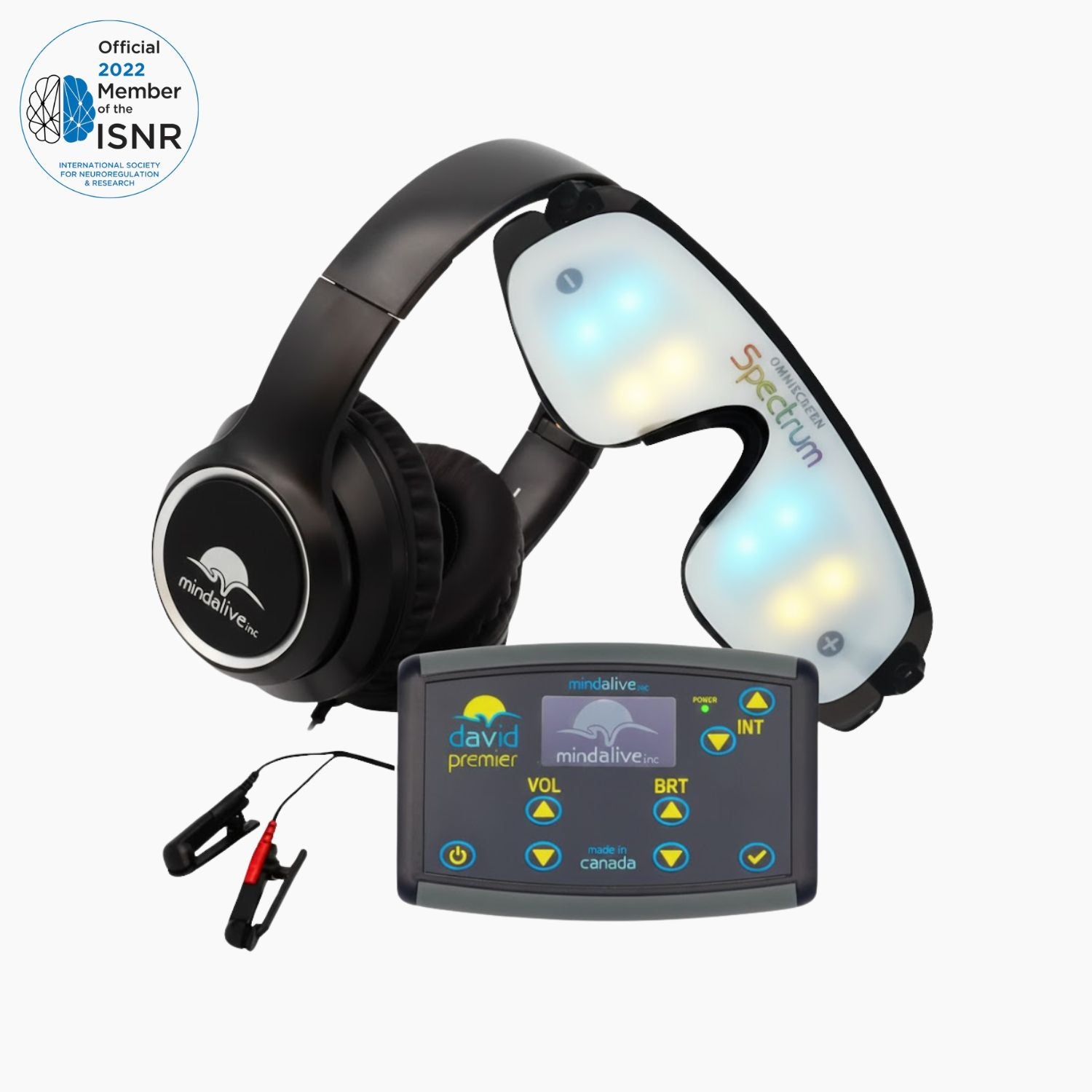
Audio-Visual Entrainment (AVE) uses rhythmic pulses of light (via goggles) and sound (via headphones) to guide the brain into specific frequency states. These pulses entrain or “pull” brain activity toward the target frequency through a phenomenon called frequency following response.

How AVE Works
- Light stimulation: LED flashes at controlled frequencies (e.g., alpha 10 Hz for relaxation).
- Auditory stimulation: Pulsed tones reinforce the same frequency.
- Brainwave entrainment: The brain synchronizes to the external stimulus.
AVE is most often used for: relaxation sleep prep focus meditation stress reduction
2. Cranial Electrotherapy Stimulation (CES)
Cranial Electrotherapy Stimulation (CES) uses micro-current delivered through ear-clip electrodes to influence brain activity and autonomic balance. Unlike AVE, which uses sensory entrainment, CES uses direct low-level electrical signaling.

How CES Works
- Delivers ~100–600 μA micro-current via earlobes.
- Modulates limbic activity and neurotransmitter dynamics.
- Supports parasympathetic activation.
CES is commonly associated with: mood regulation stress resilience calming
3. tDCS (Transcranial Direct Current Stimulation)
tDCS applies a constant, low-intensity direct current (usually 1–2 mA) through scalp electrodes to alter cortical excitability in targeted areas. It does not cause neurons to fire; instead, it shifts membrane potentials to make regions more or less likely to activate.

How tDCS Works
- Anodal (positive) electrode = increases excitability.
- Cathodal (negative) electrode = decreases excitability.
- Placement = critical because stimulation is region-specific.
Often used for: cognitive enhancement focus motor learning executive control
4. MET (Micro-current Electrical Therapy)
Micro-current Electrical Therapy (MET) uses extremely low-intensity currents (typically below sensory threshold) to support systemic relaxation and autonomic regulation.

How MET Works
- Uses currents in the micro-amp range (smaller than CES or tDCS).
- Aims to normalize electrical patterns and autonomic tone.
- Can be applied cranially or elsewhere depending on the system.
MET is associated with: deep relaxation autonomic balance gentle neuromodulation
Comparison Table: AVE vs CES vs tDCS vs MET
| Technology | Stimulation Type | Main Targets | Feels Like | Best For |
|---|---|---|---|---|
| AVE | Light + sound pulses | Global brainwave states | Flashing lights & tones | Relaxation, focus, sleep prep |
| CES | Ear-clip micro-current | Limbic & parasympathetic systems | Tingling (mild) or barely noticeable | Mood, calm, stress relief |
| tDCS | 1–2 mA direct current | Specific cortical regions | Mild itch or warmth | Cognition, focus, motor learning |
| MET | Ultra-low micro-current | Autonomic and subtle regulatory pathways | Generally not perceptible | Deep relaxation, gentle modulation |
When Should You Use Each Technology?
- If you want to shift your mental state quickly (calm, focus, alertness): choose AVE.
- If you want emotional regulation or deep relaxation: choose CES.
- If you want to target a specific brain region for cognitive enhancement: choose tDCS.
- If you want a gentle, subtle biological modulation: choose MET.
FAQ
Is AVE safe for daily use?
Yes—most users can safely apply AVE daily or even multiple times per day, depending on the session type.
Is CES the same as tDCS?
No. CES uses micro-currents to affect mood and arousal, while tDCS uses higher currents to modulate specific cortical regions.
Can these technologies be combined?
Some devices allow stacking (e.g., AVE + CES). However, tDCS should generally be used separately unless guided by professional protocols.