

The 3PM Energy Slump: A 20-Minute Fix
Yrian BrugmanThe 3pm energy slump is a real, predictable dip in alertness that hits most desk workers between roughly 1pm and 4pm, and it gets worse the more you fight it with sugar and extra coffee. This article explains why the dip happens, why the usual quick fixes tend to make the next one worse, and how a short light and sound session may support afternoon alertness without adding another stimulant to your system.
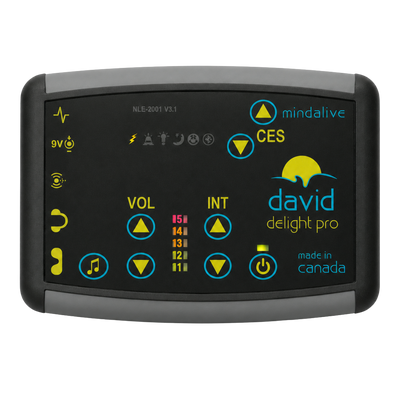
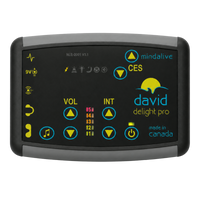
If you want a device built for exactly this kind of short daily session, the DAVID Delight Pro combines audio-visual entrainment (AVE) with CES ear-clips in one unit, and it is the model most Mindalive customers choose for daily use at a desk or in a home office.
See the DAVID Delight ProKey Takeaways
- The afternoon dip is partly circadian (a natural low point in alertness) and partly the result of sleep debt, blood sugar swings and long stretches of screen-focused attention.
- Caffeine and sugar can mask the dip for thirty to sixty minutes, then tend to hand back a sharper crash later in the afternoon.
- Audio-visual entrainment sessions using alpha, SMR and beta patterns have been studied for their effects on mood, arousal and cognitive performance.
- A twenty-minute session at your desk, taken before the dip sets in rather than after, is easier to build into a workday than a nap.
- This is a routine to test for two or three weeks, not a one-time fix, since entrainment sessions build on repetition.
Why Your Energy Crashes at 3pm
The dip has a name in sleep research: the post-lunch trough, part of a broader pattern called the circadian rhythm of alertness. Your body temperature and cortisol naturally ease off in the early afternoon, independent of what you ate for lunch. Layer on a poor night of sleep, a heavy carbohydrate lunch, or three hours of back-to-back video calls, and the dip becomes a wall.
None of this means something is wrong with you. It means your nervous system has spent the morning in a high-beta, high-vigilance state and is asking for a change of pace. The problem is that most people answer that request with more stimulation rather than a genuine shift in brain state.
Why Reaching for Coffee Doesn't Fix It Long-Term
A second coffee or an energy drink at 2:30pm does work, briefly. Caffeine blocks adenosine, the molecule that signals tiredness to your brain, so the tired feeling is delayed rather than resolved. The adenosine keeps building in the background, and when the caffeine clears, the crash tends to land closer to 5pm, right when you still need to finish the day and drive home.
There is also a knock-on cost. Caffeine taken after early afternoon has a long half-life and can still be active in your system at bedtime, which chips away at sleep quality that night and sets up a rougher slump the next day. Tang, Riegel, McCurry and Vitiello (2015) studied audio-visual entrainment as a non-drug approach to insomnia in older adults, and one of the more useful findings for anyone managing daytime energy is how tightly next-day alertness is tied to the quality of the previous night's sleep, not just its length.
What the research looked at: Huang and Charyton's 2008 meta-analysis of audio-visual entrainment studies found consistent associations between AVE sessions and improvements in self-reported mood, cognitive performance and reduced anxiety across the trials reviewed. AVE is not a medical treatment for fatigue or sleep disorders, but it has been studied for its effects on brain state and arousal.
What a Twenty-Minute Light and Sound Session Does Instead
Audio-visual entrainment works by pairing pulsed light through closed-eye glasses with pulsed tones through headphones, at frequencies designed to guide the brain toward a target state. For an afternoon slump, the goal is usually not deep relaxation, which can leave you groggy, but a session built around alpha and SMR (sensorimotor rhythm) patterns to ease tension, followed by a beta segment to lift alertness before you go back to work.
Berg and Siever (2009) studied AVE protocols combining these bands for symptom relief in stress-related complaints, and the general principle, that a calm-then-alert sequence tends to outperform a single flat frequency, is one that shows up across the DAVID device programming as well.
| Fix | Time cost | Common after-effect | Works at a desk |
|---|---|---|---|
| Second coffee | 2 minutes | Sharper crash later, possible sleep disruption | Yes |
| Sugary snack | 2 minutes | Blood sugar dip within the hour | Yes |
| 15-minute walk | 15 minutes | Mild, temporary lift | Only if you can step away |
| 20-minute nap | 20 to 30 minutes | Grogginess if you sleep too deep | Rarely, needs a quiet space |
| AVE session (alpha, SMR, beta) | 20 minutes | None reported in the studies reviewed here | Yes, with closed-eye glasses and headphones |
The 20-Minute Afternoon Protocol
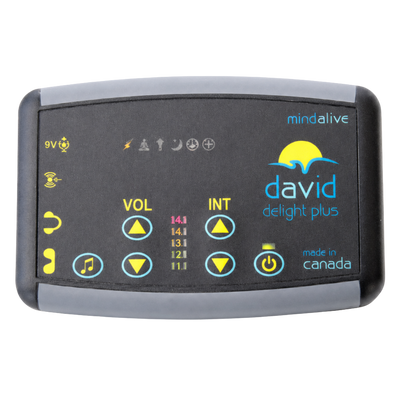
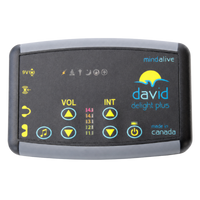
This is the sequence Mindalive customers most often describe using with a DAVID Delight Pro or DAVID Delight Plus between 1pm and 2:30pm, before the dip fully sets in.
- Block twenty minutes on your calendar before your energy typically drops, rather than waiting until you already feel flat.
- Find a chair where you can sit upright with your back supported. AVE sessions are usually done seated, not lying down, to avoid drifting into sleep.
- Put on the closed-eye glasses and headphones and choose a session built around alpha and SMR frequencies for the first stretch.
- Let the session run its full length without checking your phone. The point is a genuine break from screen-driven beta activity.
- If your device offers it, let the program step up into a beta segment for the final few minutes to support the return to alert, task-focused thinking.
- Stand up, get some daylight or a glass of water, and go back to work. Track how you feel at the same time the next day.
Which Sessions to Choose and Why
DAVID devices ship with pre-set sessions labelled by their target brainwave pattern, which makes this easier than programming your own frequencies.
- Alpha sessions are associated with a relaxed, non-drowsy wakefulness, useful as the opening stretch of an afternoon session.
- SMR (sensorimotor rhythm) sessions sit near the alpha-beta border and have been used within protocols aimed at calm, stable attention.
- Beta sessions target a more alert, engaged state and work well as a short closing segment before you return to focused work.
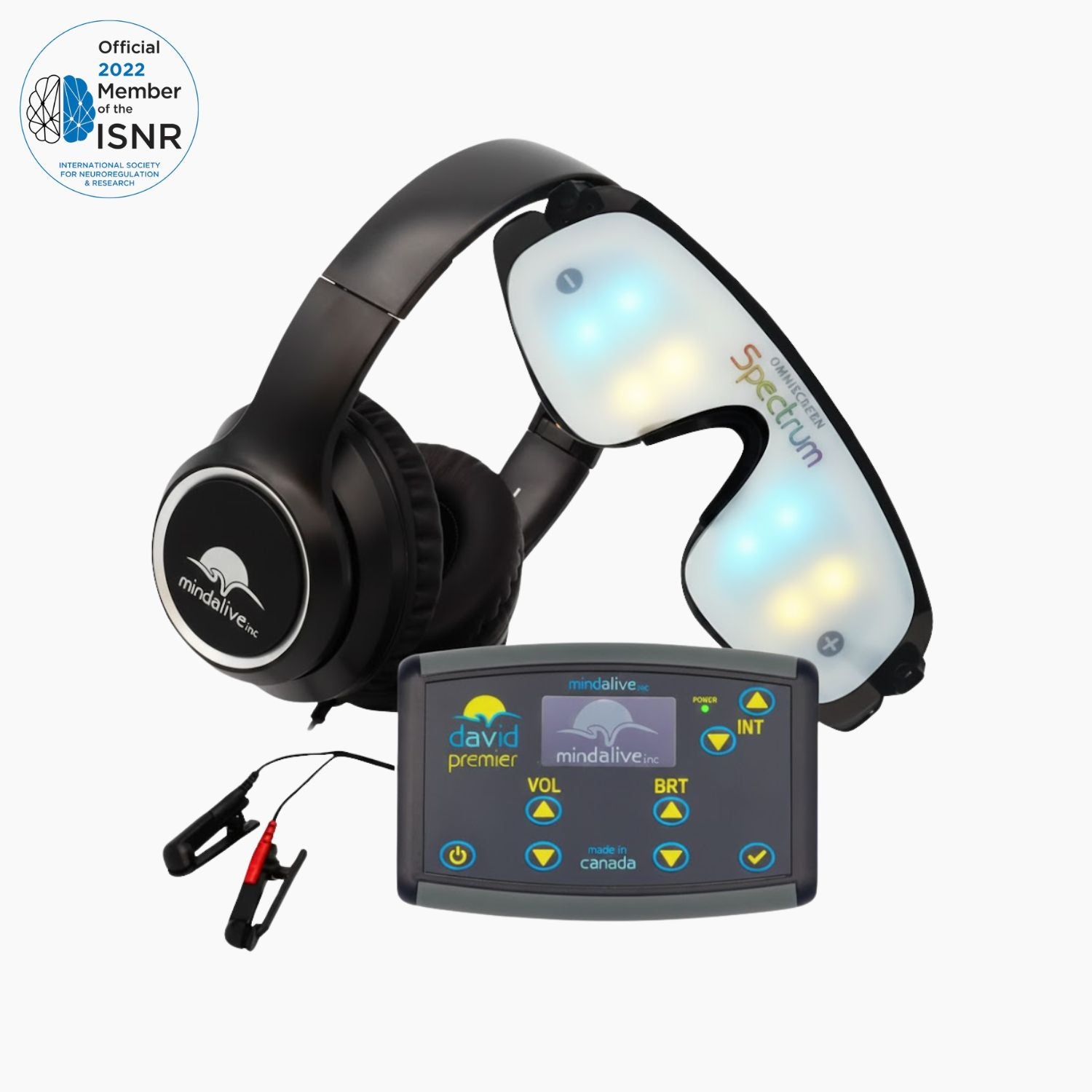
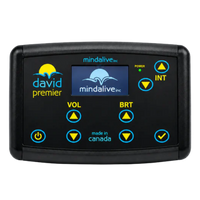
Roberts et al (2018) reviewed AVE approaches across a range of applied settings and noted that session sequencing, not just the frequency itself, appeared to matter for how participants felt afterward. That is consistent with why the DAVID Delight Pro and DAVID Premier both offer multi-stage sessions rather than a single fixed tone.
Building the Habit Into a Real Workday
The biggest obstacle to any afternoon routine is not the device, it is the calendar. A few practical notes from customers who have kept this going for months rather than weeks:
- Anchor the session to something fixed, like right after lunch or right before your first afternoon meeting, rather than an open-ended "whenever I feel tired."
- Keep the device at your desk or in a drawer, not in a bag you have to dig through. Friction kills habits faster than lack of motivation.
- Use headphones you already like, since the tone quality affects how easy the session is to sit through.
- Expect the first few sessions to feel unremarkable. Entrainment effects tend to build with regular use over two to three weeks rather than appearing on day one.
Not for people with a history of photosensitive epilepsy or seizures, or anyone with an implanted electronic device. If either applies to you, or you are managing a diagnosed condition, talk to a clinician before starting AVE or CES sessions.
FAQ: The 3pm Energy Slump
Is the afternoon energy dip the same for everyone?
The timing varies by a couple of hours depending on your own sleep schedule and chronotype, but the underlying circadian dip in alertness is a documented pattern for most adults, not something unique to bad sleepers.
Can a light and sound session replace sleep I'm missing?
No. AVE is not a substitute for adequate nightly sleep, and it is not marketed as a treatment for sleep disorders. It is a short daytime tool that may support alertness within the day you are already in.
Do I need the CES ear-clips for an afternoon session, or is light and sound enough?
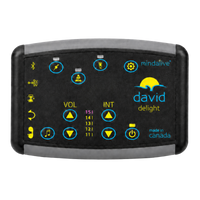
Light and sound alone, available on the DAVID Delight and DAVID Delight Plus, covers the alpha, SMR and beta sessions described here. The CES ear-clips on the DAVID Delight Pro are an additional option some people layer in during more stress-focused sessions, not a requirement for an afternoon protocol.
How long before I notice a difference?
Individual response varies and Mindalive cannot promise a specific timeline, but customer feedback and the research reviewed above both point to a pattern of building benefit over repeated sessions rather than a single use.
Is it safe to do this every workday?
Most DAVID sessions are designed for daily use as part of a routine. The exceptions are the safety notes above regarding photosensitive epilepsy, seizure history and implanted electronic devices.
What if I fall asleep during the session?
It happens, especially early on when sleep debt is high. It is not harmful, but if it happens most days, that is a signal your sleep debt needs addressing directly, and an evening routine such as the one in our guide on how to stop your mind from racing at night may be more useful than an afternoon one.
Can I do this at my desk with coworkers around?
Many customers use closed-eye glasses and headphones at their desk during a lunch break or a blocked-off slot, similar to stepping away for a phone call. It is worth checking your workplace's own norms around visible headsets during work hours.