

Stress for Shift Workers: A Brainwave-Based Routine
Yrian BrugmanStress for shift workers builds differently than ordinary workday stress. The body's internal clock expects daylight to mean activity and darkness to mean rest, and a rotating or night schedule asks it to do the opposite, week after week. Over time this mismatch shows up as a wired, overtired feeling that caffeine cannot quite fix and that a normal bedtime routine does not reach. This guide looks at why shift work stress feels different from other stress, what happens to brainwave activity across a rotation, and a short daily routine that fits around unpredictable hours.
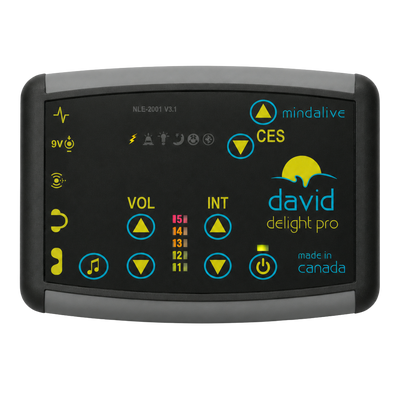
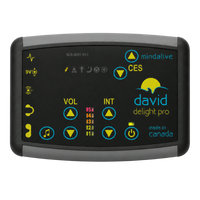
Audio-visual entrainment (AVE) and cranial electrotherapy stimulation (CES) are used within protocols that support relaxation and may help the nervous system settle into rest more easily, which is often what shift workers are missing most. The DAVID Delight Pro combines both in a single device small enough to use at home before or after a shift.
See the DAVID Delight ProKey Takeaways
- Shift work stress is driven by circadian misalignment, not just workload, so the fix has to target the body's internal clock, not only mood.
- AVE and CES sessions are studied for supporting relaxation and may help shorten the wind-down period after a shift ends.
- Timing matters more than intensity: the same session used before sleep after a night shift works differently than one used to recover alertness before a day shift.
- A short, repeatable routine works better for rotating schedules than a long one that depends on a fixed time of day.
- DAVID is not a medical device for treating disease; it is one part of a broader approach to managing shift work stress alongside sleep hygiene and light exposure.
Why Shift Work Stress Is Different
Most stress advice assumes a fairly stable day: wake in the morning, work during daylight, wind down at night. Shift workers do not get that structure. A rotation that swings between day, evening and night shifts forces the body to adjust its internal clock repeatedly, and that clock does not reset quickly. Cortisol, the hormone that should rise in the morning and fall at night, often stays elevated at the wrong times, which is part of why many shift workers describe feeling tired and wired at once.
This is not a willpower problem. The signal telling the brain when to be alert and when to rest is out of sync with the clock on the wall, which is why ordinary tools, caffeine, naps, bright lights, often only half work.
What Happens to Brainwave Activity Across a Rotation
Across a typical day, a well-rested brain shifts through recognizable patterns: alert beta activity during focused work, more relaxed alpha activity during downtime, and slower theta and delta activity during sleep. Shift work disrupts the timing of these shifts rather than the patterns themselves. A worker coming off a night shift may still be carrying high-frequency beta activity into the hours when the body should be moving toward sleep, which makes falling asleep in daylight harder even when the body is exhausted.
This is the gap that light and sound sessions are designed to work with. By guiding brainwave activity toward a slower, more settled state at the moments it is needed most, a short session can act as a bridge between an alert work state and a restful one, even when daylight and household noise are working against it.
Research note: Huang and Charyton's 2008 meta-analysis of audio-visual entrainment studies found consistent support for AVE's use in relaxation and stress-related outcomes across a range of populations, which is the broader evidence base this kind of session timing draws on.
A Simple Routine Built Around an Irregular Schedule
The routine that works for shift workers looks different from a routine built around a 9-to-5 life. It cannot depend on a fixed clock time, so it is built around the shift itself instead.
- Before a night shift, use a short alertness-supporting session an hour or two before leaving for work, rather than relying only on caffeine.
- During a break on a long shift, a brief relaxation session of ten to fifteen minutes can take the place of a second coffee without the crash that follows.
- Immediately after a night shift, before exposure to bright morning daylight, use a calming session to help the transition toward sleep.
- On days off, keep the same basic session times where possible so the body gets some consistency even though the clock does not match a normal day.
The point is not to add another obligation to an already disrupted schedule. A DAVID session runs between ten and twenty-five minutes depending on the program chosen, short enough to fit into a locker-room break or the last few minutes before bed.
| Shift pattern | Best time for a session | What it is used for |
|---|---|---|
| Night shift | Right after the shift, before bright daylight exposure | Supporting the wind-down into daytime sleep |
| Evening shift | During a mid-shift break | Easing mid-shift stress without added caffeine |
| Rotating days and nights | An hour before each shift starts | Helping the body settle into the shift ahead rather than fight it |
| Days off after a run of nights | Consistent time, same as the work-day routine | Keeping some rhythm while the body recovers |
Choosing a Device That Fits a Changing Schedule
For shift workers, portability and session variety matter more than the number of programs available. The DAVID Delight Pro ($559.99) pairs AVE with CES ear-clips, which is useful because the ear-clip sessions can be used with eyes open during a break, while the light and sound sessions are better suited to a quiet room before sleep. It includes 25 sessions and 3 gamma programs, enough range to cover both a pre-shift and a post-shift routine.
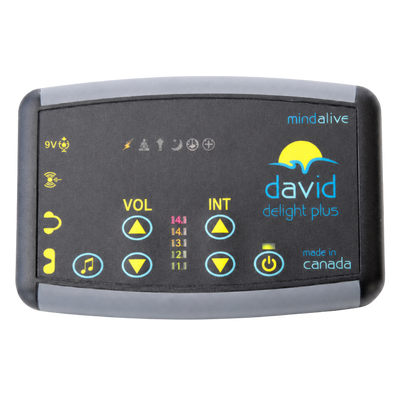
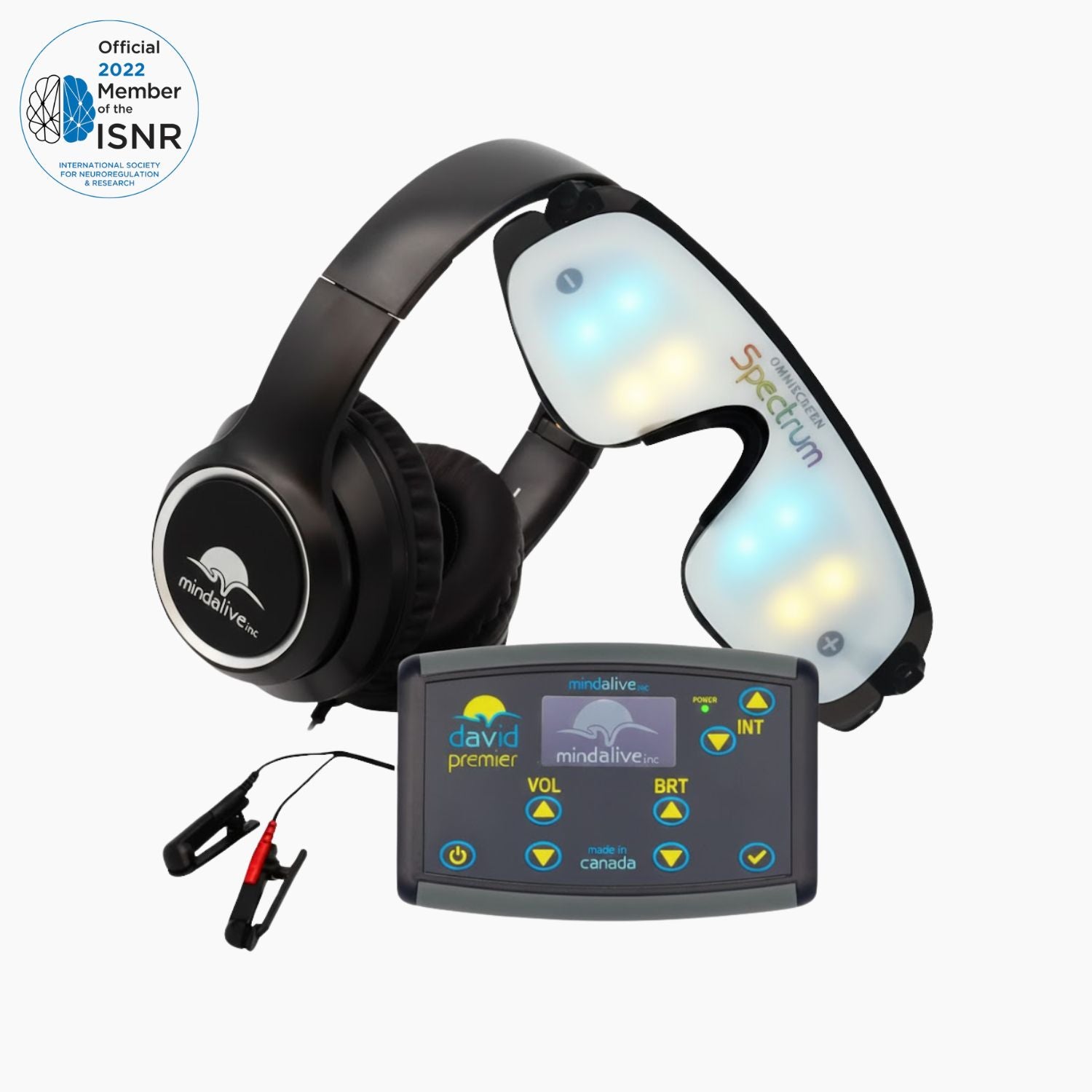
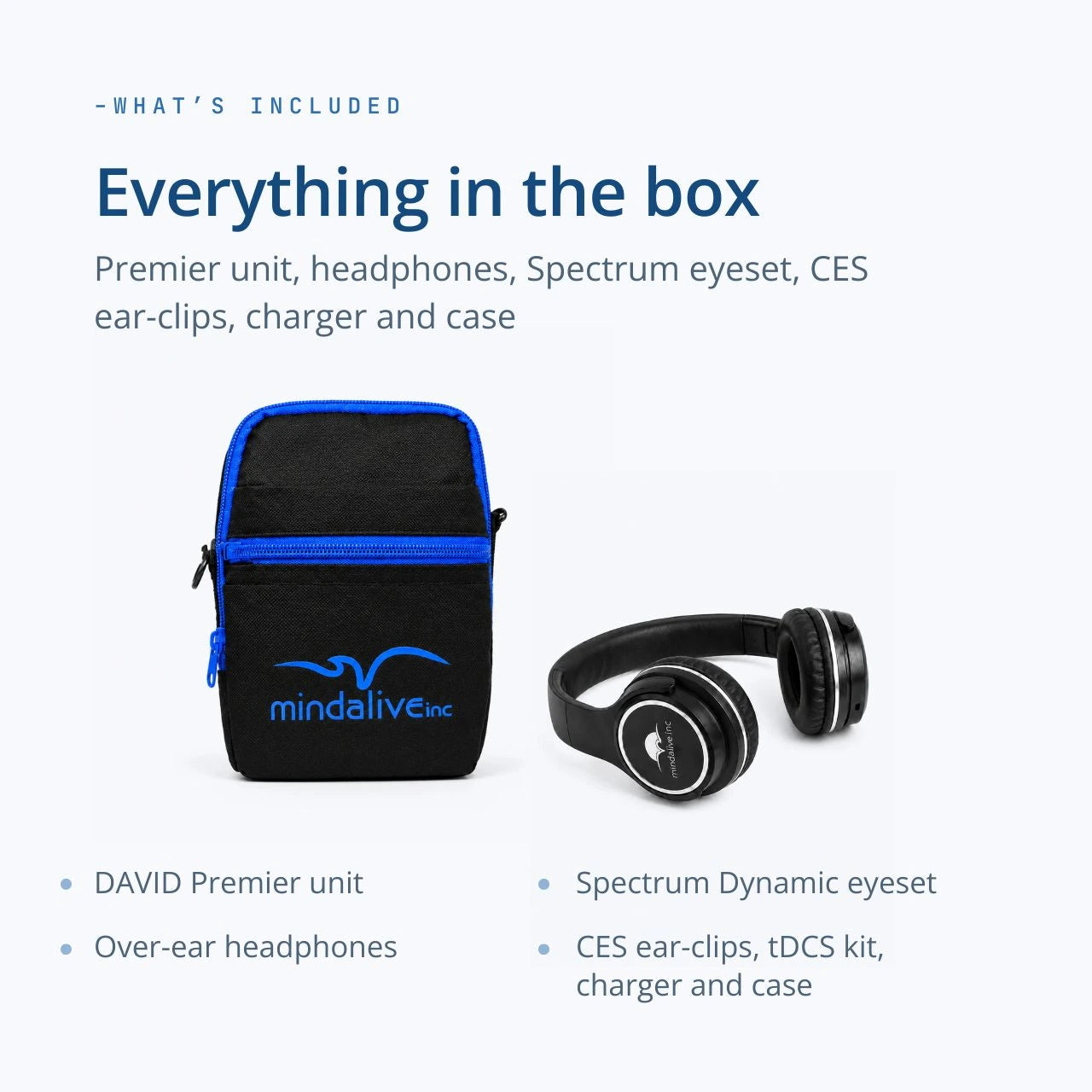
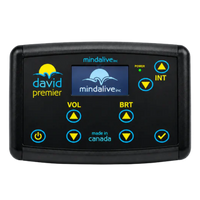
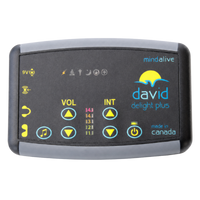
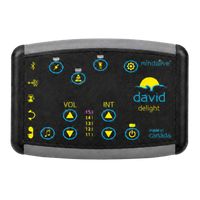
For someone who only wants light and sound without the CES option, the DAVID Delight ($349.99, 10 sessions) or the DAVID Delight Plus ($394.99, 25 sessions plus 3 gamma) are lighter entry points. Practitioners or anyone wanting full programmability, including CES and an optional tDCS kit, may prefer the DAVID Premier ($994.99). A side-by-side comparison of all four is on the devices comparison page.
Every order ships from Mind Alive in Canada by FedEx Express, with delivery in 2 business days within the United States and 3 to 5 business days elsewhere. Shipping is free in the US over $500 and free worldwide over $800; below that it is $49.95 in the US, $74.95 in Europe and $99.95 elsewhere. Every device carries a 30-day money-back guarantee and a 1-year warranty.
Clinician note: Berg and Siever's 2009 study on CES and anxiety found measurable reductions in anxiety and depression symptoms over a course of sessions, which is part of why ear-clip sessions are often recommended for stress that builds across a long shift rather than a single acute moment.
Sleep Disruption Is Usually the Real Problem
Much of what shift workers describe as stress is downstream of poor sleep. Daytime sleep after a night shift is lighter and more fragmented than nighttime sleep, even in a dark, quiet room, because the body's drive to be awake during daylight hours works against it. Tang, Riegel, McCurry and Vitiello's 2015 research on insomnia in older adults is a reminder that sleep quality, not just duration, drives daytime functioning, and that principle holds for shift workers of any age. A calming AVE session in the last twenty minutes before an attempted daytime sleep supports that transition, not a replacement for blackout curtains or a consistent sleep environment.
Building a Routine That Survives Schedule Changes
The biggest reason stress routines fail for shift workers is that they are built around a stable day that never arrives. A routine anchored to the shift itself, rather than to a clock time, survives schedule changes better. Keeping the device somewhere visible, a locker, a nightstand, a bag used for every shift, removes the extra step of deciding whether there is time for it. It also helps to pair session use with something already fixed in the routine, such as right after clocking out, so the new habit attaches to one that already happens no matter what the schedule looks like that week.
What not to expect
A session will not undo the physical effects of a demanding rotation on its own, and it is not a substitute for adequate total sleep time. It is best understood as one tool that supports the transitions, into alertness, into relaxation, into sleep, that a rotating schedule makes harder to manage naturally.
DAVID is not a medical device for treating disease. It is studied for and used within protocols that may support relaxation and sleep-related outcomes. It is not recommended for anyone with a history of photosensitive epilepsy or seizures, or with an implanted electronic device. Consult a clinician before starting if you have any of these conditions or other health concerns.
FAQ: Stress for Shift Workers
Can I use a light and sound session right before a night shift, not just after?
Yes. A shorter, more alert-oriented program used an hour or two before a night shift is a common use case, separate from the calming session used after the shift ends. The two are different programs within the same device.
Will an alpha or SMR session make me too relaxed to drive home or stay alert at work?
Sessions used during work hours are typically chosen for mild relaxation rather than deep calm, and most users schedule the deeper calming sessions for the period right before an attempted sleep, not before driving or operating machinery.
How long should a session be for someone on rotating shifts?
DAVID sessions generally run between ten and twenty-five minutes. Shorter sessions tend to fit better into breaks, while longer ones are more often used at home before sleep.
Can CES ear-clips be used during a short break at work?
The ear-clip sessions can be used with eyes open, which makes them more practical than light and sound sessions for a workplace break room, though a quiet moment still helps.
Is this safe to use alongside caffeine or shift-work sleep aids?
There is no listed interaction, but anyone using prescribed sleep medication or managing a diagnosed sleep disorder should check with their prescribing clinician before adding any new routine.
How soon will a shift worker notice a difference?
This varies by person and by how disrupted the existing schedule is. Many users report noticing an easier wind-down within the first couple of weeks of consistent use, though individual results differ and are not guaranteed.
What if my schedule changes every week?
Anchor the routine to the shift rather than the clock, a session right after clocking out and another right before the next shift begins works regardless of what time those moments fall on any given week.