

Menopause and Sleep: A Calmer Routine
Yrian BrugmanMenopause and sleep rarely stay on good terms. Hot flashes, night sweats, and a mind that will not settle can turn a reliable sleeper into someone who dreads bedtime. This guide looks at what is actually happening to your nervous system overnight during perimenopause and menopause, and lays out a calmer evening routine, one that pairs ordinary habit changes with short audio-visual entrainment (AVE) and cranial electrotherapy stimulation (CES) sessions you can do at home.
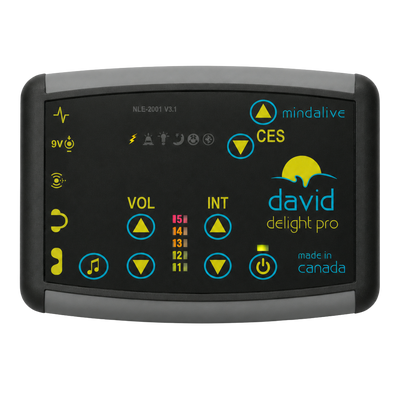
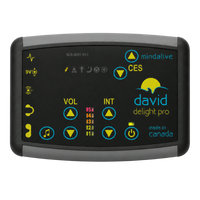
The DAVID Delight Pro combines light and sound AVE sessions with CES ear-clips in a single device, which is why it tends to be the model people reach for when sleep and stress hit at the same time. It is not a treatment for menopause and it will not stop hot flashes. What it is studied for is relaxation, and the sessions may support an easier wind-down before bed as part of a wider routine.
See the DAVID Delight ProKey Takeaways
- Perimenopause and menopause commonly disrupt sleep through hot flashes, night sweats, and a more reactive stress response.
- A calmer bedtime routine works on the nervous system directly, not only on the bedroom environment.
- AVE sessions are designed to guide brainwave activity toward slower, calmer patterns associated with winding down.
- CES ear-clip sessions have been studied for relaxation and looked at for insomnia in older adults.
- The DAVID Delight Pro combines both in one device, backed by a 30-day money-back guarantee if it is not the right fit.
Why Menopause Disrupts Sleep
Falling estrogen and progesterone during perimenopause change more than reproductive hormones. They also affect the body's thermostat and the nervous system's baseline level of arousal, which is why sleep is often the first thing to suffer. The disruption usually shows up in a few recognisable ways.
- Hot flashes and night sweats that wake you mid-cycle, sometimes several times a night.
- More fragmented sleep overall, with less time spent in deep, restorative stages.
- A racing or ruminating mind at exactly the moment you want to switch off.
- Shifts in circadian rhythm, so the usual wind-down cues feel less reliable.
- Greater sensitivity to caffeine, alcohol, and evening screen time than before.
None of this means poor sleep is simply something to accept. It means the routine that worked in your thirties may need a few deliberate changes now.
What Happens to Your Brainwaves at Night
Healthy sleep moves through a sequence of brainwave stages: alert beta activity gives way to relaxed alpha, then to drowsy theta, then to the slow delta waves of deep sleep. A hot flash or a surge of anxiety can pull the brain back toward beta in the middle of the night, and getting back down through alpha and theta again takes time, which is part of why menopausal sleep feels so fragmented rather than simply shorter.
What the research looked at: Tang, Riegel, McCurry and Vitiello (2015) studied audio-visual entrainment for insomnia in older adults and found it may support better sleep outcomes as part of a broader approach, not as a stand-alone cure.
This is the logic behind using an AVE and CES session before bed. The light and sound pacing in a DAVID session is set to guide the brain gradually from an alert state toward calmer, slower patterns, rather than asking the nervous system to make that drop on its own after a stressful day.
A Calmer Evening Routine
A routine works better than a single trick, because menopausal sleep disruption usually has more than one cause. The following order is a reasonable place to start.
- Set a consistent wind-down time, even on nights you do not feel tired yet.
- Cool the bedroom and keep breathable bedding within reach for night sweats.
- Cut caffeine after midday and keep evening alcohol light, since both can worsen hot flashes and fragment sleep.
- Run a 20 to 30 minute AVE and CES session on a calming, low-frequency program before lights out.
- Dim household lighting for the hour beforehand so the session is not undone by bright screens right after.
- Close with a few minutes of slow breathing or a short journal entry if your mind is still active.
Where AVE and CES Fit In
Audio-visual entrainment uses pulses of light and sound to guide brainwave activity, and it has been studied across a range of relaxation and sleep contexts. Huang and Charyton's 2008 meta-analysis of AVE research found consistent support for its use in relaxation and stress-related outcomes, while Berg and Siever (2009) looked specifically at CES for anxiety-related symptoms. Neither study, nor any research on the DAVID devices, treats menopause itself. What the evidence supports is a narrower claim: these sessions may support relaxation and a calmer nervous system state, which is exactly what a disrupted menopausal routine needs help with.
Not for people with a history of photosensitive epilepsy or seizures, or an implanted electronic device. Consult a clinician before starting if you are unsure whether AVE or CES is appropriate for you.
| Device | Sessions | CES | Price | Best for |
|---|---|---|---|---|
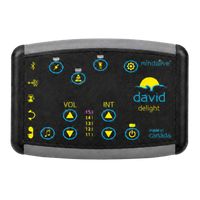
| DAVID Delight | 10 light and sound sessions | No | $349.99 | A first, simple AVE routine |
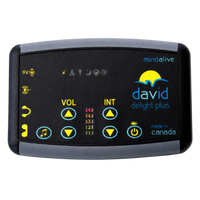
| DAVID Delight Plus | 25 sessions plus 3 gamma | No | $394.99 | More session variety, light and sound only |
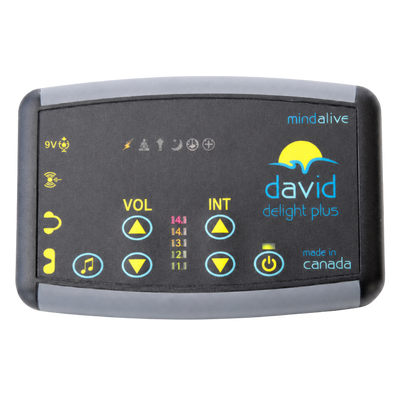
| DAVID Delight Pro | 25 sessions plus 3 gamma | Yes | $559.99 | Combining AVE with CES relaxation sessions |
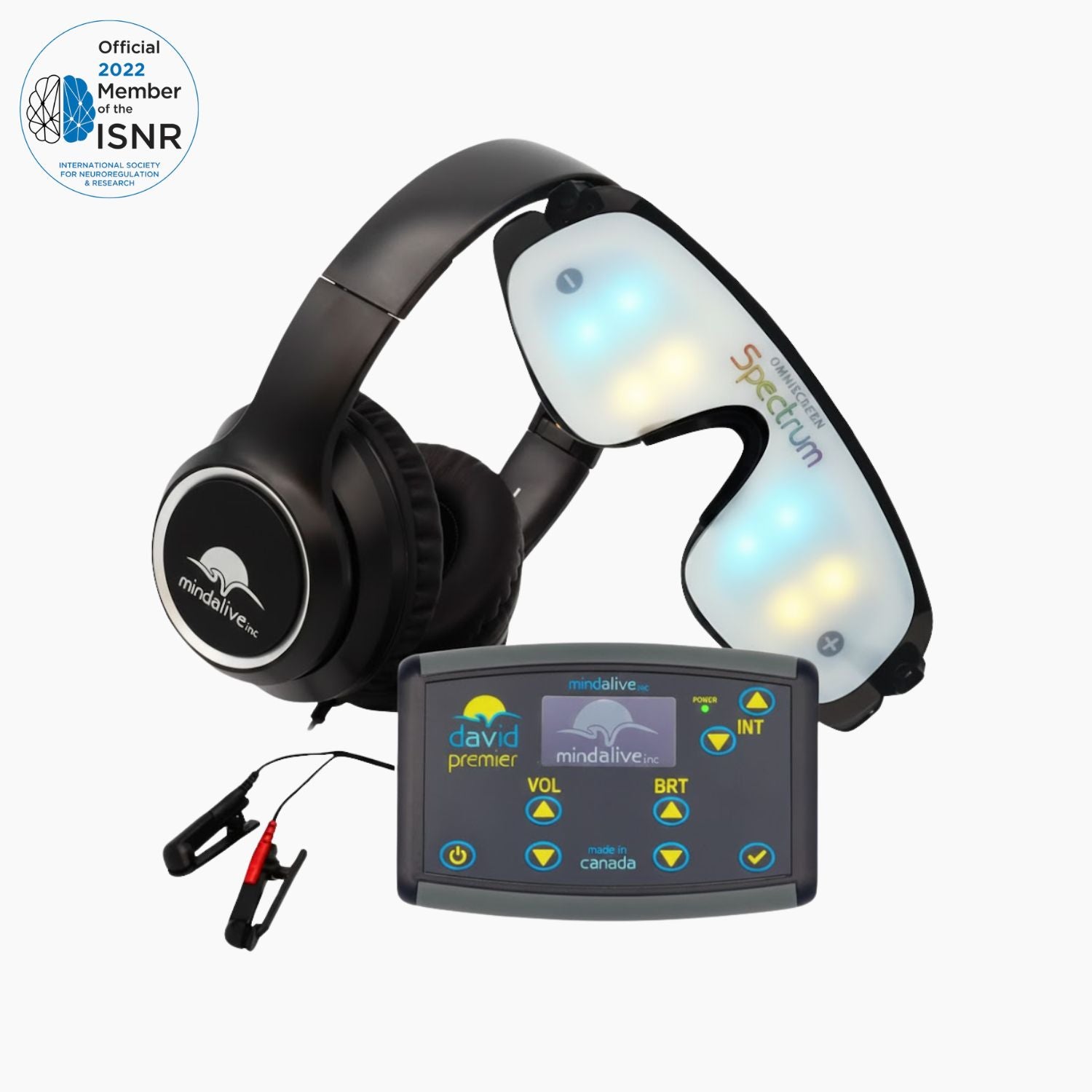
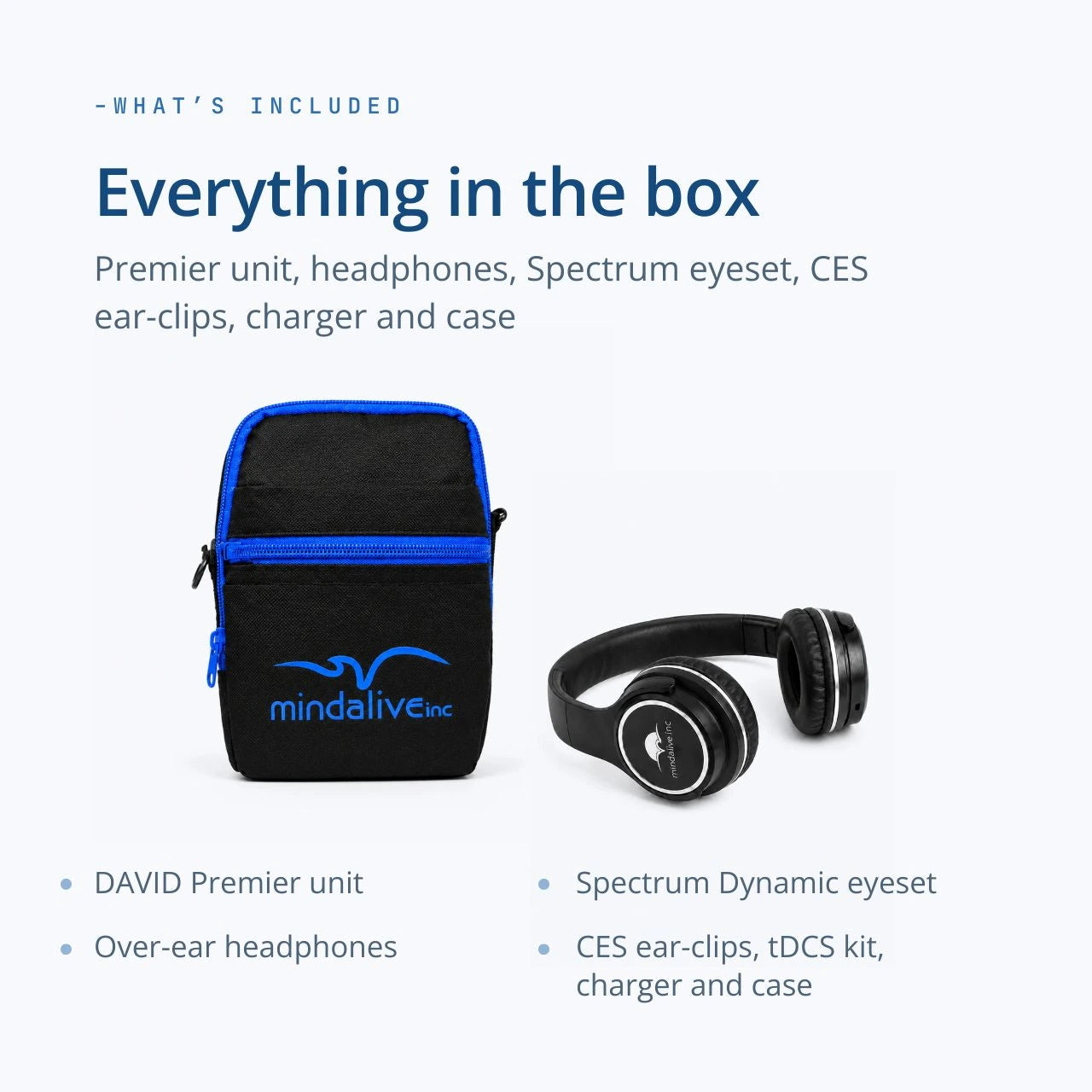
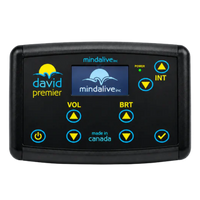
| DAVID Premier | 50+ programmable sessions | Yes, plus optional tDCS | $994.99 | Practitioners building custom protocols |
Building This Into a Weekly Rhythm
A single good night does not undo months of disrupted sleep, and a single bad night does not mean the routine has failed. Treat the first two to three weeks as a trial period rather than a verdict.
- Keep a simple log of hot flash timing, so you can see whether sessions earlier in the evening help more than sessions right at lights out.
- Pair the evening routine with brighter natural light exposure in the morning, which helps steady the circadian rhythm that menopause tends to loosen.
- Let a partner or household know you are trying a new routine, since consistency matters more than any single night.
- Bring your sleep log to your clinician if symptoms are severe, since menopause-related insomnia sometimes needs medical attention alongside any device-based routine.
FAQ: Menopause and Sleep
Is the DAVID Delight Pro a treatment for menopause?
No. It is not a medical device for treating menopause or any disease. The AVE and CES sessions are studied for relaxation and may support an easier wind-down as one part of a broader sleep routine.
How long before I notice a difference in my sleep?
Most people give it two to three weeks of consistent evening use before judging results, since sleep patterns disrupted over months rarely shift in a single session.
Can I use it alongside hormone therapy or other menopause treatments?
AVE and CES sessions are generally used alongside other approaches rather than instead of them. Discuss any new routine with your clinician, especially if you are already managing symptoms with medication.
What is the difference between the Delight Pro and Delight Plus for this use?
Both run the same light and sound AVE sessions. The Delight Pro adds CES ear-clips for relaxation sessions, which is why it is the more chosen option for people dealing with both sleep and stress.
Is CES safe to use every night?
CES sessions through the DAVID Delight Pro are designed for regular use as part of a routine. It is not suitable for people with a history of photosensitive epilepsy or seizures, or an implanted electronic device. Consult a clinician if you are uncertain.
What if a hot flash wakes me mid-session?
You can simply pause and restart later, or shift the session earlier in the evening before body temperature tends to spike. There is no harm in stopping a session partway through.
Does shipping and the return policy work the same if I am outside North America?
Every order ships from Mind Alive in Canada by FedEx Express, with delivery in 2 business days to the US and 3 to 5 business days elsewhere. Shipping is free in the US over $500 and worldwide over $800; below that it is $49.95 in the US, $74.95 in Europe, and $99.95 elsewhere. Customers outside Canada and the US are responsible for their own import duties and VAT, collected by FedEx. If it is not right for you, contact Mindalive first; the device must arrive back unused in its original packaging within 30 days, and the customer covers return shipping.