

Setting Up a Brain-Training Corner in Your Clinic
Yrian BrugmanA brain-training corner is a dedicated space in your practice for audio-visual entrainment (AVE) and CES sessions, set apart from the exam table, the talk-therapy chairs, or the waiting room. It gives clients a clear signal that this part of their care is intentional, not an afterthought fitted in between other work. For you, it turns a device that might otherwise sit in a drawer between appointments into a repeatable, schedulable part of the session flow.
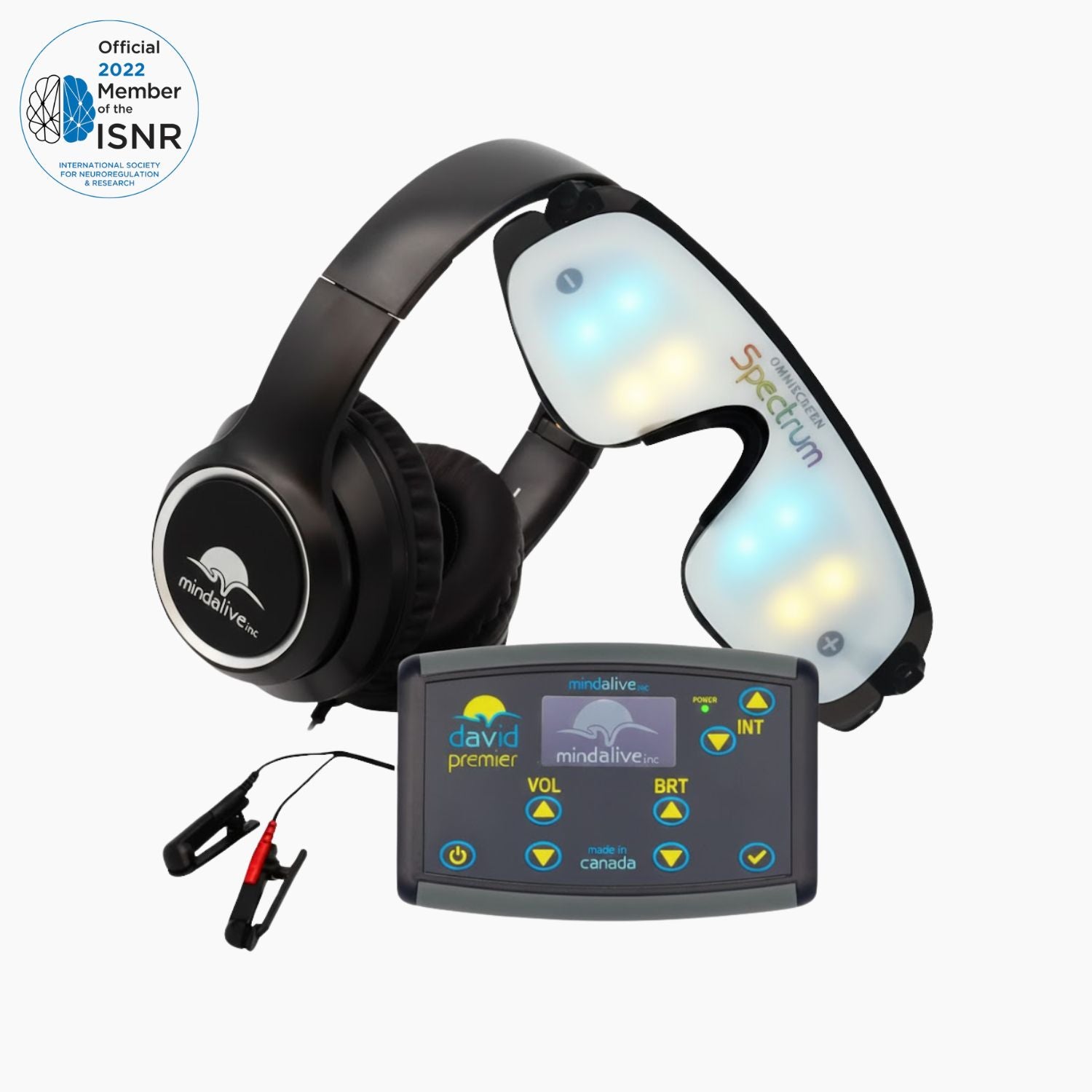
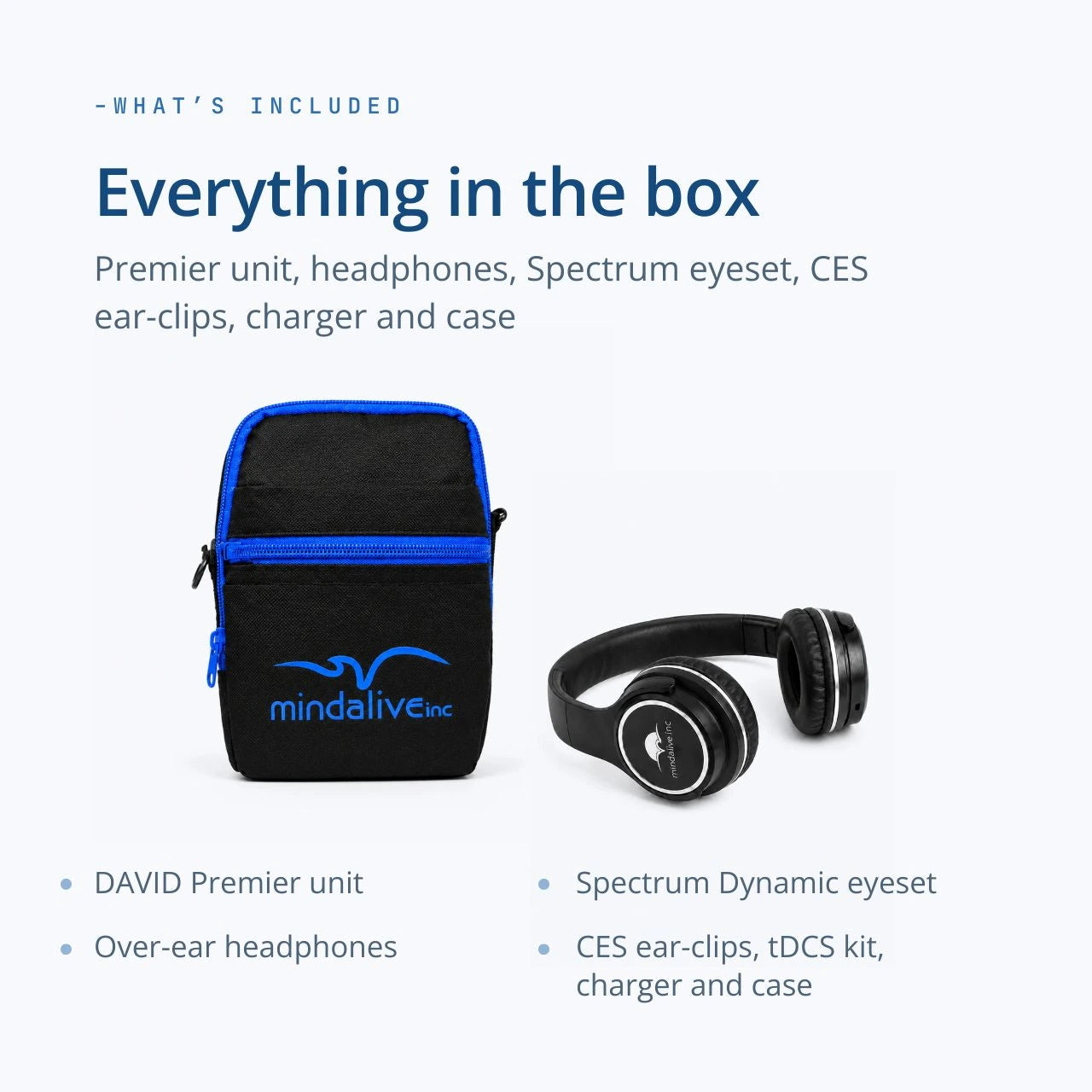
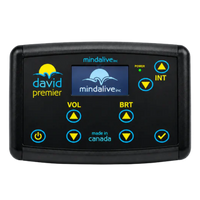
If you are still deciding which device to build that space around, the devices comparison page lays out the full DAVID range side by side, including the DAVID Premier, built with practitioners and multi-client caseloads in mind.
See the DAVID PremierKey Takeaways
- A dedicated space turns AVE and CES from an occasional add-on into a repeatable part of your session flow.
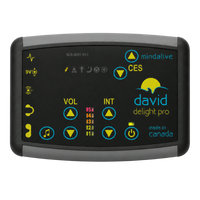
- DAVID Delight Pro suits a single consistent protocol, while DAVID Premier suits a practice running varied programs across many clients.
- A written protocol, from intake through debrief, keeps sessions consistent across staff and client types.
- Informed consent and basic contraindication screening belong at every first session, not only at the paperwork stage.
- Logging sessions through the DAVID companion app makes it easier to show clients, and yourself, what is actually changing over time.
Why Give Brain-Training Its Own Space
Clients associate rooms with purpose. A chair that is also used for intake forms and billing conversations carries that context into the session, which can work against the relaxation response AVE and CES sessions are meant to support. A separate corner, even a modest one, gives the nervous system a cue that this time is different.
There is a practical reason too. When the device, eyeset, and cables live in a fixed spot rather than a cupboard, you save the two or three minutes per session that go into setup and teardown. Across a full day of client-facing sessions, that adds up to a meaningful amount of time, and it reduces the chance of skipping the session because it felt like too much friction to set up.
Choosing the Right DAVID Device for Clinic Use
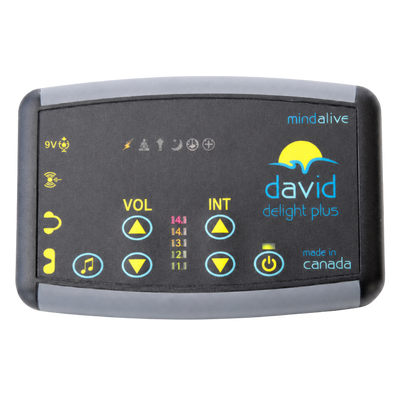
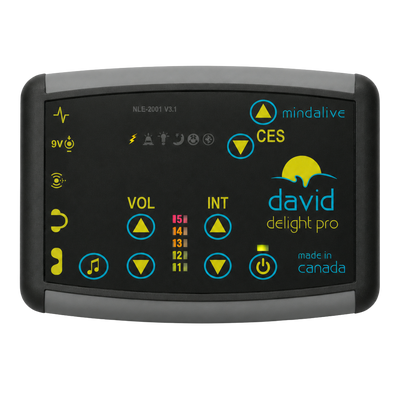
Which device anchors your corner depends on how varied your caseload is and how many practitioners will share the space. A solo practitioner running a consistent protocol for most clients can do well with a single DAVID Delight Pro. A practice running qEEG-informed protocols, offering tDCS alongside AVE, or supporting several practitioners with different client needs, tends to outgrow it faster.
| Consideration | DAVID Delight Pro | DAVID Premier |
|---|---|---|
| Price | $559.99 | $994.99 |
| Sessions included | 25 plus 3 gamma | 50 or more, programmable |
| Stimulation modes | AVE plus CES ear-clips | AVE, CES, with optional tDCS |
| Best fit | Single practitioner, consistent protocol | Multi-protocol practice, qEEG-guided work |
| Client type | General wellness, sleep, focus, relaxation | Varied clinical caseloads, custom programming |
Both devices ship from Mind Alive in Canada by FedEx Express, with delivery in 2 business days within the United States and 3 to 5 business days elsewhere. Both carry a 30-day money-back guarantee and a 1-year warranty, so testing one in your practice before committing to a second unit is a low-risk step.
What the Room Actually Needs
The physical setup does not need to be elaborate. What matters is consistency and comfort.
- A reclining chair or firm couch where the client can lie still for 20 to 30 minutes without shifting position.
- Dim, adjustable lighting, since the eyeset itself provides the light stimulus and ambient brightness can compete with it.
- A blanket within reach, as body temperature tends to drop slightly during a relaxed session.
- A side table for the device and a simple log sheet or tablet, if you are not yet using the companion app for every client.
- A closed door or sound barrier, since even a quiet hallway conversation can pull a client out of a session.
Keep the eyeset choice deliberate
If your practice sees a wide range of clients, stocking more than one eyeset style, such as the standard white eyeset alongside a viewhole option for clients who prefer to keep their eyes slightly open, gives you flexibility without needing a second device.
Building a Repeatable Session Protocol
A written protocol matters more than the room decor. It is what lets a second staff member run the same session consistently, and it is what you can hand to a new hire without repeating a verbal briefing every time.
- Confirm there is no history of photosensitive epilepsy, seizures, or an implanted electronic device, and review any new medications since the last visit.
- Walk the client through what they will feel: light through closed eyes, tones in the headphones, and a mild tingling at the ears if CES is included.
- Select the session program based on the goal for that visit, whether that is a relaxation session, a focus-oriented program, or one chosen from a qEEG-informed plan.
- Start the session and remain reachable, checking in briefly partway through for longer programs.
- Debrief for two to three minutes afterward, noting anything the client reports, and log the session.
Many practices find it useful to repeat the same two or three programs for the first several visits before introducing variation, which gives both the client and the practitioner a stable baseline to compare against.
From the research: Huang and Charyton's 2008 meta-analysis of controlled studies found consistent support for audio-visual entrainment's effects on relaxation and arousal regulation, which is the mechanism most brain-training corner protocols are built around.
Hygiene, Safety, and Informed Consent
AVE and CES equipment sits in direct contact with skin, which makes basic hygiene part of the protocol rather than an afterthought. Wipe down ear-clips and eyeset contact points between clients with the cleaning method recommended in the device manual, and keep a visible log of when equipment was last checked.
Informed consent should happen at the first session and be revisited whenever the protocol changes meaningfully. DAVID devices are not medical devices for treating disease, and any language used with clients should reflect that: sessions are studied for supporting relaxation and may support certain goals within a broader care plan, rather than curing or treating a condition.
Safety note: AVE and CES sessions are not suitable for anyone with a history of photosensitive epilepsy or seizures, or anyone with an implanted electronic device. Screen for this at intake and encourage clients to consult their own clinician if there is any uncertainty.
For a fuller walkthrough of consent language and contraindication screening, see our guide to informed consent and contraindications for AVE and CES.
Tracking Progress Across Multiple Clients
Once a brain-training corner is running several sessions a day, memory alone is not a reliable way to track what each client has done. The DAVID companion app lets you log which program was used, for how long, and what the client reported, building a record you can review at the start of each visit rather than reconstructing it from notes.
This record also gives you something concrete to show the client. Being able to point to a session history, even a simple one, helps clients see the brain-training corner as an ongoing part of their care rather than a one-off experiment.
Positioning the Service to Clients
Clients weigh the value of a session against its cost, so it helps to frame the investment clearly. A DAVID Delight Pro at $559.99, used across dozens of client sessions a month, works out to a modest cost per session when amortized, far below what a single additional in-person hour would cost. Presenting it this way, rather than as a standalone purchase, tends to land better than a raw price figure.
Keep the practical logistics in mind when recommending a home device alongside in-clinic sessions: orders ship from Canada by FedEx Express only, with free shipping in the US over $500 and free shipping worldwide over $800. Clients outside Canada and the US are responsible for their own import duties and VAT, collected by FedEx at delivery, since Mindalive does not charge VAT at checkout.
FAQ: Setting Up a Brain-Training Corner
How much space does a brain-training corner actually need?
A corner of a single room is enough, roughly the footprint of a reclining chair plus a side table. What matters more than square footage is that the space can be quiet and dimmed on demand.
Can one device serve multiple practitioners in the same clinic?
Yes, as long as session scheduling accounts for cleaning time between clients and the device is returned to its base settings after each use. Practices with heavy daily use often add a second unit once bookings regularly overlap.
Do I need a separate eyeset for every client?
No. Eyesets can be wiped down between uses following the manufacturer's cleaning guidance. Some practices keep a second eyeset on hand purely to avoid any wait time between back-to-back appointments.
Should I bill brain-training sessions separately from the main appointment?
That depends on your billing structure and local regulations, which this guide cannot advise on directly. What is consistent across practices is that framing the session as a distinct, scheduled service, rather than a brief add-on, supports both client expectations and your own time management.
What if a client falls asleep during a session?
This is common and not a problem. Most programs are designed to run their full length regardless, and many clients report that the relaxation carries over even if they dozed off partway through.
How often should sessions happen for noticeable change?
Protocols vary by goal, but many practitioners start with two to three sessions a week for the first few weeks before moving to a maintenance schedule. Your own observations and the client's reported experience should guide adjustments more than a fixed schedule.
What happens if the device needs to be returned or repaired?
Devices purchased for your practice carry a 1-year warranty handled directly through Mindalive, and a 30-day money-back guarantee if the device arrives unused and in its original packaging. Return shipping and the original shipping fee are the customer's responsibility.