

Sensate vs DAVID Delight Pro: Which One Fits You?
Yrian BrugmanSensate is a chest-worn vagus nerve device that has become popular as a quick way to feel calmer in the evening. If you have looked at it and wondered how it stacks up against a light and sound device like the DAVID Delight Pro, this guide walks through what each one actually does, where they overlap, and where they do not.
The short version: Sensate is built for one thing, calming the nervous system in short daily doses, while the DAVID Delight Pro is a broader audio-visual entrainment and CES device with 25 structured sessions plus 3 gamma sessions covering sleep, focus, relaxation and more. They are not quite competing for the same job, which is exactly why the comparison is useful.
See the DAVID Delight ProKey Takeaways
- Sensate uses gentle bone-conducted vibration against the sternum, paired with an app, to encourage a calmer state through the vagus nerve.
- The DAVID Delight Pro combines light and sound audio-visual entrainment (AVE) with cranial electrotherapy stimulation (CES) ear-clips across 25 sessions plus 3 gamma sessions.
- Sensate is narrower and app-dependent; the DAVID Delight Pro is self-contained and covers a wider range of goals, from sleep to focus to relaxation.
- Neither device is a medical device for treating disease. Research on AVE and CES describes sessions that may support relaxation, sleep and focus, not a cure.
- Price, warranty and shipping terms differ in ways worth knowing before you buy either one.
What Sensate Is Built to Do
Sensate is a small disc you wear on a pendant against your sternum. It delivers low-frequency vibration that you feel more than hear, intended to work through the vagus nerve while you breathe along with visuals in a companion app. Sessions are short, usually 10 to 20 minutes, and the whole experience is designed around one outcome: helping your body shift out of a stressed state before bed or during a tense afternoon.
It is a single-purpose tool. There is no light component, no CES, and no library of sessions aimed at focus, learning or sleep architecture specifically. It does one job and leans on the phone app for the entire experience, which means you need your phone nearby and the app working every time you use it.
What the DAVID Delight Pro Is Built to Do
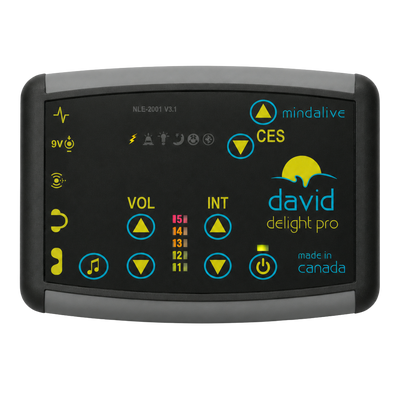
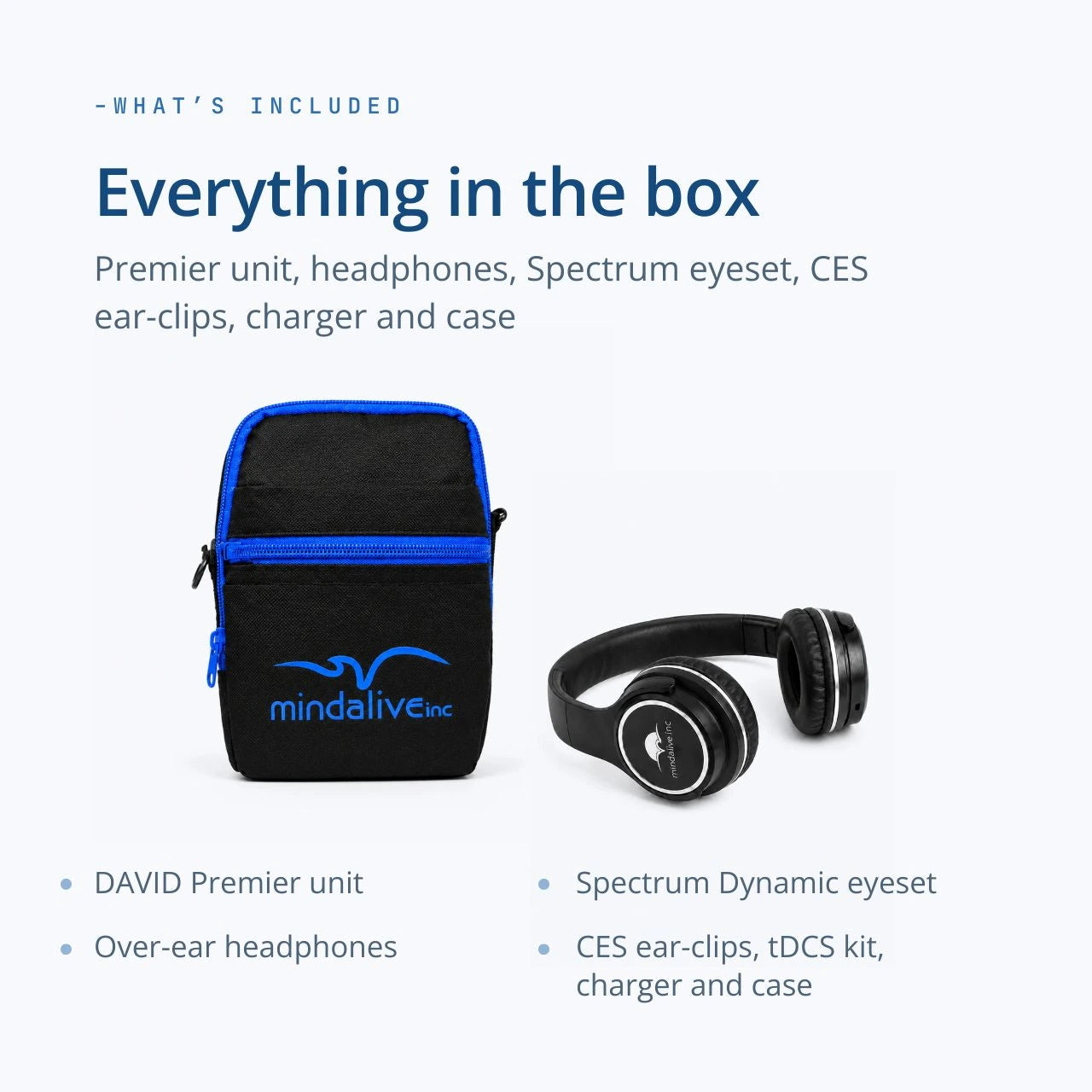
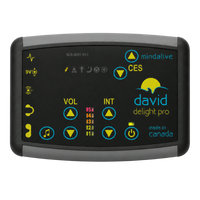
The DAVID Delight Pro pairs light and sound audio-visual entrainment with CES ear-clips in a single handheld unit. You choose from 25 preset sessions plus 3 gamma sessions covering relaxation, sleep support, energy and mental clarity, delivered through a light-and-sound eyeset and headphones, with the option to add the CES ear-clips for a separate or combined protocol. Nothing needs a live internet connection or an app to function session to session, though a companion app exists for tracking.
Audio-visual entrainment has been studied in a 2008 meta-analysis by Huang and Charyton, which reviewed randomized controlled trials across relaxation, cognitive performance and other outcomes. CES specifically has been studied by Berg and Siever (2009) and in later work by Cohen et al. (2015) looking at pain-related outcomes. None of this means a DAVID device treats or cures a condition. It means the underlying stimulation methods have a research base that a single-purpose vibration wearable does not carry in the same way.
Side by Side: How They Compare
| Feature | Sensate | DAVID Delight Pro |
|---|---|---|
| Mechanism | Bone-conducted vibration against the sternum, paired with breathing visuals in an app | Light and sound AVE plus CES ear-clips |
| Sessions | App-guided, typically 10 to 20 minutes | 25 sessions plus 3 gamma sessions, 10 to 60 minutes |
| Needs a phone | Yes, every session | No, runs standalone; app is optional for tracking |
| Main use case | Calming the nervous system in short daily doses | Sleep, relaxation, focus and energy across a broader session library |
| Price | Lower hundreds, varies by retailer and bundle | $559.99 |
| Warranty and returns | Varies by retailer | 1-year warranty, 30-day money-back |
Who Sensate Fits Better
If the only problem you are trying to solve is "I feel wound up and I want a quick, passive way to calm down," Sensate is a reasonable fit. It asks almost nothing of you: put it on, press play on the app, breathe. It does not try to be a sleep system, a focus tool or a clinical adjunct, and that narrowness is part of its appeal for people who want one simple ritual.
- You want a low-effort, phone-guided calming ritual rather than a device with a session menu to learn.
- You are not looking for anything related to CES, light stimulation or a broader training program.
- You are comfortable depending on an app and a charged phone every time you use the device.
Who the DAVID Delight Pro Fits Better
If you want one device that can address sleep on one night, focus before a work session, and relaxation after a stressful day, the Delight Pro is built for that range. Because it does not rely on a phone app to run a session, it also suits people who want a dedicated tool that behaves the same way every time, with or without a signal.
Typical readers who lean this way
- People who already keep a DAVID companion app or neurofeedback routine and want a home device that complements professional sessions.
- Anyone comparing several categories at once, since the devices comparison page covers the full DAVID lineup alongside this kind of single-purpose wearable.
- People who want CES and AVE in the same purchase instead of buying two separate single-purpose products.
A practical way to decide: ask whether you want a narrow tool for one feeling (calm before sleep) or a flexible tool for several goals across the week. That single question resolves most Sensate-versus-DAVID decisions faster than a feature list does.
What the Research Says
Neither device should be treated as a cure for anything, and claims should be read carefully regardless of which brand is making them. For AVE specifically, Huang and Charyton's 2008 meta-analysis found support across several outcome categories in the studies it reviewed. Joyce and Siever (2000) looked at AVE use with children and attention difficulties, and Tang, Riegel, McCurry and Vitiello (2015) looked at structured approaches to insomnia in older adults. For CES, Berg and Siever (2009) and Cohen et al. (2015) are the two most commonly cited studies, with Cohen's work focused on pain-related outcomes. Cantor and Stevens (2019) looked at CES in the context of mild cognitive impairment.
Sensate's category, vagal stimulation through external vibration, is newer and has a thinner independent research base at this point. That does not make it ineffective for a given person. It means the evidence picture for AVE and CES, the technologies inside the DAVID Delight Pro, is further along and better documented in peer-reviewed literature.
Buying Considerations: Shipping, Returns and Warranty
Whichever device you choose, check the logistics before you order, since they differ by brand. Every DAVID order ships from Mind Alive in Canada by FedEx Express only, with no DHL, UPS or postal service options. Delivery runs about 2 business days within the United States and 3 to 5 business days everywhere else.
- Shipping is free in the US over $500 and free worldwide over $800. Below those thresholds, shipping is $49.95 in the US, $74.95 in Europe, and $99.95 for the rest of the world.
- Customers outside Canada and the US are responsible for their own import duties, VAT and brokerage fees, collected by FedEx. Mindalive does not charge VAT at checkout.
- Every DAVID device carries a 30-day money-back guarantee and a 1-year warranty. To return one, contact Mindalive first; the device must arrive back unused in its original packaging within 30 days of purchase, and the customer covers return shipping while the original shipping fee is not refunded.
Sensate is sold through its own retailer and app ecosystem, so its shipping, return and warranty terms are set independently and should be checked on its own site rather than assumed from this comparison.
Safety note: AVE sessions are not suitable for anyone with a history of photosensitive epilepsy or seizures, or anyone with an implanted electronic device. If either applies to you, or if you are unsure, consult a clinician before using any light-based entrainment device, CES, or a similar wearable.
FAQ: Sensate vs DAVID Delight Pro
Can I use Sensate and a DAVID device together?
There is nothing that prevents using both in the same week, since they target different sessions (a calming ritual versus a structured AVE or CES session). Just avoid running them at the exact same time, and introduce one at a time so you can tell what is actually helping.
Does the DAVID Delight Pro include CES, and is that different from Sensate's vibration?
Yes. The Delight Pro's CES ear-clips deliver a mild electrical current, which is a different mechanism from Sensate's bone-conducted vibration. Berg and Siever (2009) and Cohen et al. (2015) studied CES specifically, which is a separate body of research from vagal vibration devices.
Is Sensate a medical device?
Sensate is generally marketed as a wellness wearable rather than a medical device, similar to how the DAVID Delight Pro is positioned. Neither should be used to treat, diagnose or cure a medical condition, and any specific health concern is worth raising with a clinician first.
Which one is better for sleep?
The DAVID Delight Pro has dedicated sleep-support sessions built into its library and a research base in AVE and CES that includes work on insomnia-related outcomes, such as Tang, Riegel, McCurry and Vitiello (2015). Sensate can help some people wind down before bed, but it is not built as a dedicated sleep program the way the Delight Pro's session set is.
What if I only want calm, not a full brain-training routine?
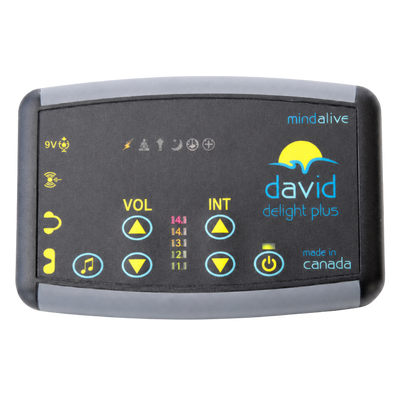
Then Sensate's narrow focus may genuinely suit you better; there is no reason to buy a broader device if you only want one outcome. If you think you might eventually want sleep or focus sessions too, the entry-level DAVID Delight is worth a look as a simpler alternative to the Pro.
How long until I notice a difference with either device?
This varies by person and by what you are using it for. Many people report a noticeable shift in how they feel within the first few sessions on either device, but consistency over several weeks is what the research protocols for AVE and CES are generally built around, not a single use.
Where can I read more about the DAVID Delight Pro itself?
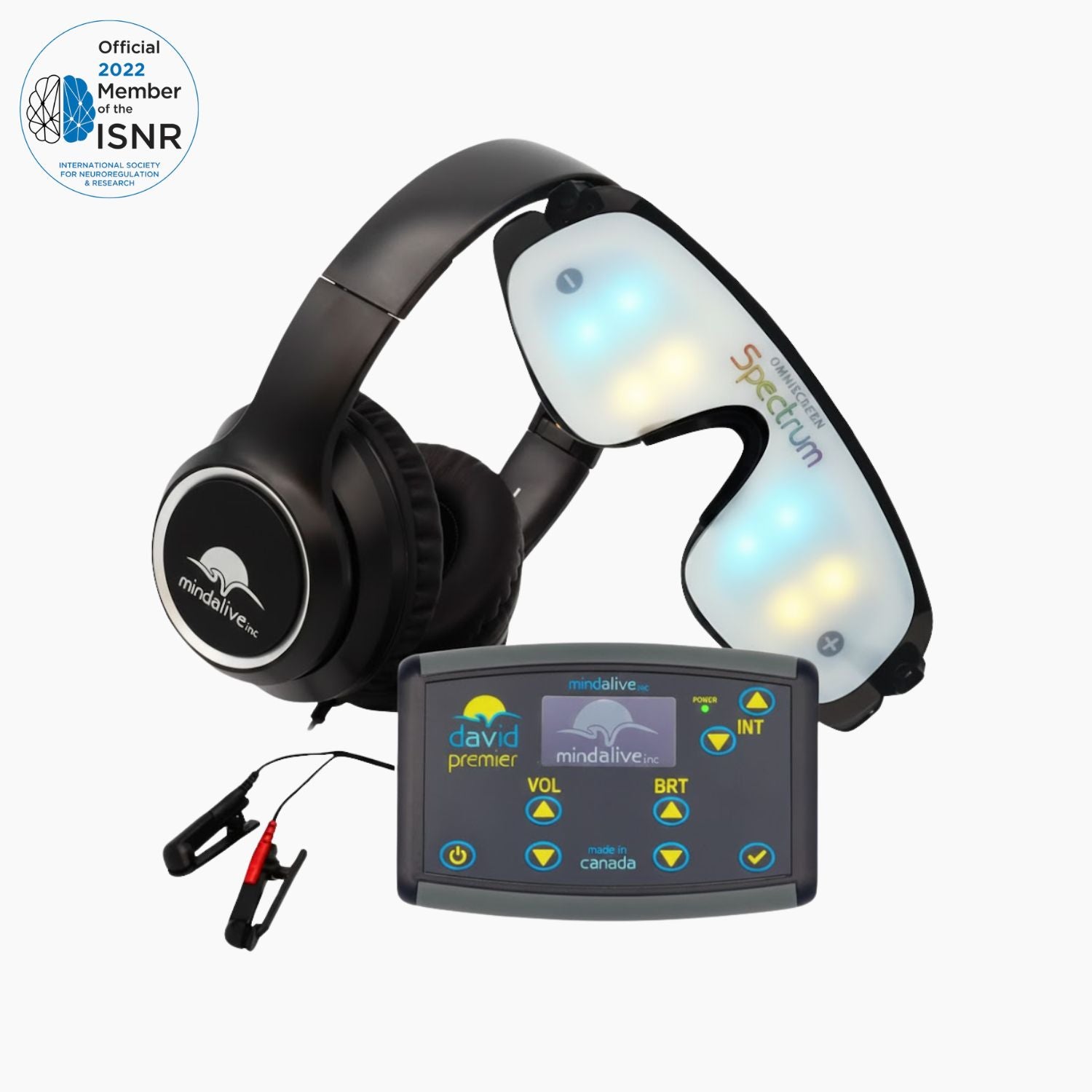
See the eyeset buyer's guide for the accessory side of the Delight Pro, and the devices comparison page for how it stacks up against the Delight Plus and Premier.