

Choosing DAVID Sessions From a qEEG Report
Yrian BrugmanChoosing DAVID sessions from a qEEG report is a practical skill, not a guessing game. A quantitative EEG gives you a map of a client's dominant frequencies, asymmetries and connectivity patterns, but it does not come with a session dial already set. This guide walks through how practitioners translate common qEEG findings into a starting protocol on a DAVID device, how to stay inside your scope of practice while doing it, and how to adjust the plan once you see how a client actually responds.
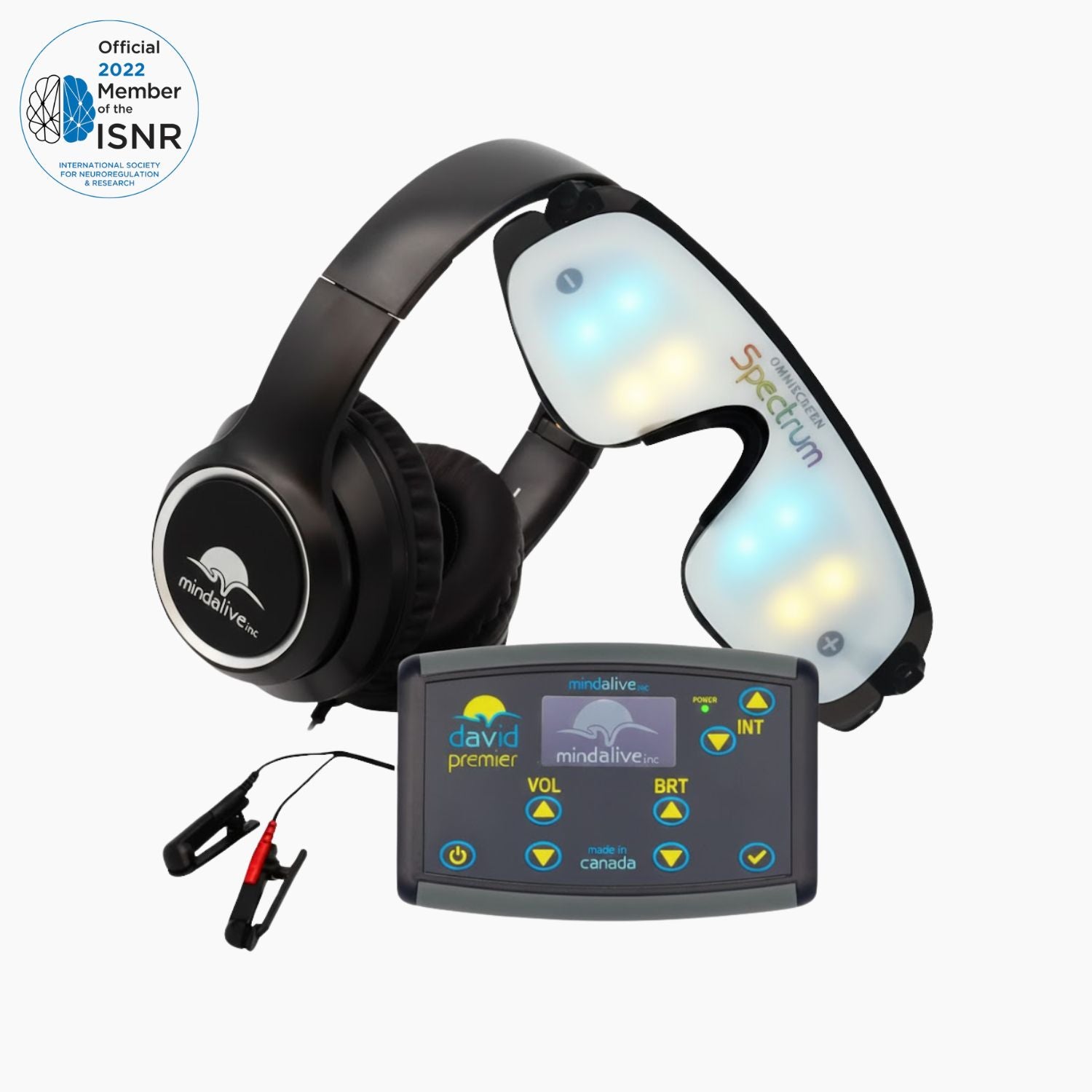
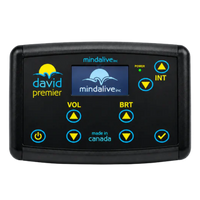
None of this replaces clinical judgment or the qEEG report's own recommendations. The DAVID Premier, Mind Alive's practitioner-grade audio-visual entrainment and CES device, gives you the session range and the data to make these choices methodically. You can see the full specification on the DAVID Premier product page.
See the DAVID PremierKey Takeaways
- A qEEG report describes patterns, such as excess slow-wave activity or frontal asymmetry, that can inform which AVE frequency range and session length to start with.
- Session selection should follow the practice's own clinical protocol and the qEEG reviewer's notes, not a fixed formula.
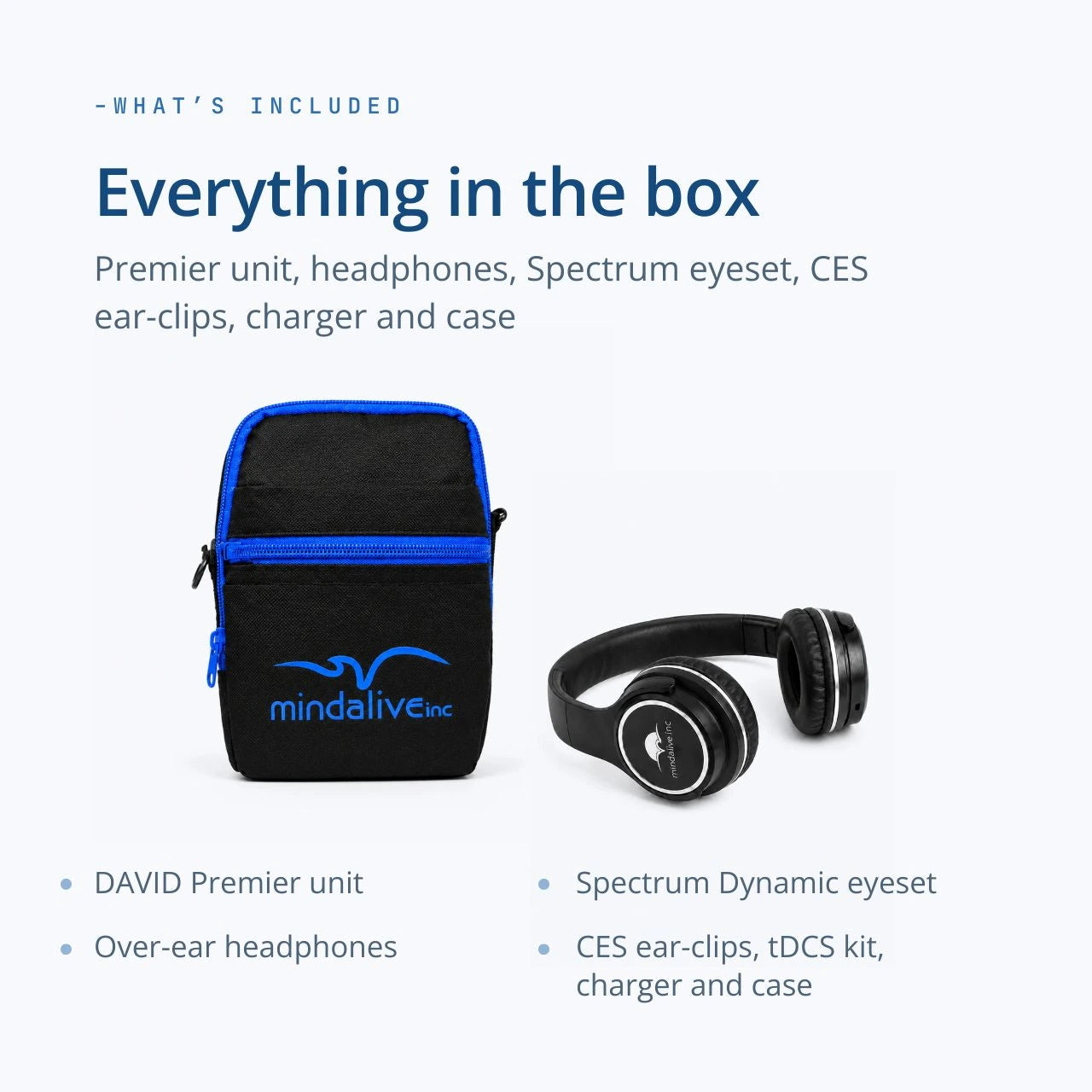
- The DAVID Premier offers 50+ programmable sessions plus CES and optional tDCS, which gives practitioners room to match a plan to the report rather than forcing a client into a one-size session.
- Progress should be tracked session by session, with the plan adjusted based on reported response, not locked in from the first visit.
- Informed consent and a review of contraindications come before any session, regardless of what the qEEG shows.
What a qEEG Report Actually Tells You
A qEEG report compares a client's recorded brain activity against a normative database and flags where the numbers sit outside the expected range. Typical findings include excess slow-wave activity (theta or delta) in attention-related regions, reduced alpha at rest, frontal asymmetry associated with mood regulation, or elevated high-beta activity consistent with a hyperaroused nervous system. These are statistical deviations, not diagnoses, and the report itself usually says so.
For AVE and CES purposes, the report is most useful as a starting direction. It tells you broadly whether a client's baseline leans toward under-arousal, over-arousal, or an asymmetric pattern, which narrows the session categories worth trying first. It does not tell you the exact frequency, duration or number of sessions a given person needs. That part comes from your own protocol, the client's history and how they respond once sessions begin.
Reading the report with the client in the room
Many practitioners walk the client through the main findings in plain language before introducing AVE or CES. This matters for informed consent and surfaces context, such as sleep habits or caffeine intake, that a qEEG alone cannot capture.
From qEEG Patterns to Session Selection
Once you have the report's main findings, the next step is matching them to a session category rather than a single session. Mind Alive groups DAVID sessions broadly by the state they are built to support: relaxation and calming sessions that lean toward slower frequencies, alertness and focus sessions that lean toward faster frequencies, and sleep-support sessions built around the lead-up to delta. A qEEG pattern of hyperarousal points toward the first group; a pattern of under-arousal or slow dominant frequencies points toward the second.
- Confirm there is no contraindication for AVE or CES before looking at session content at all.
- Map the qEEG's dominant pattern to a broad session category (calming, alertness, or sleep-support).
- Pick a shorter session length within that category for the first one or two visits.
- Record the client's subjective response immediately after the session, not just at the next appointment.
- Adjust frequency range or session length based on that response before adding CES or combining modalities.
Research note: Berg and Siever (2009) studied audio-visual entrainment in the context of anxiety and reported changes consistent with reduced physiological arousal, which is the kind of evidence practitioners draw on when choosing calming-oriented sessions for clients whose qEEG shows a hyperaroused pattern.
Matching Common qEEG Findings to DAVID Protocols
The table below is a starting reference, not a substitute for the qEEG reviewer's own notes or your clinic's protocol. Session choices still need to be confirmed against the client's full history.
| qEEG pattern observed | Typical presentation | Session direction to consider | First-visit length |
|---|---|---|---|
| Elevated high-beta, reduced alpha at rest | Reports of racing thoughts, difficulty settling | Calming, lower-frequency AVE session | 10 to 15 minutes |
| Excess frontal theta during task | Attention and focus concerns | Alertness-oriented AVE session, used earlier in the day | 15 to 20 minutes |
| Reduced slow-wave activity at night, poor sleep-onset pattern | Reported insomnia or light sleep | Sleep-support session used close to bedtime | 20 to 25 minutes |
| Mixed or inconclusive pattern | No single dominant finding | General relaxation session, reassess after two to three visits | 10 to 15 minutes |
Building a Session Plan Around the DAVID Premier
The DAVID Premier's 50+ programmable sessions exist precisely so a practitioner is not stuck choosing between a handful of fixed presets. Once a direction is set from the qEEG and the client's intake, you can select a session within that direction and adjust its parameters as the plan develops, rather than switching devices or starting from a generic protocol each time a client's needs shift. This is one reason the Premier, rather than the consumer DAVID Delight line, is the device most practitioners choose when qEEG-informed work is part of the practice. Full specifications are on the DAVID Premier product page, and a side-by-side device breakdown is available on the devices comparison page.
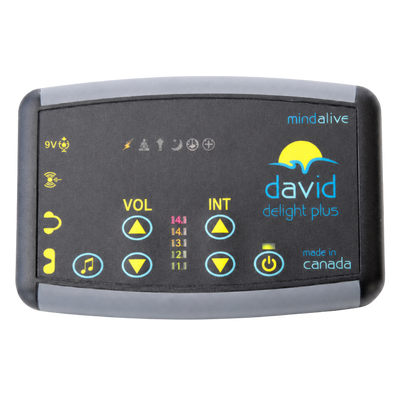
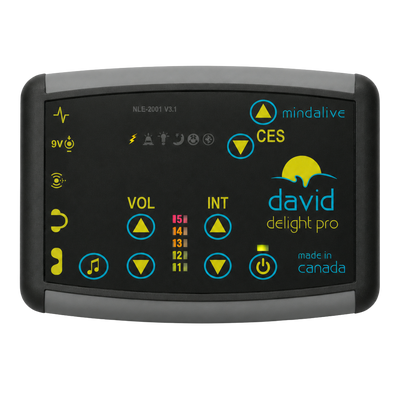
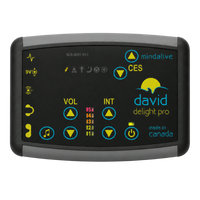
For clients whose findings are milder or for home-practice extensions of clinic work, the DAVID Delight Pro at $559.99 is the device most often sent home between appointments, since it combines AVE with CES ear-clips in a simpler package.
Combining AVE with CES Ear-Clips
Some qEEG-informed plans pair an AVE session with cranial electrotherapy stimulation. CES has been studied for its potential to support relaxation and has been used within protocols for anxiety-related presentations; Cohen et al. (2015) looked at CES in the context of pain, and findings there have informed how some practitioners think about combining AVE and CES for clients with coexisting pain and sleep complaints. CES is not a treatment for any diagnosed condition on its own, and its use should sit inside your clinic's existing protocol for electrical stimulation modalities, including screening for implanted electronic devices.
When AVE and CES are used together, most practitioners introduce them separately first, confirm tolerance of each, and only then move to a combined session.
Tracking Response and Adjusting the Plan
A qEEG gives you a starting point, not a fixed prescription. The DAVID companion app lets practitioners log session history and client notes across visits, which makes it easier to see whether a chosen direction is working before committing to a longer course. If a client reports no change after several sessions in one category, the more useful move is usually to revisit the qEEG findings alongside the client's own feedback rather than simply lengthening the same session.
- Reassess after three to five sessions rather than waiting for a full course to end.
- Note sleep, mood and subjective focus changes, not just whether the client liked the session.
- Adjust one variable at a time, such as session length or frequency range, so you know what changed the response.
- Loop back to the qEEG report if a pattern of non-response suggests the original direction was off.
Research note: Huang and Charyton's 2008 meta-analysis of audio-visual entrainment research found consistent effects across several outcome areas, which supports using AVE as part of a broader plan rather than expecting a single mechanism to explain every client's response.
Documentation, Consent and Scope of Practice
Whatever direction a qEEG points you toward, documentation should include the specific findings referenced, the session category chosen because of them, and the client's informed consent for both the qEEG-informed rationale and the AVE or CES session itself. A fuller walk-through of consent language and contraindications is covered in our guide to informed consent and contraindications for AVE and CES. This device is not for people with a history of photosensitive epilepsy or seizures, or anyone with an implanted electronic device, and clients should consult their own clinician before starting if there is any uncertainty about their medical history. Keep this screening as a standing part of intake, not just for new clients.
It is also worth being explicit with clients, in writing, that DAVID devices are not medical devices for treating or curing any disease. They are studied for their effects on relaxation, sleep and attention-related states and used within protocols the practitioner designs.
FAQ: Choosing DAVID Sessions From a qEEG Report
Can a qEEG tell me the exact DAVID session a client needs?
No. A qEEG points toward a broad direction, such as calming or alertness-oriented sessions, but the exact session, length and frequency still need to be chosen and refined based on the client's response over several visits.
Do I need to be a qEEG specialist to use this approach?
You need to be able to read and interpret a qEEG report, which usually means working with a qualified qEEG reviewer or having that training yourself. The AVE and CES session selection described here assumes the qEEG interpretation has already been done by someone qualified to do it.
How many sessions before I know if the plan is working?
Most practitioners reassess after three to five sessions rather than committing to a long course upfront. This keeps the plan flexible if the client's response does not match what the qEEG suggested.
Is the DAVID Premier necessary, or can I use a Delight Pro for this work?
The Premier's 50+ programmable sessions and CES plus optional tDCS give practitioners more room to build a qEEG-informed plan in the clinic. The Delight Pro is commonly used as the take-home device between clinic visits rather than as the primary clinical tool.
Can AVE and CES be combined in the same session?
They can, but most practitioners introduce each separately first to confirm tolerance before combining them. Any combined protocol should follow your clinic's existing rules for electrical stimulation modalities.
What if a client's qEEG shows a mixed or unclear pattern?
Start with a general relaxation session at a shorter length and reassess after two to three visits. A mixed pattern is common and does not rule out AVE or CES; it just means the first direction is a starting hypothesis rather than a confirmed plan.
Are there clients who should not start AVE or CES regardless of their qEEG?
Yes. Anyone with a history of photosensitive epilepsy or seizures, or with an implanted electronic device, should not use AVE or CES, and should consult their own clinician. This screening takes priority over anything the qEEG findings suggest.