Binaural Beats Frequency Chart
Yrian BrugmanWritten by MindAlive – 35 years of brainwave entrainment, 5× awarded for innovation in neurotechnology.
Binaural Beats Frequency Chart (Full Guide): What Each Range Does + How to Choose
Binaural beats are one of the simplest ways to explore brainwave entrainment using sound. When you play two tones that are close—but not identical— (one in each ear), your brain detects the “difference” and perceives a third rhythmic pulse. That perceived pulse is the binaural beat.
People use binaural beats for stress relief, meditation, sleep support, and focused work. The key is simple: your results depend on matching the frequency range to the state you want. That’s exactly what this guide does—clear chart, practical use cases, and a step-by-step way to choose.
How Binaural Beats Work
Here’s the mechanism in plain terms. Imagine you hear 200 Hz in your left ear and 208 Hz in your right ear. Your brain doesn’t just process them separately—it detects the offset and “creates” an internal rhythmic pulse at 8 Hz. That perceived 8 Hz is the entrainment target.
That’s why binaural beats work best with headphones: each ear must receive a different tone for your brain to generate the internal beat. Speakers can work in some setups, but the effect is typically less reliable.
Want a deeper scientific view of how brainwave patterns shift across life stages? See Human brainwaves by age.
Binaural Beats Frequency Chart
Use this chart as your “menu.” Pick the range that matches your goal, then use the guidelines later in the article for timing and session structure.
| Frequency Range | Category | Common Benefits | Best Use |
|---|---|---|---|
| 0.5–3 Hz | Delta | Deep sleep support, physical recovery, nervous system downshift | Nighttime, chronic stress recovery |
| 4–7 Hz | Theta | Creativity, intuition, emotional processing, meditation depth | Pre-sleep, creative sessions |
| 8–12 Hz | Alpha | Relaxation, calm focus, mood balance, learning readiness | Stress relief, light meditation |
| 13–30 Hz | Beta | Alertness, focus, productivity, problem-solving | Studying, work sessions |
| 31–45 Hz | Gamma | High-level cognition, integration, memory support, insight | Advanced meditation, cognitive performance |
Understanding Each Frequency Range
Delta (0.5–3 Hz) – Deep Sleep & Recovery
Delta is your deepest sleep rhythm—linked with physical repair, immune support, and full nervous system downshifting. People often use delta binaural beats when the problem isn’t “sleep time,” but sleep depth—waking up unrefreshed, restless nights, or stress that keeps the system activated.
Practical tip: delta is best used right before bed or during a wind-down routine—avoid using it during the day unless you intentionally want a nap-like effect.
Theta (4–7 Hz) – Creativity & Emotional Processing
Theta sits at the edge of sleep and wakefulness. It’s commonly associated with internal imagery, introspection, and “flowy” creativity. Many people find theta useful for meditation, journaling, and emotional processing—especially when stress makes the mind noisy.
For deeper context on theta applications, see Theta Wave Benefits Guide.
Alpha (8–12 Hz) – Calm Focus & Relaxation
Alpha is relaxed alertness—calm, but not sleepy. It’s one of the easiest entry points for binaural beats because it often feels pleasant quickly: less tension, more “space” in the mind, and smoother attention. Alpha is ideal if you want to decompress without crashing.
Beta (13–30 Hz) – Focus & Productivity
Beta supports active thinking: planning, problem-solving, and sustained attention. Used wisely, beta beats can help you lock in for studying, deep work, or mentally demanding tasks. The main caution is overstimulation: if you’re already anxious or wired, high beta can feel too intense.
Want a deeper dive on beta benefits? See Beta Wave Benefits.
Gamma (31–45 Hz) – Cognitive Enhancement
Gamma is often discussed in the context of high-level integration: learning, memory, and complex cognition. Some users describe a “clearer” mental state with gamma sessions—especially when paired with meditation or intentional cognitive training.
If gamma feels edgy, drop to low gamma (around the low 30s) or return to alpha first and build tolerance.
How to Choose the Right Frequency
The fastest way to choose is to start with the state you want, then match the frequency range. Here’s a practical map:
- Stress relief: Alpha (calm focus) or Theta (deeper release)
- Creativity: Theta
- Sleep support: Delta (bedtime) + Theta (wind-down)
- Focus: Beta (most people) or low Gamma (advanced)
- Emotional processing: Theta
- Mood balance: Alpha
If you’re unsure, start with alpha. It’s the most “universally tolerated” range, and it’s a clean baseline to compare against.
Binaural Beats vs. Light & Sound Entrainment
Binaural beats work through the auditory system only. That can be effective, but it’s also why results vary—headphone fit, competing noise, and attention all affect the experience.
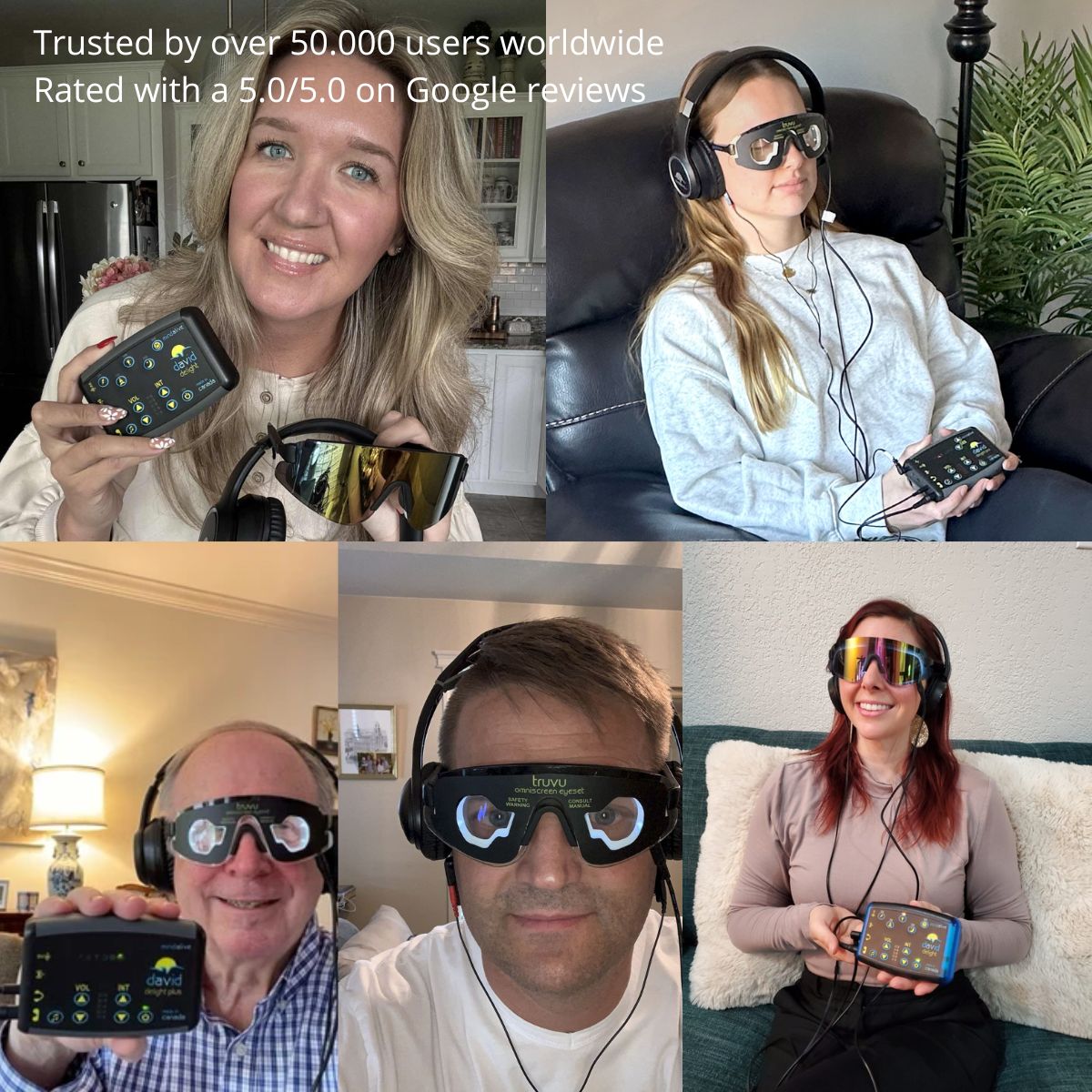
Light-and-sound entrainment (AVE) adds a second pathway: synchronized light stimulation plus audio. Because more sensory channels are engaged, many users find the shift faster and more consistent—especially for relaxation routines and sleep prep. That’s the approach used in the DAVID Premier.
When & How Often to Use Binaural Beats
- Session length: 10–20 minutes (start shorter if you’re sensitive)
- Use headphones: essential for reliable binaural perception
- Environment: quiet, low-stimulation, minimal interruptions
- Frequency: 3–5× per week (or more for gentle ranges like alpha)
The most important factor is consistency. Your brain learns states through repetition—so a simple routine you actually do beats a “perfect” routine you don’t.
Looking for Stronger, More Reliable Entrainment?
If your goal is deeper relaxation, clearer focus, or a more structured brain-state routine than binaural beats typically deliver, explore the DAVID Premier below.
Explore DAVID Premier