

How To Activate Theta Brain Waves? Explained
Mind Alive
Theta — the 4–7 Hz band your brain enters during deep meditation and just before sleep — is where creativity, memory consolidation and emotional processing happen. Here's how to reach it reliably.
What theta brain waves actually are
Theta brain waves are slow electrical oscillations in the 4–7 Hz range, recorded on an EEG when the brain is in a relaxed, inward-directed state. They dominate during deep meditation, the moments just before you fall asleep (the hypnagogic state), REM dreaming, and the memory-consolidation windows that follow intense learning.
You have experienced theta without knowing it: the moment when a stubborn problem suddenly resolves itself in the shower, the dreamlike thoughts that appear right as you drift off, the feeling after a long meditation that time has softened. These are theta signatures — and they are generated by specific brain regions, not random noise.
Understanding theta matters because it is where a great deal of the brain's most important housekeeping happens: consolidating memories, integrating emotions, cultivating insight, and resetting the autonomic nervous system. A brain that never reaches theta is a brain that never fully processes the day. For broader context on how sound and light can be used to guide the brain between these bands, see our overview of Audio-Visual Entrainment.

Why most adults rarely reach theta anymore
The modern nervous system is trained to stay in beta. Emails, notifications, news, deadlines — each one triggers a small sympathetic-nervous-system activation and reinforces the brain's default toward fast, high-frequency oscillations. Over months and years, this becomes the new baseline. The neural pathways that generate slower states grow weaker from disuse, exactly like any unused muscle.
The result is a characteristic modern complaint: "I can't switch off." It isn't weakness or a personality flaw. It's a learned pattern of suppressed theta and alpha, documented on EEG across millions of adults reporting chronic stress, insomnia and brain fog.
The good news is that the brain is neuroplastic. The pathways that produce theta can be re-strengthened — but doing so requires either thousands of hours of meditative practice or external stimulation that gives the brain the signal it has forgotten how to generate on its own.
How the brain enters theta
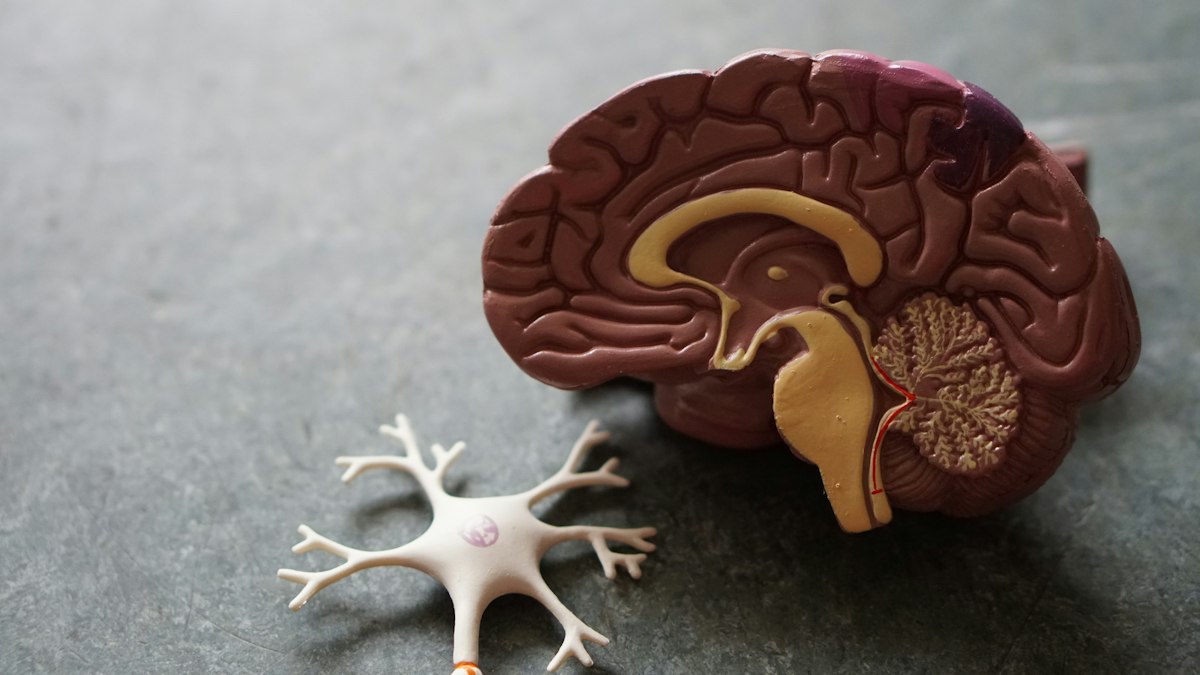
Theta isn't produced randomly. It originates primarily from the hippocampus and its connections to the medial prefrontal cortex — the same circuitry that consolidates memory, processes emotion, and coordinates internal focus. When sensory input quiets and the mind turns inward, these circuits begin to oscillate rhythmically at 4–7 Hz.
This is why theta appears during meditation, immersive storytelling, deep problem-solving, and the moments before sleep. All of these share one signature: reduced external stimulation, increased internal attention. When you pair that state with a rhythmic stimulus — a mantra, a slow breath, or pulsed sound and light — the brain synchronizes to the rhythm and enters theta faster. The technical name for this is the Frequency Following Response.
Seven methods that actually work
Below are the seven methods the research literature most consistently links to measurable theta activation. They range from deeply traditional to modern neurotechnology. Strength, speed, and reproducibility vary — so does the time cost.
1. Audio-Visual Entrainment (AVE)
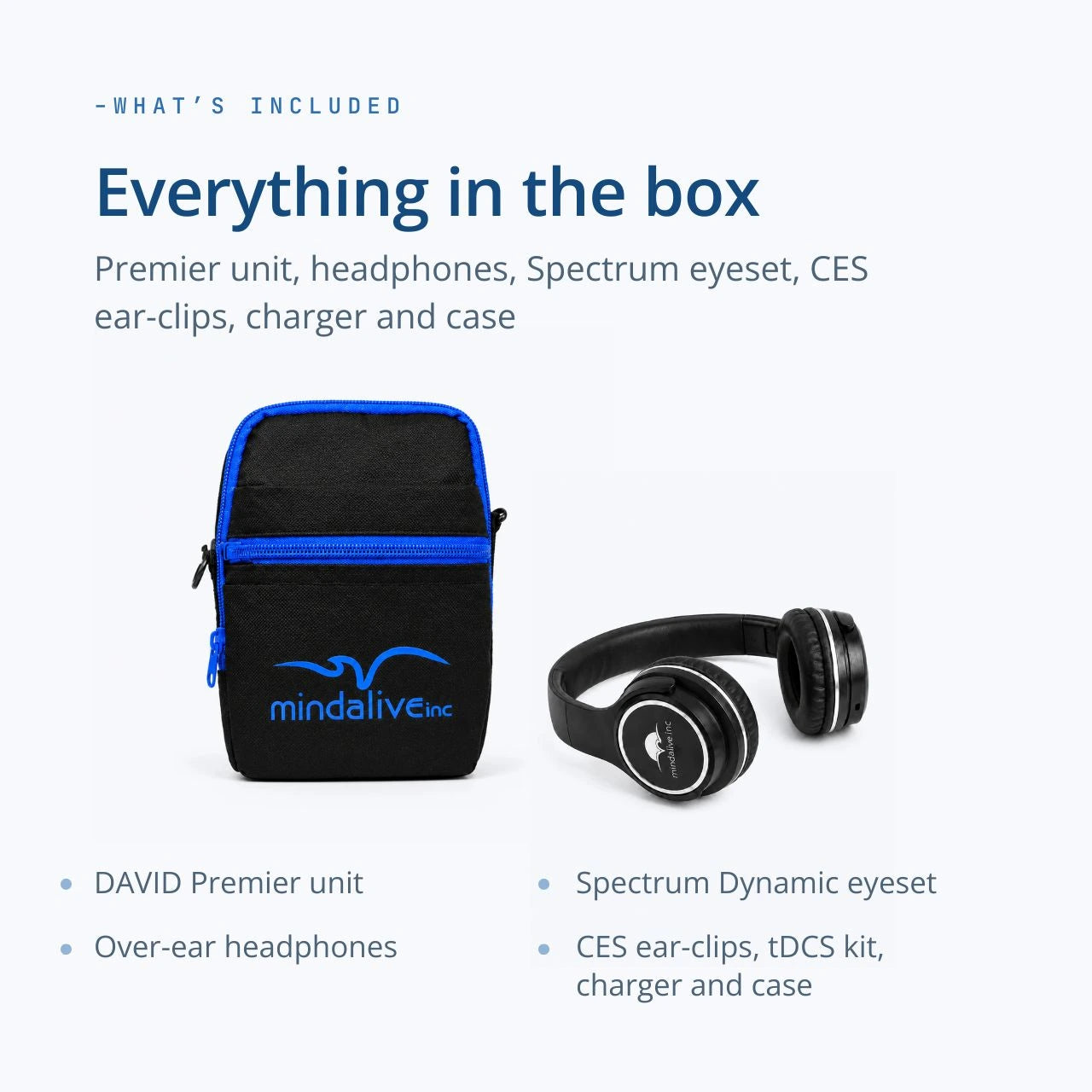
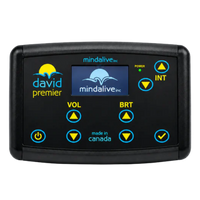
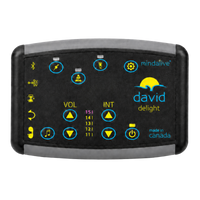
AVE is the most direct, measurable method available outside a clinical lab. A device like the DAVID Premier delivers pulsed light through a Ganzfeld eyeset combined with matched isochronic tones through headphones at a chosen frequency — for theta, typically 5–6 Hz. Most users enter measurable theta within the first 10–15 minutes of a session, no prior training required. EEG studies consistently show the largest theta increases for combined audio-visual protocols versus audio-only.
2. Deep meditation (experienced practitioners)
Long-term meditators — particularly those practicing loving-kindness, non-directive, or Tibetan-style meditation — show reliable theta increases in frontal-midline regions during practice (Aftanas & Golocheikine, 2001). The effect is real and documented, but it typically takes hundreds to thousands of hours of consistent practice to become reproducible on demand.
3. Yoga nidra
Yoga nidra ("yogic sleep") is a guided protocol that walks the practitioner through body-scan awareness while staying on the edge of sleep. EEG during advanced sessions often shows theta dominance. Unlike silent meditation, yoga nidra provides external guidance that helps beginners stay near the theta threshold instead of drifting past it into delta/sleep.
4. Binaural beats and isochronic tones at 4–7 Hz
Pure audio entrainment is accessible through any decent tracks app or player. Effects are real but smaller than AVE. Isochronic tones generally outperform binaural beats for theta induction — for a detailed comparison, see our article on binaural beats and the research behind different auditory protocols.
5. Slow diaphragmatic breathing (4–6 breaths per minute)
Slow, paced breathing increases vagal tone, down-regulates the sympathetic nervous system, and creates conditions under which theta becomes more accessible. It won't force theta, but it reliably removes the beta that blocks it.
6. Hypnagogic drifting
The few minutes between full wakefulness and sleep onset are a natural theta window — one Thomas Edison and Salvador Dalí famously used by holding a spoon while napping and waking the moment it dropped. A timer-based "theta nap" of 15–20 minutes gives access to the same state.
7. Sensory deprivation / flotation therapy
Float tanks reduce external input to near-zero, which allows the brain to shift naturally toward slower rhythms. Theta often appears in the second half of a 60-minute float. Not the most practical daily option, but a useful benchmark experience.
Building a daily theta practice
Individual sessions produce state change. Repeated sessions produce trait change — the brain gradually learning to enter theta on its own. This is the neuroplastic shift worth pursuing. Clinical data in the Mind Alive research library suggests the following timeline.
Session 1: Immediate shift
Most people notice a clear quieting within the first 20-minute AVE session — mental chatter softens, the body relaxes, time perception changes. With standalone meditation it may take longer, but the direction is identical.
Week 1–2: Sleep and anxiety improvement
Daily 20-minute sessions lead to measurable improvements in sleep onset and reduced baseline anxiety within two weeks. This is the brain getting more regular access to parasympathetic states — the preconditions for theta.
Week 3–4: Cognitive and emotional benefits
By the end of the first month, users commonly report sharper focus on demand, better emotional regulation under stress, and more vivid or meaningful dream recall. Creativity tends to improve not through effort but through quiet insight — a classic theta signature.
Long-term: Lasting neuroplasticity
After 8–12 weeks of consistent practice, many users find they can access theta-like states on their own, without the device. This is not mystical; it's ordinary neuroplasticity. The circuits used grow stronger.
Reduction in anxiety symptoms (STAI scale)
73%Siever, D. (2012). Audio-visual entrainment as a treatment modality. Journal of Neurotherapy.
Improvement in sleep onset and quality (PSQI)
68%Berg, K. & Siever, D. (2009). A controlled comparison of audio-visual entrainment for insomnia.
Enhancement in cognitive performance scores
61%Budzynski, T.H. et al. (2001). Academic performance enhancement with photic stimulation.
Clinicians reporting measurable patient improvement
81%Mind Alive practitioner survey, 2022 (n=1,047 clinicians across 32 countries).
"Theta is where the real integration work happens. When we give the brain the right signal — pulsed light and sound at the theta frequency — people who have never meditated a day in their life reach states that normally take years of practice."
— Dave Siever, M.Sc., Founder of Mind Alive Inc.

Is theta training right for you?
Intentionally activating theta brain waves is safe for most healthy adults and is used widely for stress management, sleep improvement, creative work, attention training, meditation deepening, and trauma-informed therapy under clinical supervision. MindAlive's devices have been adopted by clinicians across more than 32 countries — see clinical applications for details on specific protocols.
There are genuine contraindications. People with photosensitive epilepsy, active cardiac devices (pacemakers, ICDs), certain neurological conditions, or during pregnancy should consult a healthcare provider before using any photic or electrical stimulation protocol. Stop immediately if you experience headache, dizziness, disorientation or agitation.
For everyone else: if you are curious about accessing the state where creativity, memory and emotional integration actually happen — and you would prefer not to wait ten years of meditation practice to do it — then the evidence points clearly toward AVE as the most efficient path into theta available today.
Frequently Asked Questions
What exactly are theta brain waves?
Theta brain waves are slow EEG oscillations in the 4–7 Hz range, generated primarily by the hippocampus and medial prefrontal cortex. They dominate during deep meditation, the hypnagogic state before sleep, REM dreaming, and the memory-consolidation windows that follow intense learning.
How fast can I activate theta with AVE?
Most users enter measurable theta within the first 10–15 minutes of a 20-minute AVE session using photic and isochronic-tone stimulation at 4–7 Hz. No prior meditation experience is required. The effect is reproducible across sessions.
Is activating theta brain waves safe?
For healthy adults, yes. 35 years of AVE research have documented no serious adverse effects from therapeutic use. People with photosensitive epilepsy, active cardiac devices (pacemakers, ICDs), certain neurological conditions, or during pregnancy should consult a clinician before use.
Do I need a special device, or can I just use headphones?
Audio-only protocols (binaural beats, isochronic tones) produce real but smaller theta effects than combined audio-visual entrainment. If you want the largest, most reliable theta response, a device that pairs pulsed light with pulsed sound — like the DAVID Premier — is the evidence-backed choice.
Can too much theta be a problem?
In ordinary use, no. However, excessive theta during waking hours is associated with attention deficits and daytime drowsiness in some clinical populations (notably some ADHD subtypes). For most adults, the concern is insufficient theta access, not excess.
How does theta relate to creativity?
Theta activity increases before "aha" moments and during insight tasks — documented in EEG studies of creative problem-solving. The state allows the brain to loosen rigid associative links and form novel connections, which is why ideas so often appear in the shower, just before sleep, or after long walks.
References
- Adrian, E.D. & Matthews, B.H.C. (1934). The Berger rhythm: Potential changes from the occipital lobes in man. Brain, 57(4), 355–385.
- Aftanas, L.I. & Golocheikine, S.A. (2001). Human anterior and frontal midline theta and lower alpha reflect emotionally positive state and internalized attention: high-resolution EEG investigation of meditation. Neuroscience Letters, 310(1), 57–60.
- Siever, D. (2012). Audio-visual entrainment as a treatment for stress, anxiety and sleep disorders. Journal of Neurotherapy, 14(3), 1–28.
- Berg, K. & Siever, D. (2009). A controlled comparison of audio-visual entrainment for treating seasonal affective disorder and insomnia. Journal of Neurotherapy, 13(3).
- Budzynski, T.H., Jordy, J., Budzynski, H.K., Tang, H., & Claypoole, K. (2001). Academic performance enhancement with photic stimulation. Journal of Neurotherapy, 4(2).
- Cahn, B.R. & Polich, J. (2006). Meditation states and traits: EEG, ERP, and neuroimaging studies. Psychological Bulletin, 132(2), 180–211.
- Huang, T.L. & Charyton, C. (2008). A comprehensive review of the psychological effects of brainwave entrainment. Alternative Therapies in Health and Medicine, 14(5), 38–50.