

The Truth About Binaural Entrainment
Yrian BrugmanWritten by MindAlive – 35 years of brainwave entrainment, 5× awarded for innovation in neurotechnology.
The Truth About Binaural Entrainment
Binaural beats are one of the most popular ways people attempt to influence their mental state. With millions of playlists online, apps promising deeper sleep, and videos claiming instant calm, binaural entrainment has become a global trend.
But there is one problem: for many people, it works inconsistently — or barely at all.

What Are Binaural Beats?
Binaural entrainment uses two slightly different tones played separately into each ear. The brain detects the difference between these tones and creates an internal “beat” equal to the frequency gap.
Example:
- Left ear: 400 Hz
- Right ear: 410 Hz
- Internal beat perceived by the brain: 10 Hz (alpha range)
In theory, this internal beat encourages the brain to shift toward the frequency you want (e.g., 10 Hz for calm focus).
It’s a clever idea — but the brain’s ability to follow this signal depends heavily on internal conditions.
How Binaural Entrainment Works (The Simple Version)
The brain must perform three steps:
- receive two separate tones
- calculate the difference between them
- convert that difference into an internal pulse
This requires a calm and stable auditory system.
The Big Question: Does It Actually Work?
Yes — for some people. But not for everyone.
Here is a realistic comparison:
| Category | Binaural Entrainment | Audiovisual Entrainment (AVE) |
|---|---|---|
| Strength of signal | Weak | Strong |
| Requires earbuds | Yes | No |
| Works during stress | Rarely | Very consistently |
| Engages visual cortex | No | Yes (major advantage) |
| Clinical research support | Limited | Extensive |
Why Binaural Beats Are So Popular
People love them because they are:
- free
- easy to try
- accessible anywhere
- often relaxing
For mild stress relief, background noise, or meditation enhancement, they can be helpful.
Why Binaural Entrainment Often Fails
If you’ve ever tried binaural beats and felt nothing — you're not alone. Research shows that binaurals are highly dependent on the brain being:
- well rested
- low in stress hormones
- able to focus
- not overwhelmed or anxious
But most people try binaural beats exactly when these conditions are not present.
Stressed brains have difficulty generating internal beats — which means the entrainment effect never really happens.
The Neuroscience Limitation
Binaural beats activate the auditory processing centers of the brain. But the auditory cortex is relatively small compared to the visual cortex.
This is why sound-only methods produce mild effects, while light-based methods are far more powerful.
What the Research Says
The NIH review of brainwave entrainment concluded that audiovisual entrainment produces stronger and more consistent changes in brainwave activity than binaural beats alone.
This is because visual stimulation drives the fastest and strongest frequency-following response in the brain.
When Binaural Entrainment *Does* Work Well
People tend to respond positively when they are:
- already relatively calm
- not overly stressed
- not sleep deprived
- not neurodivergent
- not multitasking
- not fatigued
For these users, binaural beats can be soothing and supportive.
The Missing Piece: The Signal Is Too Weak
Binaural entrainment is subtle — and subtle doesn’t help when the nervous system is overloaded.
If you need noticeable changes in mood, sleep, stress or focus, sound alone simply isn't enough for most people.
A Stronger Solution: Audiovisual Entrainment (AVE)
AVE uses rhythmic LED light + pulsed audio to deliver a direct external frequency that the brain follows effortlessly.
Unlike binaural beats, AVE does not rely on the brain to create the signal — it delivers the signal to both sensory systems at once.
Why the DAVID Premier Outperforms Binaural Entrainment
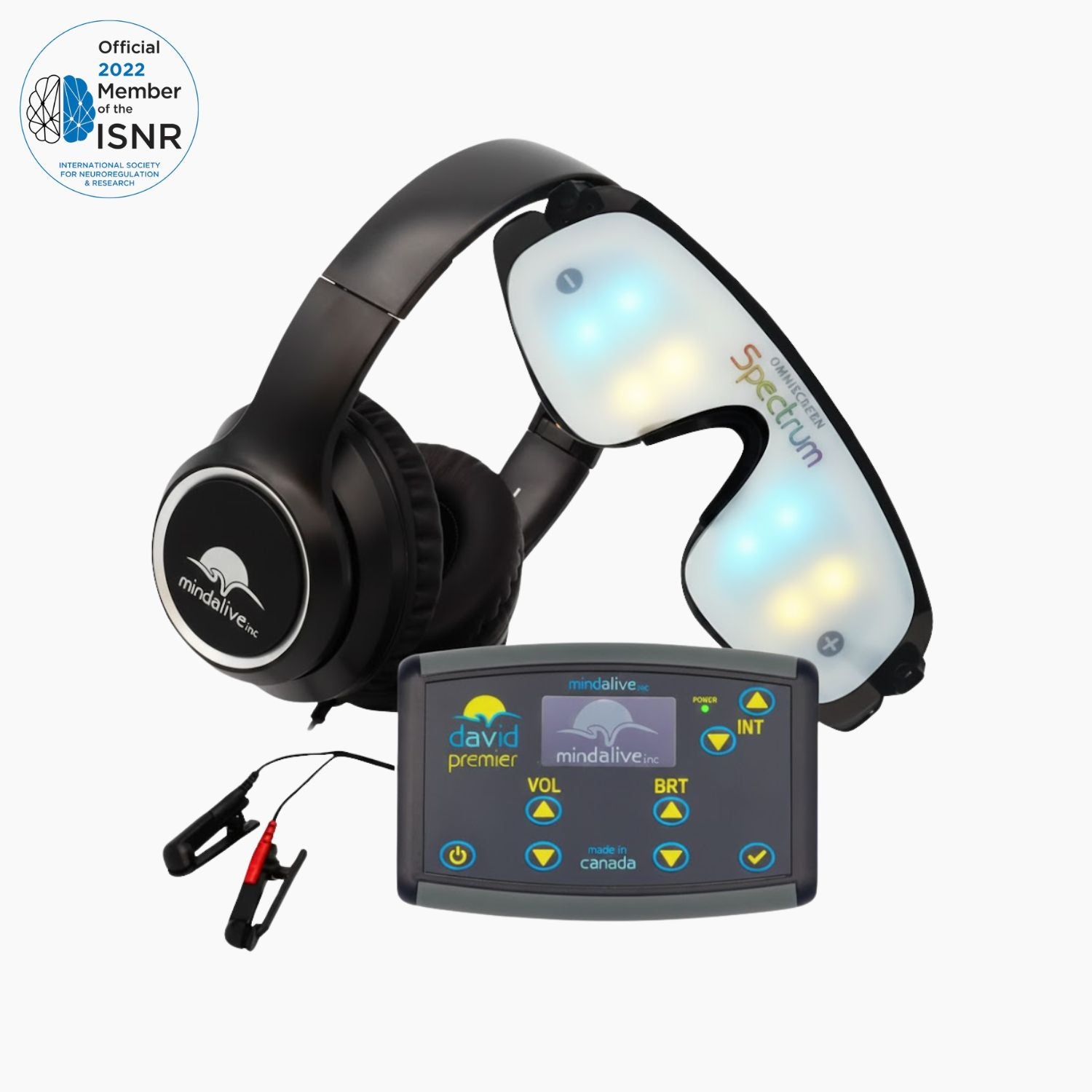
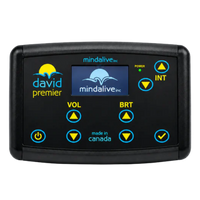
The DAVID Premier provides:
- direct LED-based brainwave stimulation
- sound pulses that reinforce the light signal
- activation across multiple brain regions
- strong, consistent entrainment
- 28 programs for sleep, stress, focus, energy and more
Its effectiveness is documented across many independent studies: Scientific Studies on the DAVID Devices.
If Binaural Beats Didn’t Work for You, It’s Not Your Fault
Your brain wasn’t able to generate a strong enough internal beat — especially under stress. You simply needed a stronger signal.
Your Next Step
Binaural beats can be a good introduction to entrainment, but if you want real, measurable changes, you need technology capable of delivering them.
Explore the DAVID Premier