What Are Theta Waves? Explained
Mind Alive
Theta waves (4–7 Hz) are not just "deep relaxation" — they're the electrical code the brain uses to encode memories, process emotion, dream, and build neuroplasticity. Here's what they do, and why they matter.
What theta waves do in brain activity: the short version
What do theta waves do in brain activity? The short answer: they are the electrical code the hippocampus uses to encode memory, the rhythm that organises internal attention, and the signature state of deep meditation, dreaming and creative thought. The longer answer — why this band matters more than its "relaxation" reputation suggests — takes a few sections.
Theta sits in the 4–7 Hz range on an EEG: slower than alpha, faster than delta. Unlike alpha, which appears the moment your eyes close, theta emerges during specific cognitive and physiological events — learning a new route through a city, recalling an old emotional memory, drifting toward sleep, entering deep meditation. The band is universal across mammals, which is a strong clue that it performs something evolutionarily important.
If you're new to this subject, our overview of Audio-Visual Entrainment explains how pulsed light and sound can be used to guide the brain through each of the major frequency bands on demand.
Memory encoding and the hippocampal theta code
The hippocampus — a small, seahorse-shaped structure deep in each temporal lobe — is where new memories are stamped into long-term storage. Almost everything we know about how this happens points back to theta.
In rodent studies, hippocampal theta runs continuously during active exploration, and it underpins the famous "place cell" activity first described by John O'Keefe. In humans, intracranial recordings show the same principle: theta power increases when subjects are learning new material, and increases again when they successfully retrieve it. Suppress theta pharmacologically and the learning collapses.
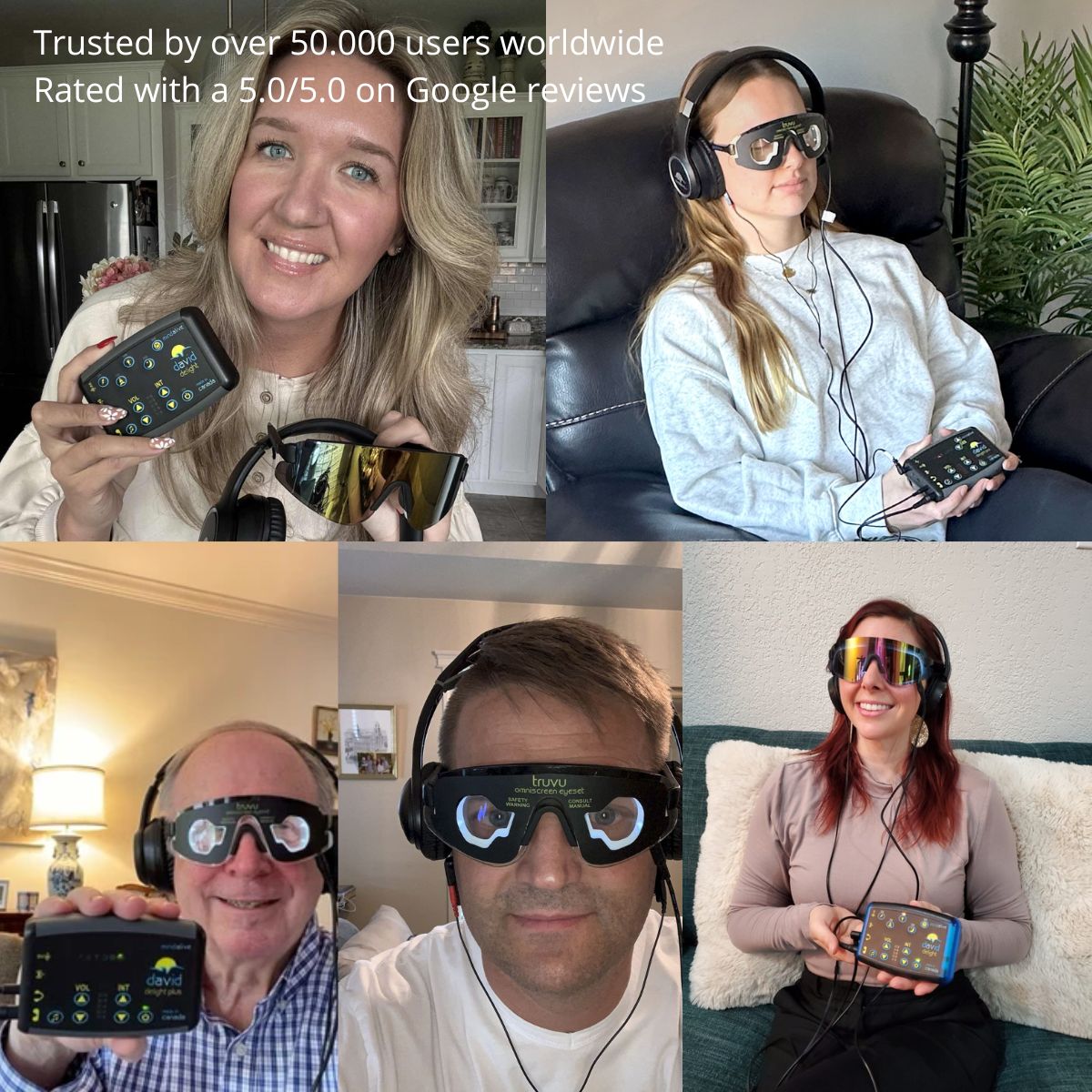
The implication is practical. If chronic stress locks the brain into beta and starves the hippocampus of theta, memory performance drops measurably — not because the brain is "tired" but because the electrical scaffolding that memory requires is weaker than it should be. This is why entry-level AVE devices like the DAVID Delight include dedicated theta protocols: they give the brain a direct route back into the state its memory systems need.
Emotional processing and regulation
Theta doesn't only live in the hippocampus. A second major source is the frontal midline — specifically the anterior cingulate cortex — where theta rises during emotional processing, conflict detection and focused internal attention. This is the theta that appears in skilled meditators during loving-kindness or non-directive practice, and the theta that appears in therapy sessions when a patient actually begins integrating a difficult memory.
Frontal-midline theta is, in a real sense, the sound of the brain doing its emotional homework. When it's present, feelings get processed rather than suppressed. When it's absent, emotional material stays stuck as reactive patterns stored in beta. This is one reason AVE protocols for PTSD and trauma adjuncts — often delivered via the DAVID Delight Plus — target theta frequencies rather than straight relaxation alpha.
Creativity, insight and the default mode
The "aha" moment — when a stubborn problem suddenly resolves itself — has a measurable EEG signature: a burst of frontal theta a few hundred milliseconds before the conscious recognition of the answer. This has been replicated repeatedly in laboratory insight tasks.
Theta is also associated with increased activity in the default mode network (DMN), the brain's introspection and self-referential circuitry. The DMN is what engages when you stop concentrating on the outside world and let the mind wander. In well-regulated brains, DMN activity paired with theta produces creative integration; in dysregulated brains, it produces rumination. Training healthy theta — through meditation or through AVE with the DAVID Delight Pro — helps keep the DMN in its productive mode.

Sleep, dreaming and neuroplasticity
Theta is the dominant rhythm during REM sleep, the phase in which the brain replays and integrates the day's experiences. During REM, hippocampal theta reactivates the same neural patterns that fired during learning — a process that effectively rehearses memory in the absence of new input. This is one of the reasons cutting sleep short impairs learning: you lose the theta replay.
Neuroplasticity — the brain's ability to rewire itself — is heavily theta-dependent. Long-term potentiation, the cellular mechanism behind learning, is most efficiently triggered when pre-synaptic firing arrives on a theta-rhythm schedule. In other words, the brain learns best when its electrical carrier signal is in the 4–7 Hz range.
This is why AVE protocols aimed at sleep support and memory consolidation — for instance those included with the DAVID Delight Pro — emphasise theta frequencies rather than alpha. Full peer-reviewed data is catalogued in the MindAlive research library.
Reduction in anxiety symptoms (STAI scale)
73%Siever, D. (2012). Audio-visual entrainment as a treatment modality. Journal of Neurotherapy.
Improvement in sleep onset and quality (PSQI)
68%Berg, K. & Siever, D. (2009). A controlled comparison of audio-visual entrainment for insomnia.
Enhancement in cognitive performance scores
61%Budzynski, T.H. et al. (2001). Academic performance enhancement with photic stimulation.
Clinicians reporting measurable patient improvement
81%Mind Alive practitioner survey, 2022 (n=1,047 clinicians across 32 countries).
"Theta is where learning, emotion and creativity all get stitched together. Protect the brain's access to theta and you protect the mind's ability to integrate experience — which is ultimately what mental health is."
— Dave Siever, M.Sc., Founder of Mind Alive Inc.
How to support healthy theta activity
Because theta serves so many distinct functions, supporting it doesn't require a single "trick" — it requires not suppressing it. Most people in modern life already produce plenty of beta and too little of everything else. A short list of reliable practices:
1. Prioritise sleep, especially REM
REM sleep is the body's main theta protocol. Go to bed at a consistent time, avoid alcohol late (it suppresses REM), and aim for 7–9 hours so you get the full complement of late-night REM cycles.
2. Daily meditation or AVE sessions
15–20 minutes a day of meditation, yoga nidra or AVE at a theta frequency (5–6 Hz) strengthens the neural pathways that produce theta on demand. Entry-level AVE options like the DAVID Delight and DAVID Delight Plus make this straightforward.
3. Slow, paced breathing
4–6 breaths per minute increases vagal tone and removes the sympathetic activation that crowds out theta. Simple, free, reliable.
4. Reduce chronic beta-dominant stress
Not all stress is bad, but chronic beta overstimulation is what keeps most adults out of theta. Boring as it sounds: fewer notifications, shorter work blocks, more outdoor time, more actual rest.
5. Time outdoors and mind-wandering
Nature exposure reliably produces both alpha and theta shifts on EEG. A 30-minute walk without a phone is a surprisingly effective protocol.

Frequently Asked Questions
What exactly do theta waves do in brain activity?
Theta waves (4–7 Hz) coordinate memory encoding in the hippocampus, emotional processing in the anterior cingulate, creative insight in the default mode network, and memory replay during REM sleep. They are the electrical rhythm that supports the brain's integrative functions — the things that turn information into lived experience.
Is more theta always better?
Not necessarily. Theta that appears at the right time — during learning, sleep or meditation — is highly beneficial. Excess theta during waking hours can be associated with attention problems and daytime drowsiness. For most adults, the concern is insufficient theta access during restorative windows, not an excess.
Can I train theta without a device?
Yes — consistent meditation, yoga nidra, slow breathwork and adequate REM sleep all support theta. These methods work but often take months to years to become reliably reproducible. AVE devices like the DAVID Delight shortcut that learning curve.
Which DAVID device is best for theta training?
All four include theta protocols. The DAVID Delight is the accessible entry point; the DAVID Delight Plus adds extended program options; the DAVID Delight Pro adds CES for stronger sleep and anxiety effects; the DAVID Premier adds tDCS on top. Choose based on breadth of protocols and budget.
Is theta training safe?
For healthy adults, yes. 35+ years of AVE research have documented no serious adverse effects. People with photosensitive epilepsy, active cardiac devices, certain neurological conditions, or during pregnancy should consult a clinician first.
How quickly can I notice effects?
Most people notice a clear quieting effect within a single 20-minute AVE session. Measurable shifts in sleep, memory and baseline anxiety typically appear within 1–2 weeks of daily practice, with trait-level changes developing over 8–12 weeks of consistent use.
References
- Adrian, E.D. & Matthews, B.H.C. (1934). The Berger rhythm: Potential changes from the occipital lobes in man. Brain, 57(4), 355–385.
- Buzsáki, G. (2002). Theta oscillations in the hippocampus. Neuron, 33(3), 325–340.
- O'Keefe, J. & Recce, M.L. (1993). Phase relationship between hippocampal place units and the EEG theta rhythm. Hippocampus, 3(3), 317–330.
- Klimesch, W. (1999). EEG alpha and theta oscillations reflect cognitive and memory performance: a review and analysis. Brain Research Reviews, 29(2–3), 169–195.
- Aftanas, L.I. & Golocheikine, S.A. (2001). Human anterior and frontal midline theta and lower alpha reflect emotionally positive state and internalized attention. Neuroscience Letters, 310(1), 57–60.
- Siever, D. (2012). Audio-visual entrainment as a treatment for stress, anxiety and sleep disorders. Journal of Neurotherapy, 14(3), 1–28.
- Berg, K. & Siever, D. (2009). A controlled comparison of audio-visual entrainment for treating seasonal affective disorder and insomnia. Journal of Neurotherapy, 13(3).