Alpha Brain Waves Meditation: Science, Benefits & Techniques | Mind Alive
Mind Alive
Alpha Brain Waves Meditation: Science, Benefits & Techniques
How 8–12 Hz helps you stay calm, sharp, and in control.
In today's fast-paced world, staying mentally sharp and focused can feel like a full-time job. Constant notifications, deadlines, and distractions keep many brains locked in stress-heavy modes. Alpha brain waves offer a different path—one that combines calm with clarity.
Alpha waves sit in the 8–12 Hz range and are associated with a relaxed yet alert state. When alpha activity is healthy, we're more focused, less reactive, and better able to think creatively under pressure.[1] Alpha brain wave meditation is a practical way to access this state on purpose, supporting both personal and professional growth.
Key Takeaways
- Alpha brain waves (8–12 Hz) are linked to relaxed alertness, mental clarity, and sustained focus.
- Meditation, mindfulness, and breathwork can increase alpha activity and improve cognitive performance.
- The alpha state feels like a quiet, spacious mind—awake and clear, without the urgency of high-beta.
- Beginners can reach a light alpha state in 5–10 minutes using simple breathing and body awareness.
- Alpha states support creativity, problem-solving, and stress reduction—key pillars of mental health.
- Technologies like AVE, binaural beats, neurofeedback, and CES can further optimize alpha wave production.
Understanding Brain Wave Patterns and States of Consciousness
The human brain generates rhythmic electrical activity that can be measured with electroencephalography (EEG). This activity is grouped into five broad frequency bands: delta, theta, alpha, beta, and gamma. Each band is associated with characteristic mental states and functions.
Types of Brain Waves and Their Frequencies
Although real brain activity is complex and overlapping, the classic frequency bands can be summarized as:
| Brain Wave Type | Frequency Range | Associated Mental States & Cognitive Functions |
|---|---|---|
| Delta | 0.5 – 4 Hz | Deep, restorative sleep; physical regeneration |
| Theta | 4 – 8 Hz | Emotional processing, learning, early sleep, deep meditation |
| Alpha | 8 – 12 Hz | Relaxed alertness, creativity, "idling" but ready to focus |
| Beta | 12 – 30 Hz | Active thinking, problem-solving, planning, task execution |
| Gamma | 30 – 100 Hz+ | High-level cognition, binding of sensory information, working memory |
The Role of Neural Oscillations in Mental States
These brain rhythms—also called neural oscillations—help coordinate activity across networks. The dominant frequency pattern at any moment influences (and reflects) how you feel and think: sleepy, stressed, creative, focused, or deeply relaxed. Practices like meditation, neurofeedback, and AVE can deliberately shift these oscillations toward more supportive states, such as alpha for calm focus.
How Brain Waves Influence Cognitive Function
Different brainwave bands support different cognitive processes:
- Alpha promotes relaxed alertness, access to creative ideas, and a readiness to focus without strain.
- Beta facilitates analytical thinking, planning, and task management—but can tip into stress when excessive.
- Theta and delta support emotional integration, recovery, and long-term memory consolidation.
By understanding how alpha fits into this spectrum, you can intentionally cultivate brain states that match what you need: focus without burnout.
The Science Behind Alpha Brain Waves
Alpha brain waves arise when large groups of neurons synchronize their firing patterns in the 8–12 Hz range. Typically strongest over occipital and parietal regions when the eyes are closed and the body is relaxed, alpha is often described as the brain's "idle but ready" rhythm.[1]
Historically, alpha waves were first identified by Hans Berger in the 1920s and later popularized as a "relaxation rhythm." Since then, research has linked alpha to:
- Reduced mental noise and chatter
- Improved mood and stress resilience[2]
- Enhanced creativity and idea generation
- Better performance on certain cognitive tasks
A 2021 study published in Scientific Reports found that alpha and theta oscillations change measurably with progressive levels of meditation depth—supporting the idea that regular meditation practice can reliably shift your brain toward more beneficial wave patterns.[1]
Modern studies show that mindfulness, meditation, and gentle neurostimulation (such as Audio-Visual Entrainment) can increase alpha power, often correlating with reports of calm clarity and better emotional balance.
What Does the Alpha State Feel Like?
One of the most common questions beginners ask is: "How will I know I'm in alpha?" Unlike sleep or deep trance, the alpha state is subtle—but once you recognize it, it becomes unmistakable.
People in a healthy alpha state typically report:
- A quieter mind — fewer intrusive thoughts, lower mental "volume"
- Relaxed body, alert mind — muscles soften, breathing slows, but attention remains clear
- A sense of mental spaciousness — as if there's more room to think without rushing
- Effortless attention — focus that doesn't feel forced or strained
- A subtle "poised" readiness — calm and ready, like standing at the edge of a pool before diving in
- Gentle warmth or heaviness in the limbs as the parasympathetic system activates
Alpha vs. Drowsiness: The Key Difference
Alpha is frequently confused with the onset of sleep. The critical distinction: in true alpha, you remain mentally alert and aware, even as the body is deeply relaxed. If you start losing track of thoughts or drifting off, you're likely sliding into theta or delta. Keeping your posture slightly upright (rather than lying flat) is the easiest way to stay in alpha rather than falling asleep.
Alpha vs. High-Beta Stress: The Other Direction
When you're anxious, overwhelmed, or stuck in overthinking, your brain is running hot in the high-beta range (20–30 Hz). Thoughts feel urgent, the body is tense, and it's hard to see solutions clearly. Alpha is the physiological opposite: calm, open, and receptive. Meditation practices, breathwork, and AVE technology all work by gently pulling the brain away from high-beta and toward this more productive alpha territory.
Alpha Brain Waves Meditation: Core Techniques and Benefits
Alpha brain wave meditation is not a single technique, but a family of approaches that reliably push the brain toward relaxed alertness. Over time, these practices can shift your baseline—making it easier to stay clear and composed even under pressure.
Essential Meditation Practices for the Alpha State
- Mindfulness meditation: Gently rest attention on the breath or body. When the mind wanders, notice and return. This simple cycle tends to increase alpha while reducing stress-driven beta.
- Guided imagery: Follow a voice that leads you through calming scenes (e.g., forest, beach, mountain). Vivid visualization plus relaxation is a strong alpha trigger.
- Mantra or transcendental-style meditation: Silently repeat a word or phrase. The rhythmic, effortless focus helps quiet mental chatter and promotes alpha rhythms.
- Body scan: Move attention slowly through the body, relaxing each region. This reduces muscle tension and invites the brain into an alpha-dominant pattern.
Measuring Success in Alpha Wave Generation
You can track your alpha practice in two main ways:
- Subjective markers: Feeling calmer, less reactive, more focused, and more creative after sessions.
- Objective tools: Consumer EEG devices and neurofeedback systems that show changes in alpha amplitude or give real-time feedback.
Over weeks and months, consistent practice typically leads to improved stress management, clearer thinking, and enhanced performance at work or school.
Creating the Optimal Environment for Alpha Wave Production
Environment matters. You'll enter alpha more easily if your sensory inputs support rather than fight your nervous system.
- Choose a quiet, interruption-free space with minimal visual clutter.
- Use soft, indirect lighting or an eye mask to reduce visual stimulation.
- Sit or lie in a comfortable but alert posture (avoid collapsing into sleepiness).
- Optionally add gentle nature sounds or calm music to support relaxation.
- Anchor your practice with a consistent schedule so your brain learns the cue (e.g., 10–20 minutes, once or twice per day).
When your space, schedule, and nervous system all point toward relaxation, alpha meditation becomes easier, deeper, and more reliable.
Beginner's Guide: How to Enter the Alpha State in 5 Minutes
You don't need years of meditation experience to access alpha. This step-by-step protocol is designed for beginners and can produce noticeable results from the very first session.
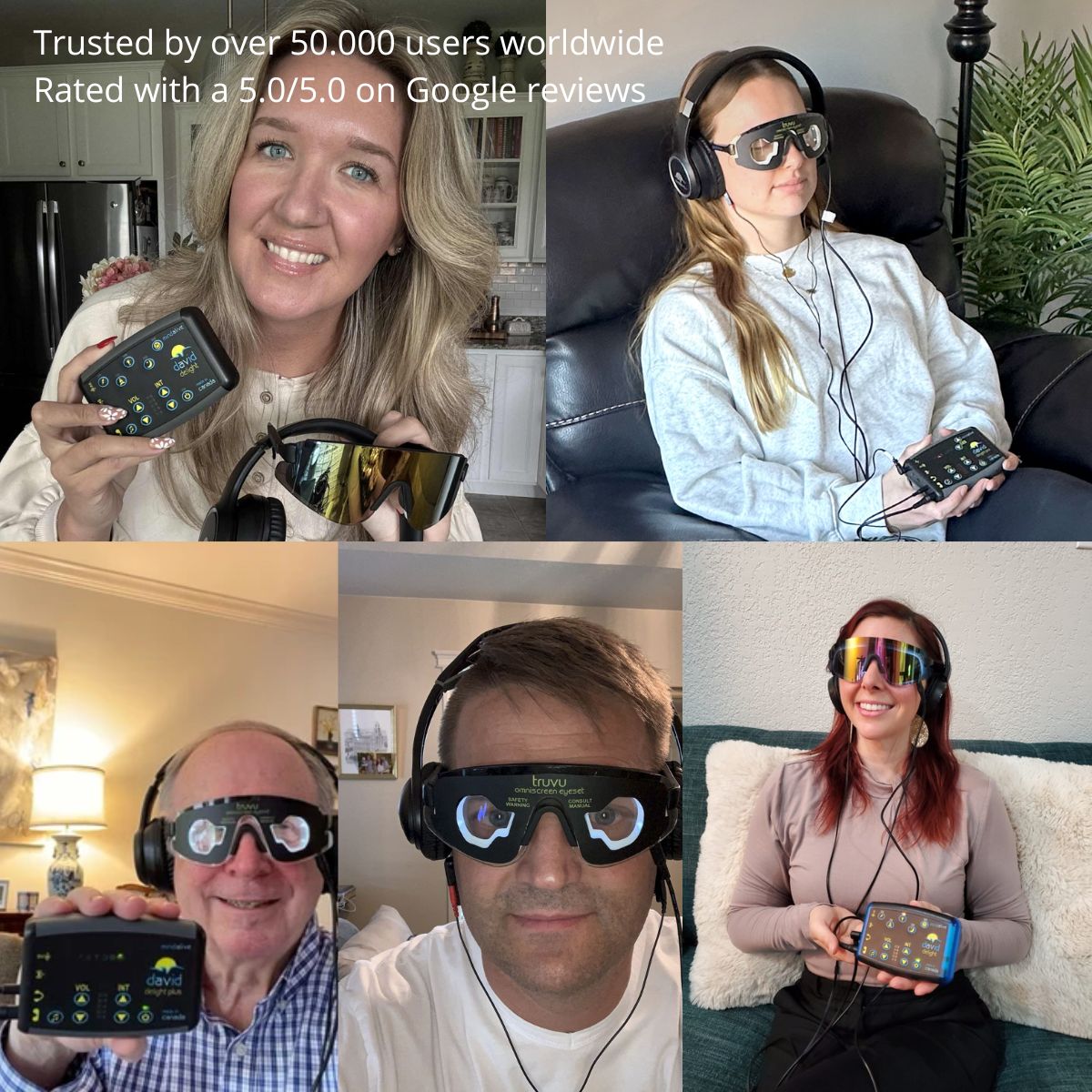
Want to shortcut the process? AVE devices like the DAVID Premier use rhythmic light and sound at 8–12 Hz to guide your brain into alpha automatically—ideal for days when traditional meditation feels out of reach.
The Connection Between Alpha Waves and Creativity
Alpha waves are strongly associated with creative cognition and divergent thinking.[2] In alpha, the brain relaxes inhibitory filters just enough to consider new combinations and perspectives—without losing all structure.
How Alpha States Enhance Creative Thinking
Increased alpha activity is linked to:
- More original ideas during brainstorming tasks
- Improved ability to break away from habitual solutions
- Greater access to intuitive insights and "aha" moments
Meditation and mindfulness that boost alpha have also been shown to improve creative problem-solving and mood—two factors that often move together.
Research-Backed Evidence on Creative Enhancement
Studies using brain stimulation and neurofeedback suggest that gently enhancing alpha can improve performance on certain creative tasks and may support people dealing with low mood or rigid thinking patterns. Practically, that means alpha training can be a valuable tool for artists, designers, entrepreneurs, and anyone who relies on flexible thinking.
Mental Focus and Cognitive Performance Enhancement
Alpha waves are a cornerstone of "relaxed focus"—the sweet spot between wired and tired. In this state, attention is steady, but your nervous system stays efficient rather than overclocked.
| Cognitive Metric | Impact of Healthy Alpha Activity |
|---|---|
| Attention span | Improved ability to sustain focus without feeling strained. |
| Information processing | Better filtering of distractions; more efficient handling of relevant input. |
| Working memory | Greater capacity to hold and manipulate information in mind. |
| Mental fatigue | Reduced cognitive overload and faster recovery from demanding tasks. |
Integrating alpha-focused techniques into your day—short sessions before deep work, for example—can noticeably upgrade your mental performance.
Biofeedback and Alpha Wave Training Methods
Biofeedback and neurofeedback add precision to alpha training. Instead of guessing how your brain is responding, you see or hear feedback in real time and adjust your mental state accordingly.
- EEG neurofeedback: Sensors record your brainwaves. When alpha increases within a desired range, you receive positive feedback (e.g., sound, visuals), training your brain to return to that pattern.
- Audio-Visual Entrainment (AVE): Devices like the DAVID Premier use precisely timed light pulses and audio tones to guide the brain toward alpha—no EEG required. This makes consistent alpha training accessible at home.
- Brain-computer interfaces (BCI): Emerging systems use brain signals to control digital elements, offering new ways to practice stabilizing alpha while interacting with tasks and environments.
| Training Method | How It Works | Key Benefits |
|---|---|---|
| EEG Neurofeedback | Measures brainwaves, rewards desired alpha patterns | Precise, measurable; enhances focus, reduces anxiety, deepens meditation |
| AVE (DAVID Premier) | Rhythmic light & sound at alpha frequencies | No setup needed; structured sessions; ideal for daily home practice |
| BCI-Based Training | Brain signals control digital interfaces | Interactive alpha training; potential for neurorehabilitation |
The Role of Breathing Techniques in Alpha Wave Generation
Breath and brain are tightly coupled. Specific breathing patterns can nudge your nervous system into the calm, parasympathetic state that favors alpha activity.
Proper Breathing Patterns for Meditation
To support alpha during meditation:
- Use slow, diaphragmatic breathing, expanding the belly on inhale and relaxing on exhale.
- Try a simple 4–7–8 pattern: inhale for 4 seconds, hold for 7, exhale slowly for 8.
- Keep breathing through the nose when possible to support a calmer physiological profile.
Integrating Breathwork into Daily Practice
You don't have to wait for a full meditation session to benefit. Even 3–5 minutes of focused breathing between tasks can reset your nervous system and bring you back into an alpha-friendly zone of relaxed clarity.
Physical Exercise and Its Impact on Alpha Wave Production
Regular physical exercise—especially aerobic activities like brisk walking, running, cycling, or swimming—can increase alpha activity and improve overall brain health. Many people describe the post-exercise "clear and calm" feeling, which reflects a shift away from high-stress patterns and toward alpha-friendly states.
Combining movement with meditation (such as mindful walking or yoga) can be particularly effective for people who struggle with stillness-based practices. The body moves, the mind settles, and the brain naturally drifts toward alpha.
Using Music and Sound for Alpha Wave Stimulation
Sound is another powerful lever for alpha waves:
- Binaural beats: Present slightly different tones to each ear to generate a perceived 8–12 Hz beat, encouraging alpha synchronization.
- Isochronic tones: Single tones turning on and off at alpha rates, often used without headphones.
- Nature sounds and ambient music: Ocean waves, rain, or gentle soundscapes can support relaxation and help the brain slip into alpha.
Embedding these sounds into your meditation routine—or playing them quietly while doing light creative work—can reinforce alpha activity and improve the quality of your practice.
Common Obstacles in Alpha Wave Meditation Practice
Like any skill, alpha-wave meditation comes with challenges. Recognizing them makes it easier to stay consistent.
Overcoming Mental Barriers
Common mental blocks include skepticism ("Is this doing anything?"), restlessness, and frustration about wandering thoughts. The antidotes:
- Approach practice as an experiment, not a test you can fail.
- Accept mind-wandering as normal; gently return to your focus each time.
- Track small wins (better sleep, calmer responses, more clarity) to reinforce motivation.
Maintaining Consistent Practice
Alpha benefits build with repetition. To stay consistent:
- Start small (5–10 minutes) and increase gradually.
- Pair practice with existing habits (after coffee, before bed, post-workout).
- Use reminders, apps, or accountability partners to stay on track.
Conclusion
Alpha brain waves offer a powerful, practical way to align calm with focus. By learning how 8–12 Hz activity shapes your mental state—and by using meditation, breathwork, movement, audio tools, and technology to cultivate it—you can build a more resilient, creative, and productive mind.
Alpha states are not mystical or out of reach. With the right techniques and a bit of consistency, they can become a daily resource you draw on whenever you need clarity without the cost of chronic stress. Start with the 5-minute beginner protocol above, and build from there.
Sources & References
- Berkovich-Ohana, A., et al. (2021). Alpha and theta oscillations are inversely related to progressive levels of meditation depth. Scientific Reports, 11, 24060. https://pmc.ncbi.nlm.nih.gov/articles/PMC8633885/
- Lagopoulos, J., et al. (2009). Increased theta and alpha EEG activity during nondirective meditation. Journal of Alternative and Complementary Medicine, 15(11), 1187–1192. PubMed: 19922249
- Bazanova, O.M., & Vernon, D. (2014). Interpreting EEG alpha activity. Neuroscience & Biobehavioral Reviews, 44, 94–110.
- Berger, H. (1929). Über das Elektrenkephalogramm des Menschen. Archiv für Psychiatrie und Nervenkrankheiten, 87, 527–570. (First published identification of alpha waves.)
- Mind Alive Inc. (2026). The Complete Guide to Brainwaves 2026. mindalive.org
Frequently Asked Questions
What are alpha brain waves and how do they impact cognitive function?
Alpha brain waves are oscillations in the 8–12 Hz range. They're associated with relaxed alertness, which supports focus, creativity, and reduced stress—key ingredients for strong cognitive performance.
What does the alpha state feel like?
The alpha state typically feels like a calm, quiet mind with fewer intrusive thoughts, a relaxed body while remaining mentally alert, and a subtle sense of mental spaciousness. Many describe effortless attention—focus that doesn't feel forced—and a gentle, poised readiness. It is distinctly different from drowsiness: you feel awake and clear, just without the urgency of high-beta.
How long does it take to enter an alpha brain wave state?
Most people can reach a light alpha state within 5–10 minutes of focused relaxation or simple mindfulness breathing. With regular practice, experienced meditators can shift into alpha within 1–2 minutes. AVE devices like the DAVID Premier can accelerate this process using rhythmic sensory cues at alpha frequencies.
How are different brain wave types categorized and what are their functions?
Brain waves are usually grouped into delta, theta, alpha, beta, and gamma bands. Delta and theta dominate sleep and deep rest; alpha corresponds to relaxed wakefulness; beta to active thinking; and gamma to complex information processing.
What is the scientific basis for alpha brain waves and their impact on the brain?
Alpha waves arise from synchronized neural activity. Peer-reviewed research links healthy alpha levels to improved mood, less "mental noise," better creative performance, and more efficient attention control.
What are the best meditation techniques for inducing an alpha brain state?
Mindfulness, guided imagery, mantra-based meditation, and body scans are all effective. They reduce stress-driven beta activity and invite a calm, steady alpha pattern.
How can the environment and sensory inputs impact alpha wave production?
A quiet space, soft lighting, comfortable posture, and gentle audio support alpha waves. Harsh lighting, noise, and frequent interruptions make alpha harder to access.
How are alpha brain waves connected to creativity and divergent thinking?
Alpha states relax rigid thinking, making it easier to see new possibilities, form unusual connections, and generate original ideas.
What are the cognitive benefits of maintaining an alpha brain state?
Regular alpha access can enhance focus, information processing, working memory, and resilience against mental fatigue.
How can biofeedback and neurofeedback be used to train the brain for alpha wave production?
EEG neurofeedback and AVE tools give real-time feedback or direct sensory cues at alpha frequencies. By rewarding or guiding desired patterns, they train the brain to enter and maintain alpha more easily.
What is the role of breathing techniques in enhancing alpha wave production?
Slow, deep, controlled breathing activates the parasympathetic nervous system, reduces arousal, and creates favorable conditions for alpha activity.
How does physical exercise affect alpha wave generation in the brain?
Aerobic exercise improves brain health and can shift you into a post-exercise state of clear, calm awareness that overlaps strongly with alpha profiles.
How can music and sound be used to stimulate alpha wave production?
Binaural beats, isochronic tones, and calming nature sounds can support alpha by providing rhythmic cues and reducing stress.
What are the common obstacles in alpha wave meditation practice and how can they be overcome?
Common obstacles include restlessness, doubt, and inconsistency. The solution is to start small, be patient with yourself, and build practice into your daily routine so it becomes automatic.